Hurricane Screens Central Florida | Lanai Protection
Hurricane Screens for Your Central Florida Lanai: A Local Guide
Quick Answer: Motorized hurricane screens turn a Central Florida lanai or pool cage into a space you can use year-round and seal shut when a storm crosses the peninsula. Florida Living Outdoor installs MaxForce Hurricane Screens — engineered for High-Velocity Hurricane Zone winds up to 185 mph — for homeowners across Central Florida, from Oviedo and the Orlando area out to the coast. The right screen protects against wind, rain, sun, and insects on ordinary days, then becomes a storm barrier in seconds.
Why a Central Florida Lanai Needs More Than Good Intentions
There's a quiet assumption inland of the coast: that hurricanes are a beachfront problem. Central Florida homeowners know better. When a storm makes landfall and turns north, the interior of the state sits squarely in its path — and the winds that arrive in Oviedo, Orlando, or Sanford are still strong enough to lift patio furniture, drive rain sideways under a roofline, and turn loose debris into something dangerous.
The part of the home that takes the worst of it is usually the part you love most. Your lanai. Your pool cage. The screened porch is where the family actually spends its evenings. Those spaces are open by design, which is exactly what leaves them exposed when the weather turns.
A hurricane screen closes that gap. But for most Central Florida homes, the smarter question isn't only "how do I survive the storm?" It's "how do I protect this space without giving up the reason I built it?"
Your Options, Plainly
There's no single right answer, and a good local installer will tell you so. Here's how the common choices actually compare.
Hurricane shutters and panels are strong and proven. They're also permanent fixtures or pieces you store, haul out, and bolt on before a storm — and once they're up, they seal you in. For a window, that's fine. For a lanai you use every week, it's a poor fit.
Doing nothing and relying on the existing screen enclosure is the most common choice and the riskiest. The standard pool-cage screen is built for bugs, not wind.
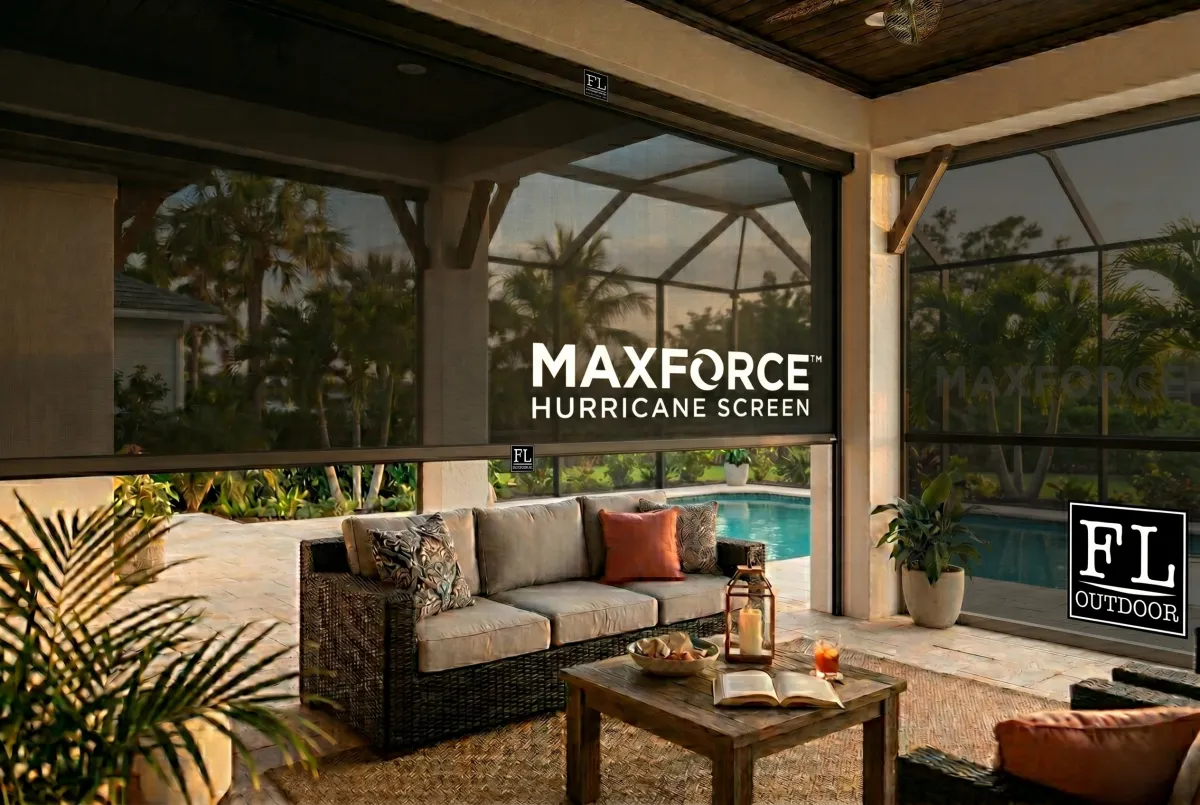
Motorized retractable hurricane screens sit in between, and for outdoor living spaces, they tend to be the most livable answer. They roll down at the push of a button when a storm approaches and disappear into a slim housing the rest of the year. The good ones do double duty: shade and insect control on a normal day, a sealed barrier when you need one. The trade-off is that they're a bigger upfront investment than a tarp-and-pray approach — which is why it's worth choosing a system that earns it.
Why Motorized Screens Fit the Way Central Florida Lives
Central Florida weather isn't only hurricanes. It's relentless afternoon sun, sudden summer downpours, and a bug season that never fully quits. A motorized screen handles it all — which is why, for a lanai you use most of the year, everyday performance matters as much as the storm rating.
The system Florida Living Outdoor installs, MaxForce, was rebuilt recently around exactly this idea. The newest generation uses a self-adjusting spring-tension track that keeps the screen taut and quiet, lies nearly flat when it's down, and blocks up to 95% of UV — so it works as a daily shade-and-insect screen and then seals into a storm barrier in seconds. It's made in the United States by Fenetex, a Florida manufacturer that's been building motorized screens since 2007.
What makes it hold in a storm is engineering, not marketing. MaxForce is built to meet the engineering standards of Miami-Dade County — the toughest hurricane code in the country — and engineered for use in the High-Velocity Hurricane Zone at winds up to 185 mph. If you want the full picture of how that system is built and why it stays on its track when the wind loads up, MaxForce lays it out here: a closer look at why MaxForce hurricane screens hold. For the product and its certifications straight from the source, see MaxForce Hurricane Screens.
What Installation Looks Like Here
Hurricane screens aren't a weekend DIY purchase, and in Florida, they shouldn't be. A hurricane-rated installation has to meet the Florida Building Code, and the permit has to be pulled by a credentialed contractor, which is the single biggest reason to work with a local dealer who does this every day rather than a general handyman.
That's the role Florida Living Outdoor plays. We measure your openings, design the system to fit them exactly, handle the permitting, and install it to code — across Central Florida from our home base in Oviedo, out through the Orlando metro, and along the coast we serve. You get one local team accountable from the first measurement to the final test, and a screen matched to your home instead of a one-size kit.
Talk to Your Central Florida MaxForce Dealer
If you're weighing hurricane protection for a lanai, pool cage, or patio anywhere in Central Florida, the next step is a conversation, not a sales pitch. We'll look at your space, walk you through what fits, and give you a straight answer on cost and timeline.
See the system we install on our MaxForce hurricane screen page, or reach us directly at (386) 463-8494 or schedule a free 20-minute phone consultation.
Frequently Asked Questions
Do homes in Central Florida really need hurricane screens, or is that just a coastal thing? Inland Central Florida regularly experiences hurricane-force winds and heavy rain as storms cross the peninsula after making landfall. Lanias, pool cages, and screened porches are the most exposed parts of a home, and standard enclosure screens aren't built for storm winds — so protection matters even well away from the beach.
What's the difference between hurricane screens and hurricane shutters for a lanai? Shutters and panels are strong, seal the space, and are made for occasional storm use. Motorized hurricane screens roll down for a storm and retract the rest of the year, so they also work as everyday shade and insect protection — a better fit for an outdoor living space you use regularly.
Are MaxForce screens strong enough for a real hurricane? MaxForce Hurricane Screens are built to meet Miami-Dade County engineering standards and engineered for High-Velocity Hurricane Zone use at winds up to 185 mph. Hurricane installations must be permitted and installed in accordance with the Florida Building Code by a credentialed dealer.
Can I use the screens on normal days too? Yes. The current MaxForce uses a self-adjusting track that lies nearly flat and runs quietly, so it works daily for shade, ventilation, insect control, and up to 95% UV blocking — then seals into a storm barrier when needed.
What areas does Florida Living Outdoor serve? We install throughout Central Florida, from Oviedo through the greater Orlando area and out to the coastal communities we cover. Reach out, and we'll confirm we serve your address.
Florida Living Outdoor — your Central Florida outdoor living and MaxForce hurricane screen dealer.