
Labor Day Is the Last Quiet Weekend Before Hurricane Season Peaks
Labor Day Is the Last Quiet Weekend Before Hurricane Season Peaks
Labor Day weekend usually reads as the last cookout of the summer. In Florida, it's also something else on the calendar: the National Hurricane Center's own climatology puts the statistical peak of Atlantic hurricane season at September 10 — just three days after this year's holiday. That's not a coincidence worth panicking over, but it is worth understanding correctly, because most of what gets said about "beating the peak" misses the actual shape of the season.
Why the "September 10 peak" gets misread
The National Hurricane Center's own climatology page states it plainly: the peak of the Atlantic hurricane season is September 10, with most activity occurring between mid-August and mid-October. September 10 isn't a deadline — it's the single statistical midpoint of a much wider high-activity stretch. NOAA's own reporting on the peak notes that from mid-August through mid-October, that window accounts for the large majority of tropical storm days and the overwhelming majority of major hurricane days recorded historically.
For Florida's Gulf side specifically — Tampa Bay, Sarasota, Naples, and the rest of Florida Living Outdoor's west-coast service area — the National Weather Service notes a secondary peak around mid-October, as activity that started in the open Atlantic shifts back into the warmer Gulf of Mexico and Caribbean waters late in the season. If your property sits on that side of the state, mid-October matters to you nearly as much as early September does.
What this year's forecast actually says
NOAA's most recent 2026 outlook, updated in August, maintains a below-normal call for the remainder of the season: 7 to 13 named storms, 2 to 6 hurricanes, and 0 to 2 major hurricanes, with a 75% chance the season finishes below normal overall. An emerging El Niño pattern is the main reason forecasters expect a quieter back half.
Below normal is real information, and it's not nothing. But NOAA has been careful, in the same outlooks, to note it only takes one storm reaching your specific coastline to make it a bad year for you personally — a below-normal season nationally is not a below-risk season for any one property. Two of the past several Atlantic seasons that looked unusually quiet heading into the peak went on to produce some of the most destructive individual storms of the decade in their back halves. Below normal describes the total count. It does not describe whether the one storm that matters to your address shows up in September or October.
The lead-time math that actually matters
Florida Living Outdoor states its own install timeline plainly: most residential hurricane-screen installations take one to three days on-site, but the lead time from signed contract to finished install typically runs four to eight weeks, once engineering, permitting, and manufacturing are accounted for. Call this Labor Day weekend, and a four-week turnaround lands you an installed system by roughly the third week of September — squarely inside the mid-August-to-mid-October high-activity window described above. An eight-week turnaround lands you in mid-to-late October — inside the Gulf's own secondary peak, not past it.
Wait until October to start the process instead, and that same four-to-eight-week window pushes installation into November or later — past most of the season's historical activity, but also past the point where acting still gets you protected for the year it actually matters. The honest version of "act before the peak" isn't about beating September 10. It's about not letting the calendar run out on a four-to-eight-week process while the season's real risk window is still open.
It's still the last cookout weekend, too
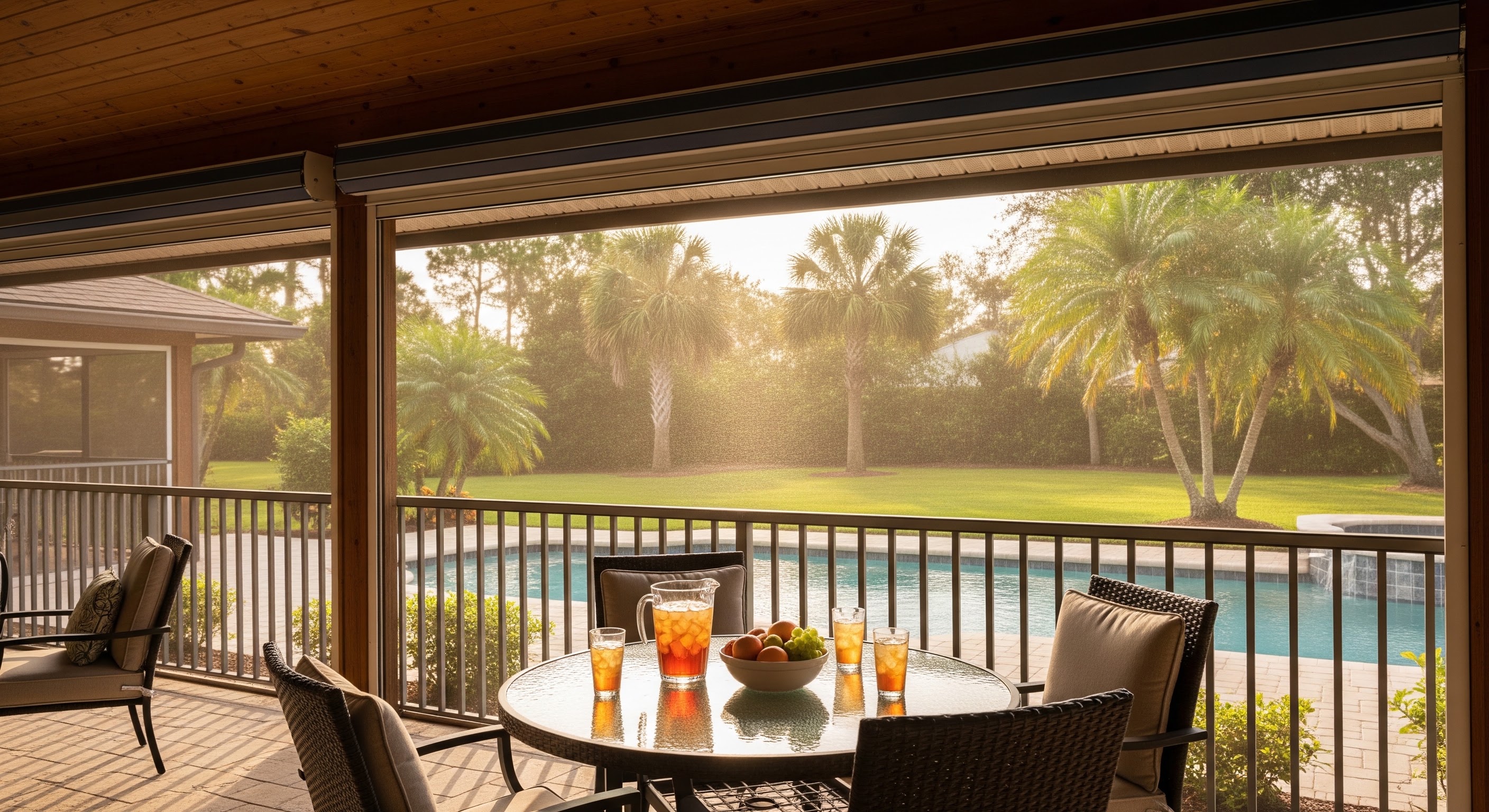
None of this changes what most people are actually planning for this weekend: one more outdoor gathering before the routine of the school year and shorter days sets back in. That's the other half of this series — what a Labor Day gathering on a Florida lanai actually needs to go well, separate from the storm-season math above. We'll get into which of Florida Living Outdoor's own screen and shade systems fit which kind of weekend in the next post, published this Saturday.
Frequently Asked Questions
Is September 10 the last dangerous day of hurricane season?
No. It's the statistical midpoint of the season's most active stretch, which the National Hurricane Center's climatology places between mid-August and mid-October. The Gulf of Mexico specifically sees a secondary peak around mid-October.
Does a "below-normal" hurricane season forecast mean I don't need to worry?
It means fewer storms are expected across the whole Atlantic basin, not that your specific property is at lower risk. NOAA's own outlooks note it takes only one storm reaching your coastline to make it a bad year regardless of the seasonal total.
How long does it actually take to get a hurricane screen installed in Florida?
Florida Living Outdoor states a typical four-to-eight-week lead time from signed contract to finished install, covering engineering, permitting, and manufacturing, with one to three days of on-site installation once materials arrive.
Sources
National Hurricane Center. Tropical Cyclone Climatology. Accessed August 2026. nhc.noaa.gov/climo
NOAA. The Peak of the Hurricane Season — Why Now? noaa.gov
National Weather Service, Tampa Bay. Hurricane Climatology. weather.gov
NOAA.NOAA Maintains Prediction for Below-Normal Atlantic Hurricane Season, August 2026. noaa.gov
Florida Living Outdoor. FAQ — installation timeline and lead time. Company-published; general operational disclosure, not an independently audited figure.