Seminole County’s Mosquito Alert: What It Means and How to Keep Enjoying Your Lanai
Out here in the Black Hammock, this fall was wetter than normal. The heavy rain came late, through September and October, and the low spots that are usually damp stayed soaked. Even on dry days, the water had nowhere to go. It didn’t soak in and it didn’t dry up.
Standing water is where mosquitoes breed, and this fall Seminole County ended up under a mosquito-borne illness alert. Here’s what the alert means, what the county is asking residents to do, and how we’ve kept using our own lanai through it.
What happened
On October 21, 2026, the Florida Department of Health in Seminole County (DOH-Seminole) issued the county’s first mosquito-borne illness advisory of the year after a locally acquired dengue case. Five days later, on October 26, a second local case moved it up to an alert. Seminole County Mosquito Control stepped up ground fogging and larviciding in response.
We’re not alone. The state’s weekly Arbovirus Surveillance report counted 485 locally acquired dengue cases in Florida through October 24, and 524 through October 31. Orange County is also under an alert, and most of this year’s cases have been in the Tampa Bay area.
Advisory vs. alert
An advisory is the first notice level. An alert is the higher one: local health and mosquito control crews have stepped up their work, and they’re asking residents to pitch in. Seminole County is generally on top of mosquito control, but in conditions like these, it’s hard for any crew to keep up on its own.
Why the time of day matters
Dengue is spread by Aedes mosquitoes, mainly Aedes aegypti. They bite mostly during the day, with the busiest stretches in the early morning and late afternoon.
We saw what that does to a routine. Friends and neighbors without screens stopped drinking their coffee outside at sunrise and headed indoors around dusk. With motorized screens on our own lanai, our mornings and evenings stayed the same.
What Seminole County asks residents to do
These steps come straight from DOH-Seminole and Seminole County Mosquito Control:
- Drain standing water. Empty anything that collects water, including flowerpot saucers, buckets, birdbaths, toys and old tires. Mosquitoes can breed in very small amounts of water.
- Use an EPA-registered insect repellent on exposed skin, and follow the label directions.
- Cover up with long sleeves, long pants, socks and shoes when you’re outdoors.
- Request mosquito control service if you’re seeing more mosquito activity around your property. You can submit a request at seminolecountyfl.gov/mosquito.
We’d add one thing. Walk your property and look for anything holding water, and don’t overlook the small stuff. It could be a single flowerpot. Everything matters.
If you have questions about the alert, or about symptoms, DOH-Seminole can be reached at 407-665-3243. For anything health-related, your healthcare provider and the official sources linked below are the right places to go.
Where retractable insect screens fit
Screens don’t replace any of the steps above. They add one more layer on the spot where you actually spend your time outside.
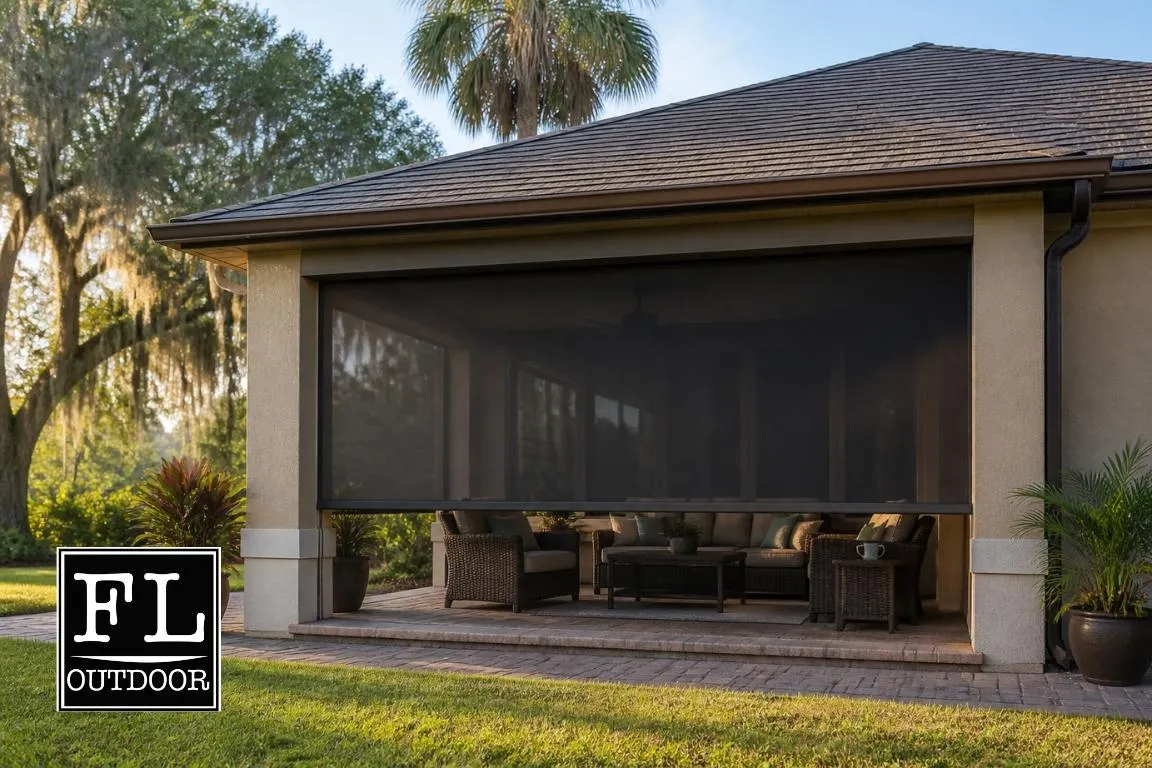
A motorized retractable insect screen closes in the open sides of a lanai, patio or porch with fine mesh. Lower the screens when you head outside, and you can enjoy that morning coffee or afternoon cookout with fewer mosquitoes and fewer bites. Raise them when you’re done, and they roll up into a housing at the top of the opening, leaving your view and your breeze wide open the rest of the time.
That’s the habit that makes them work: screens down when you’re out there, screens up when you’re not. It takes the push of a button.
Ask Kip Hudakoz, who owns Florida Living Outdoor, whether the screens are worth it, and you’ll get a short answer: “Best investment ever.”
Florida Living Outdoor installs One-Track™ insect screens, made in the USA by Fenetex® in Jacksonville, Florida, and installed and serviced by our team here in Oviedo. A few things homeowners tend to appreciate:
- Nothing on the floor. The weight bar rides in the side tracks, so there’s no bottom track to trip over when you walk out to the yard.
- Out of sight when retracted. When the screens are up, the opening looks the way it always has.
- Made to fit your space. Every screen is built to the measurements of your opening, so a covered patio, a lanai or a wide garage opening can all be considered.
Screens work best alongside the county’s advice. A screened lanai next to a yard full of standing water will still see more mosquitoes than one next to a yard that’s been drained and tidied.
Book a free consultation
If you’d like to talk through insect screens for your lanai or patio, book a free 20-minute phone consultation. We’ll answer your questions and walk you through your options, with no pressure.
Official sources
- DOH-Seminole: Mosquito-Borne Illness Alert (Oct. 26, 2026)
- DOH-Seminole: Mosquito-Borne Illness Advisory (Oct. 21, 2026)
- Seminole County: Mosquito-Borne Illness Advisory page
- Seminole County Mosquito Control service requests
- Florida Department of Health: Arbovirus Surveillance reports
- Florida Arbovirus Surveillance, Week 42 (Oct. 18–24, 2026)