Hurricane screens for patios: roll-down screens vs. shutters
Getting a Florida patio ready for a hurricane used to mean hauling plywood or metal panels out of the garage, matching each one to the right opening, climbing a ladder, and fastening hardware, often in heat and wind, and usually after a watch has already been issued. Roll-down hurricane screens change that routine.
Quick Answer: Roll-down hurricane screens give a patio hurricane protection that stays installed and lowers with a motor, so there are no shutters or plywood to carry, fit and fasten before a storm. MaxForce™ Hurricane Screens by Fenetex® are rated for the 185 MPH wind zone (HVHZ) and approved for use in Miami-Dade County and the HVHZ under Florida Product Approval FL8637-R15. 2026 models carry Quiet Spring Technology™. The best time to plan an installation is before hurricane season, while scheduling is open.
Why patio hurricane prep takes so long
Shutters, panels, and plywood must be installed by hand before a storm and removed afterward. For a patio with wide openings, that can take hours and more than one person, and it puts someone on a ladder just as conditions worsen. Then everything has to be cleaned and stored until the next storm.
That's why so many homeowners wait until the last minute, and why the last minute is the most dangerous time to be doing it.
Roll-down hurricane screens vs. shutters and plywood
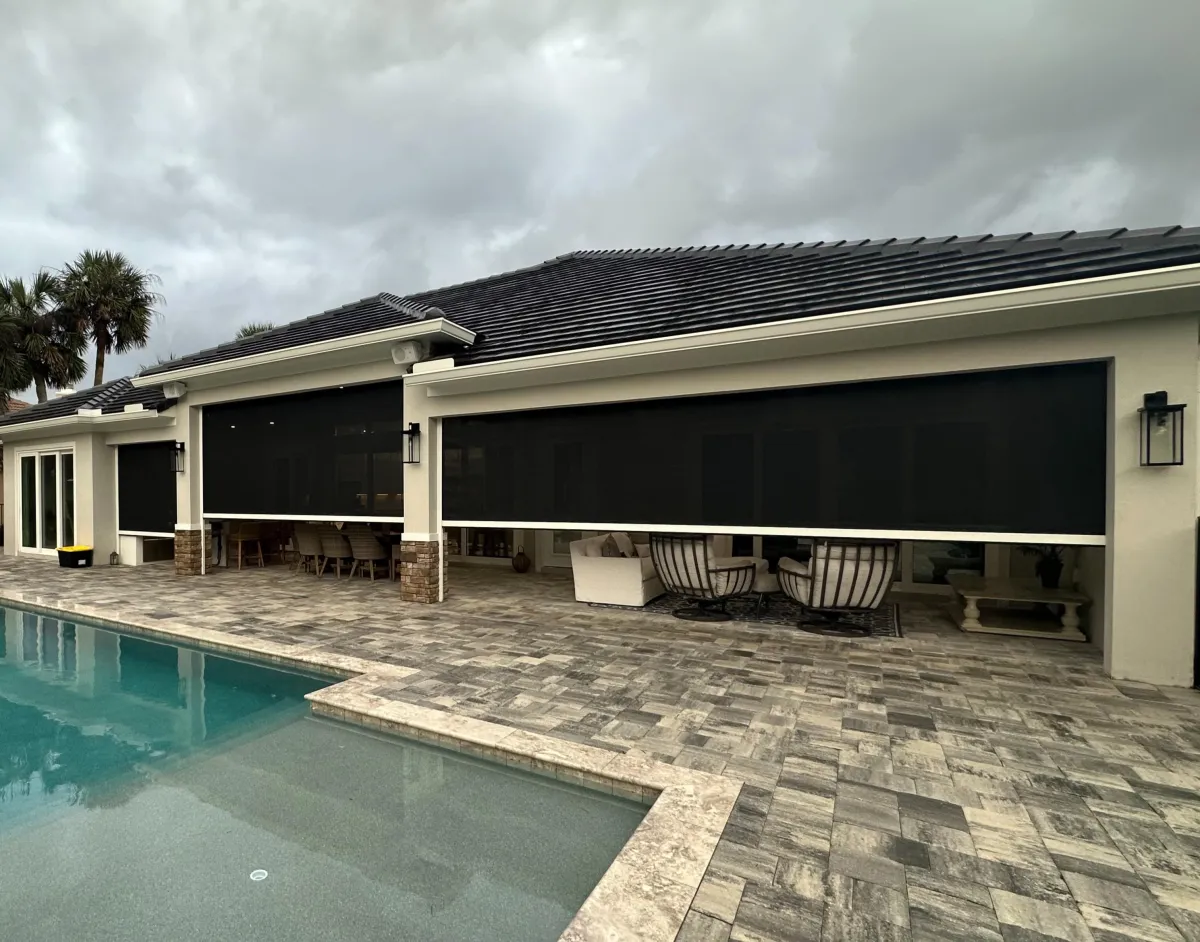
A roll-down hurricane screen is part of the house. It stays rolled up in a housing above the opening until you need it, then lowers with a switch or remote. Here's how it compares with the other common ways to protect a patio opening.
The right choice depends on the opening. Shutters and impact-rated products are common choices for windows and doors. For wide patio openings you use every day, roll-down screens are often the most practical fit.
What MaxForce™ Hurricane Screens are rated for
MaxForce™ Hurricane Screens are rated for the 185 MPH wind zone (HVHZ). They are approved for use in Miami-Dade County and the High Velocity Hurricane Zone under Florida Product Approval FL8637-R15. Design pressure varies by span; your installer works from the FL8637-R15 installation instructions for each opening.
MaxForce™ Hurricane Screens are made in the USA by Fenetex® in Jacksonville, Florida. Florida Living Outdoor installs and services them and has installed 500+ systems.
What Quiet Spring Technology™ adds
2026 MaxForce™ Hurricane Screens carry Quiet Spring Technology™, Fenetex's spring-based, self-adjusting track design. Instead of forcing the screen edge through a rigid, fixed channel, the track adjusts with the screen as it moves.
Binding and wear in fixed tracks are a common source of service calls on older screen systems. Quiet Spring Technology™ is engineered to eliminate the service issues that plague zipper and fixed-track systems, so the screen is ready when you need it.
Hurricane protection screens you can use every day
A hurricane screen that only comes down twice a year sits idle most of the time. MaxForce™ screens can be lowered on ordinary days as well. The fabric blocks up to 91% of UV rays, which helps shade a patio during Florida's long, hot afternoons and protects outdoor furniture from fading.
Your patio hurricane checklist
At the start of the season: lower and raise every screen once to confirm it runs smoothly, and book a service visit if anything sounds or feels different.
Keep tracks and housings clear: remove leaves, dirt and debris, and trim branches that could fall onto the screens.
Know where your controls are: make sure everyone at home knows how to operate the screens.
Lower the screens early: deploy them once officials advise residents to prepare, before tropical-storm-force winds arrive. Don't wait until it's dangerous to be outside.
Secure everything else: bring in furniture, grills, and planters that wind could pick up.
Follow official guidance: hurricane screens protect your openings; they don't turn a home into a shelter. If you're told to evacuate, evacuate.
When to plan your installation
Roll-down hurricane screens are custom-measured and made for each opening, so the time to plan is well before a storm forms. Homeowners who start in the off-season get their choice of installation dates and have their screens in place and tested before the first watch. Read more about why early hurricane preparation saves time and money and why April matters for hurricane preparation in Florida.
See the full product details on our MaxForce™ Hurricane Screens page.
Frequently asked questions
Are roll-down hurricane screens a good option for patios?
For wide patio openings, often yes. They stay installed, lower with a motor, and can be used for shade on ordinary days. Check that any screen you consider carries a current Florida Product Approval for your wind zone.
What's the difference between hurricane screens and hurricane shutters?
Both protect openings during a storm. Shutters are usually solid panels or slats closed only for storms. Roll-down hurricane screens are fabric screens that roll up out of sight and can also be lowered for everyday shade.
When should I lower hurricane screens before a storm?
Once local officials advise residents to prepare, and before tropical-storm-force winds arrive. Lowering them early means nobody has to be outside when conditions turn dangerous.
Related reading
Sources
MaxForce™ Hurricane Screens are a Fenetex® product, made in the USA in Jacksonville, Florida, and installed and serviced by Florida Living Outdoor.