
Motorized Hurricane Screens & Shade Solutions
Does Mother Nature Spend More Time On Your
Florida Patio or Lanai Than You Do?
Protect your outdoor space from hurricanes, bugs, and blazing sun,
so you can enjoy Florida living 365 days a year with a click of a button.


BBB Accredited

26 Years Experience

Veteran Owned

Cat 5 Certified Screens
You Didn't Buy A Home to Stay Inside
You invested in the patio. The lanai. The view.
But somehow, you're not the one enjoying it.
The sun is relentless. The mosquitoes own the evenings. Every hurricane season brings the same scramble—plywood, panic, and prayers. And that outdoor furniture you splurged on? It's already fading.
Mother Nature has taken over your outdoor space. And every month you don't act, you're paying for square footage you can't use.
It doesn't have to be this way. One button changes everything.
One Button. Total Control
Premium motorized screens for every Florida challenge
Magnetic Hurricane Screens
We've installed more than 1,000 magnetic hurricane screens across Florida. These systems are Category-5 rated with impact absorption. Learn more before you buy.
Retractable Bug Screens
Do pesky insects evict you from your patio 30 minutes before dusk? Avoid the itch; click a button and watch OneTrack Motorized insect screens deploy.
Retractable Shades Screens
Beat the Heat. Getting Chased off your patio or lanai. Our OneTrack Motorized Shade Solutions for patios and lanais blocks up to 80% -97% of harmful UV rays
MaxForce Hurricane Screens
Are you worried hurricane? Harness the ultimate protection with a click a button & watch the MaxForce Hurricane Screens deploy. Rate for 185+ MPH
You Didn't Buy A Home to
Stay Inside
You invested in the patio. The lanai. The view.
But somehow, you're not the one enjoying it.
The sun is relentless. The mosquitoes own the evenings. Every hurricane season brings the same scramble—plywood, panic, and prayers. And that outdoor furniture you splurged on? It's already fading.
Mother Nature has taken over your outdoor space. And every month you don't act, you're paying for square footage you can't use.
It doesn't have to be this way. One button changes everything.
One Button. Total Control
Premium motorized screens for every Florida challenge
Magnetic Hurricane Screens
We've installed more than 1,000 magnetic hurricane screens across Florida. These systems are Category-5 rated with impact absorption.
Retractable Insect & Bug Screens
Do pesky insects evict you from your patio 30 minutes before dusk? Avoid the itch; click a button and watch OneTrack Motorized insect screens deploy.
OneTrack Motorized Solar & Shade Screens
Beat the Heat. Getting chased off your patio or lanai. Our OneTrack Motorized Shade Solutions for patios and lanais blocks up to 80% -97% of harmful UV rays
Fenetex MaxForce Cat-5 Hurricane Screens
Are you worried about a hurricane? Harness the ultimate protection with a click a button & watch the MaxForce Hurricane Screens deploy. Rated for 185+ MPH
Your Vision Deserves
A Partner
Who Listens...
Your Vision Deserves
A Partner
Who Listens...
Take Total Control of Your Outdoors.
Block the sun. Light up the nights. The perfect backdrop
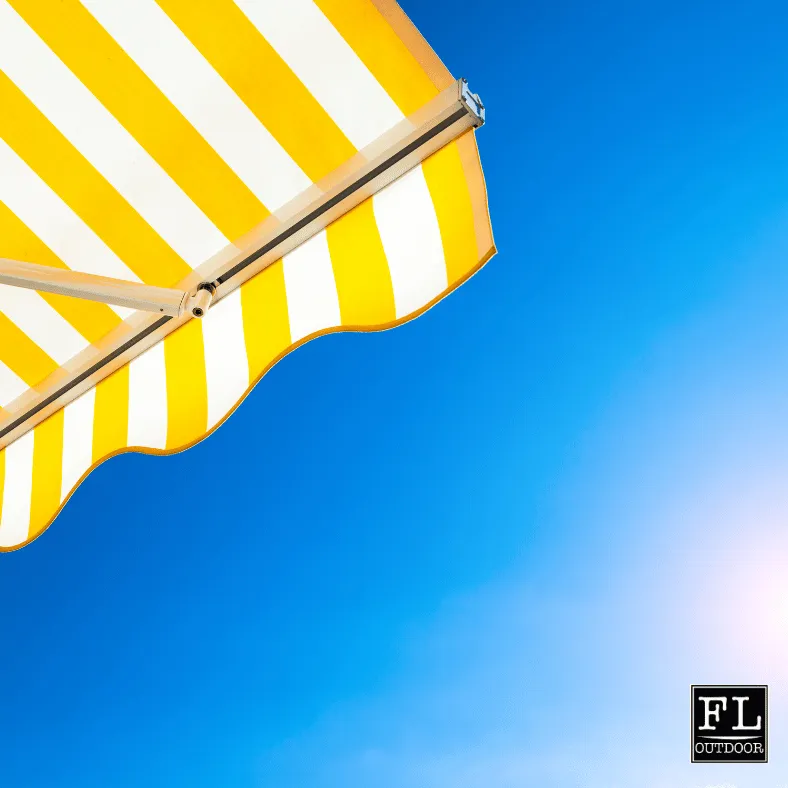
Retractable Awnings
Enjoy on-demand sun protection with retractable awnings, offering shade when you need it and open skies when you don't.
Motorized Awnings: Upgrade your outdoor space with motorized awnings, providing effortless sun protection at the touch of a button.
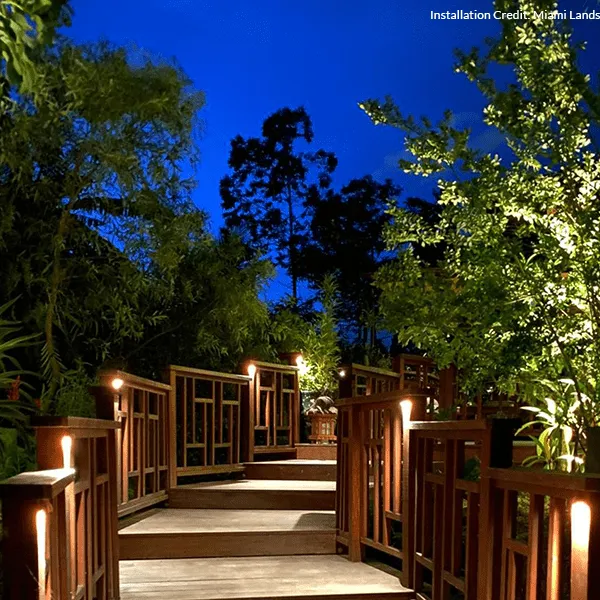
Landscape Lighting
Light up your home at night with beautiful, customized outdoor landscape lighting from Garden LED Lighting.
It doesn't matter whether you're looking to increase your home's security or boost its curb appeal; our team is here to bring your vision to life.
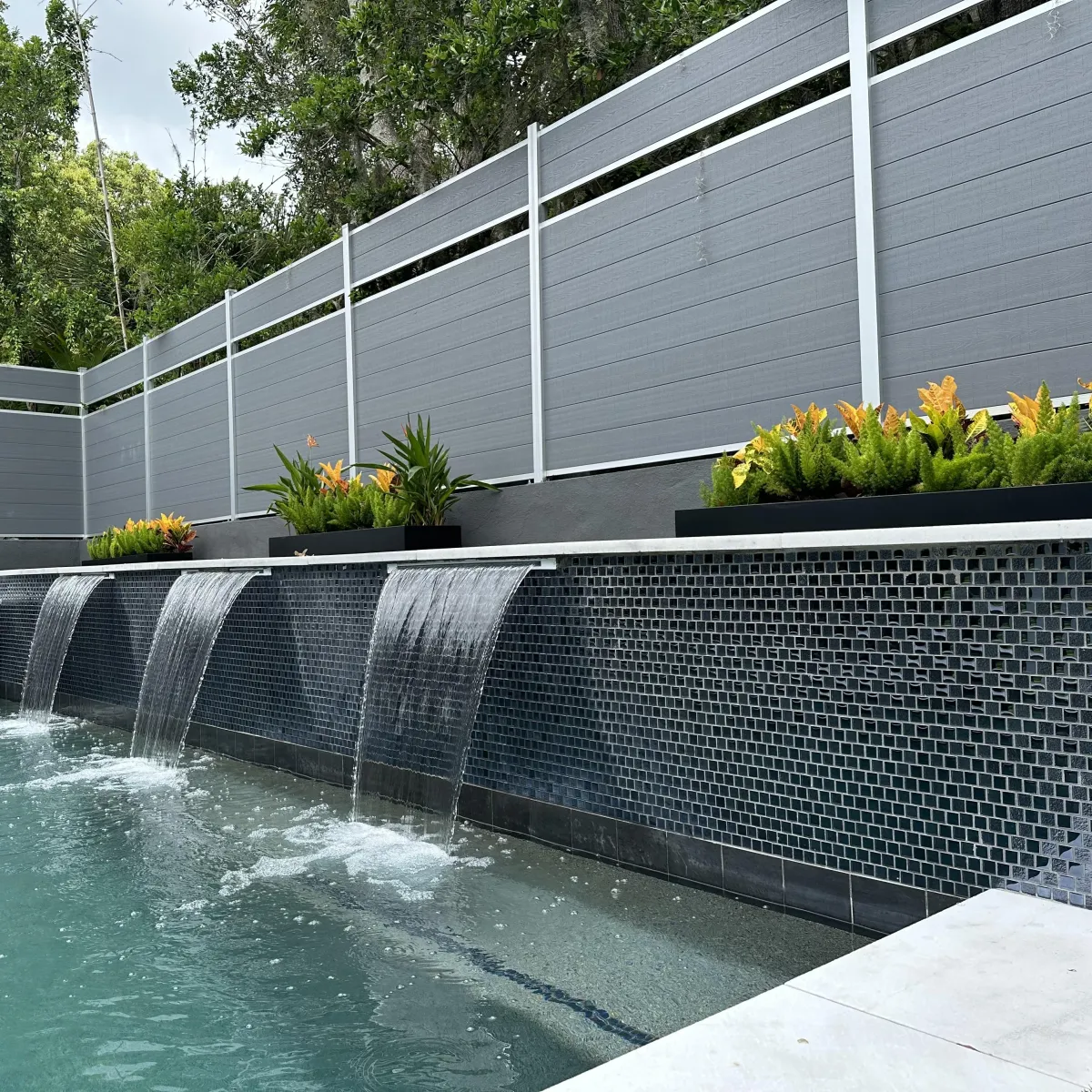
Greenwood Composite Fence
Need privacy in your backyard that combines aesthetics with durability and requires very little maintenance?
Welcome to Greenwood Fence. High-quality modern European-style fencing for the residential, commercial
Your Vision Deserves
A Partner
Who Cares...
WHY FLORIDA LIVING OUTDOOR...?
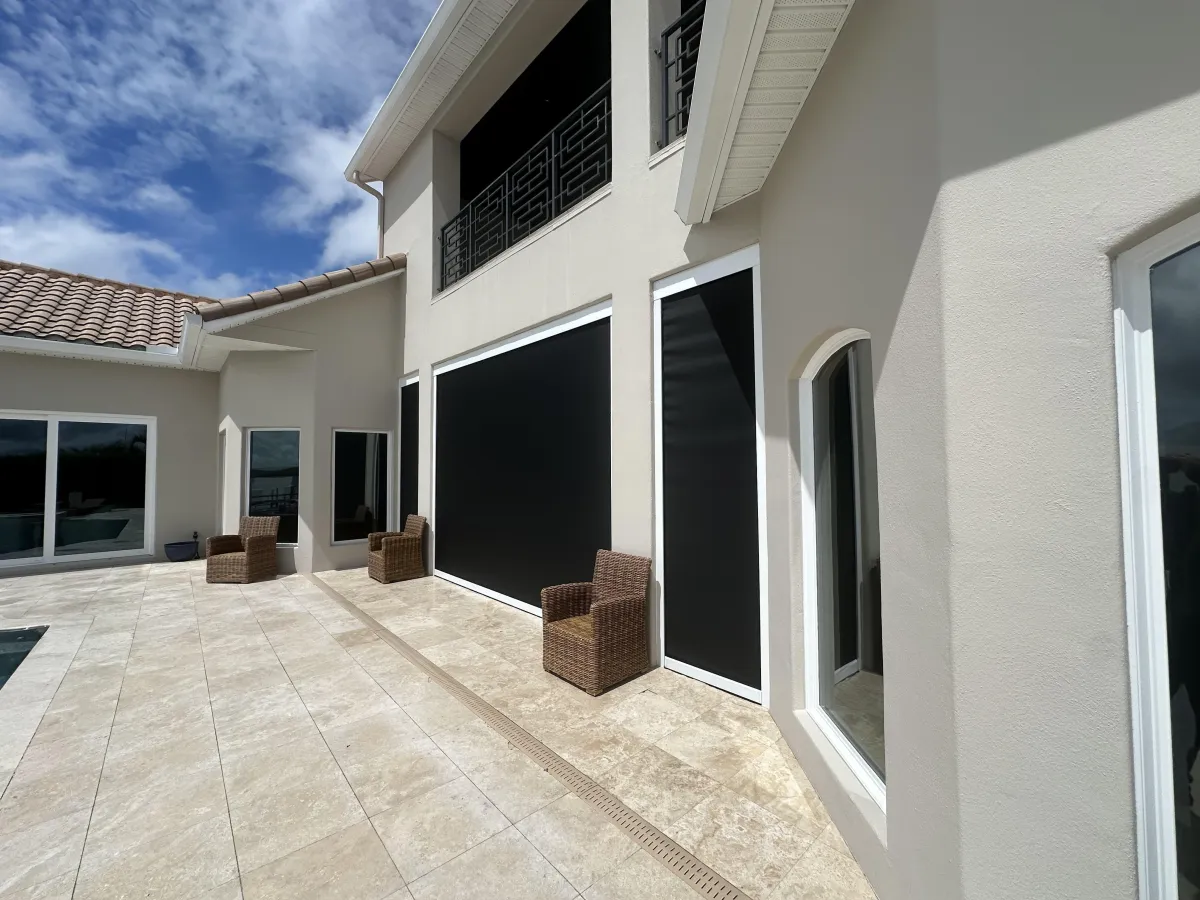
At Florida Living Outdoor, we specialize in enhancing, expanding, and protecting your outdoor living spaces, making them more functional and enjoyable. It does not matter if it is an open space, patio, or lanai. We offer top-of-the-line solutions, including motorized retractable screens, sun awnings, and aluminum pergolas.
At Florida Living Outdoor, we understand. When it comes to enhancing your outdoor living spaces or making them more functional, you're not just looking for a product. You are looking for a partner to help complete your vision.
The bottom line is that nobody knows Sun Pro Awnings, MagnaTrack Motorized Screens, and Fenetex Motorized Screens better than Florida Living Outdoor. We are Florida's number one Trusted resource for Motorized Screens and Awnings.
Don't Take Our Word For It.
Here Is What People Are Saying About Florida Living Outdoor.
Take Total Control of Your Outdoors.
Block the sun. Light up the nights. The perfect backdrop
Retractable Awnings
Enjoy on-demand sun protection with retractable awnings, offering shade when you need it and open skies when you don't.
Motorized Awnings: Upgrade your outdoor space with motorized awnings, providing effortless sun protection at the touch of a button.
Landscape Lights
Light up your home at night with beautiful, customized outdoor landscape lighting from Garden LED Lighting.
It doesn't matter whether you're looking to increase your home's security or boost its curb appeal; our team is here to bring your vision to life.
Greenwood Composite Fence
Need privacy in your backyard that combines aesthetics with durability and requires very little maintenance?
Welcome to Greenwood Fence. High-quality modern European-style fencing for the residential, commercial
Your Vision Deserves
A Partner
Who Cares...
WHY FLORIDA LIVING OUTDOOR...?
At Florida Living Outdoor, we specialize in enhancing, expanding, and protecting your outdoor living spaces, making them more functional and enjoyable. It does not matter if it is an open space, patio, or lanai. We offer top-of-the-line solutions, including motorized retractable screens, sun awnings, and aluminum pergolas.
Bottom line, we install the products that actually win their job. For Category-5 hurricane protection, MaxForce Hurricane Screens by Fenetex — engineered for daily-use, code-compliant storm protection. For everyday shade, insect, UV, and privacy protection, OneTrack motorized screens, engineered with a patented self-adjusting tension system, welded seams, and UV-stable fabrics made for long-term Florida exposure.
For the full picture of outdoor living — Sun Pro awnings, Azenco-Outdoor pergolas, Greenwood Fence, and Garden LED lighting — all under one veteran-owned roof.
Don't Take Our Word For It.
Here Is What People Are Saying About Florida Living Outdoor.
Your Vision Deserves
A Partner
Who Delivers...
Your Vision Deserves
A Partner
Who Delivers...
Aluminum Pergolas -Turn Your Patio Into the Room Everyone Wants
An aluminum pergola gives you shade, structure, and a reason to stay outside longer.
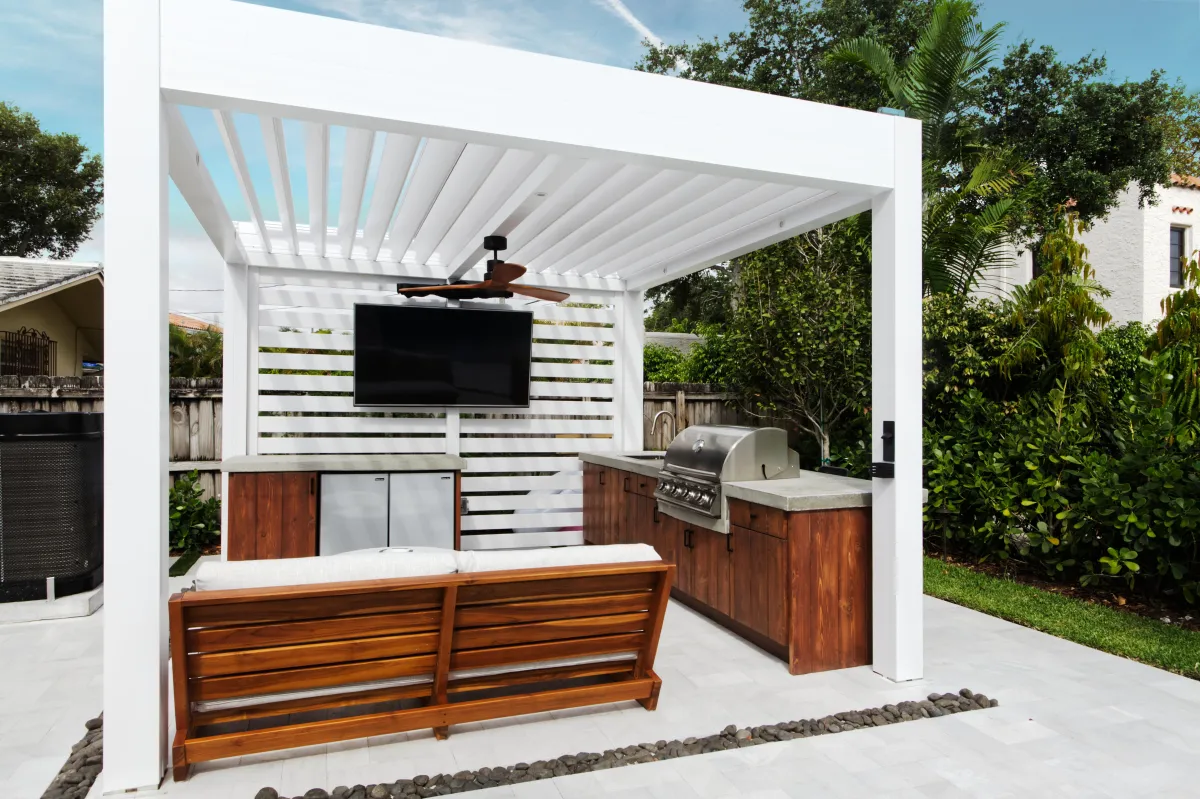
Louver Roof Pergolas
Enhance your outdoor space with aluminum pergolas with louvers, This modern pergola idea lets you control sunlight and airflow, creating the perfect ambiance year-round.
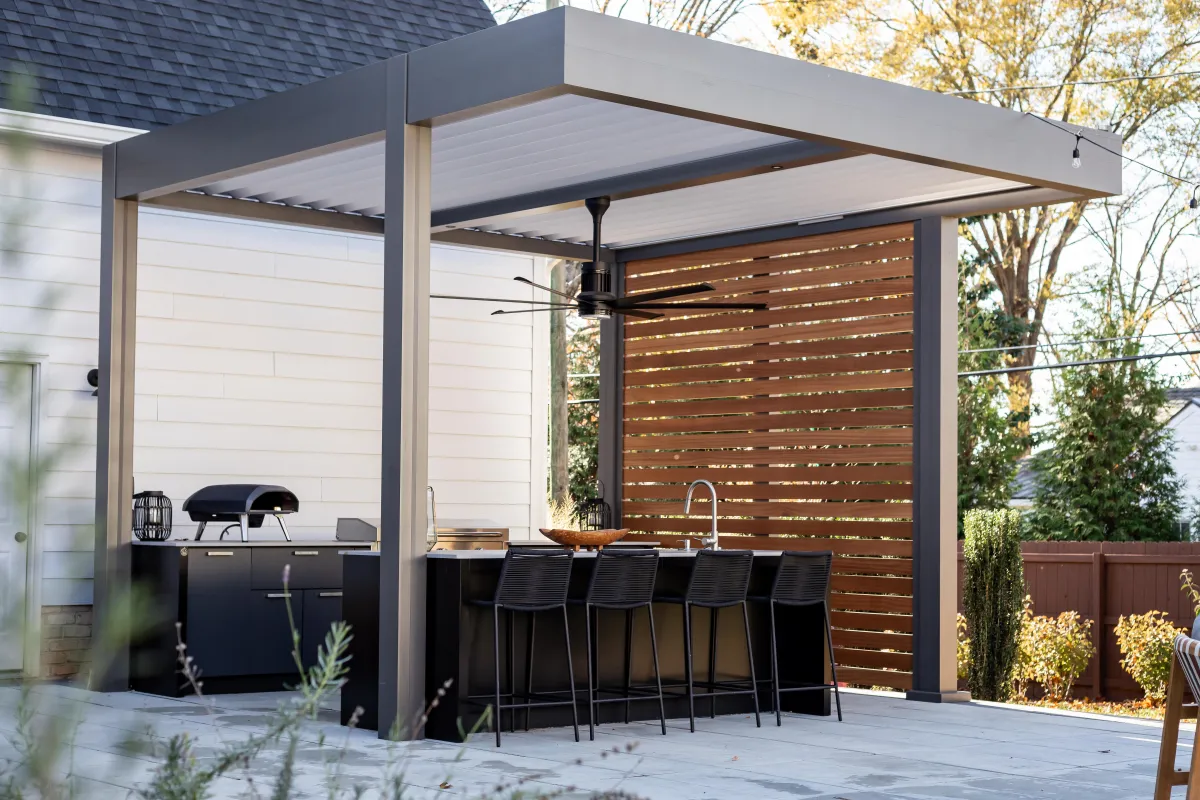
Insulated Roof Pergolas
For a cooler, more comfortable outdoor retreat, insulated roof pergolas provide superior protection from heat and rain. This pergola idea blends style and function, making your patio usable in any season.
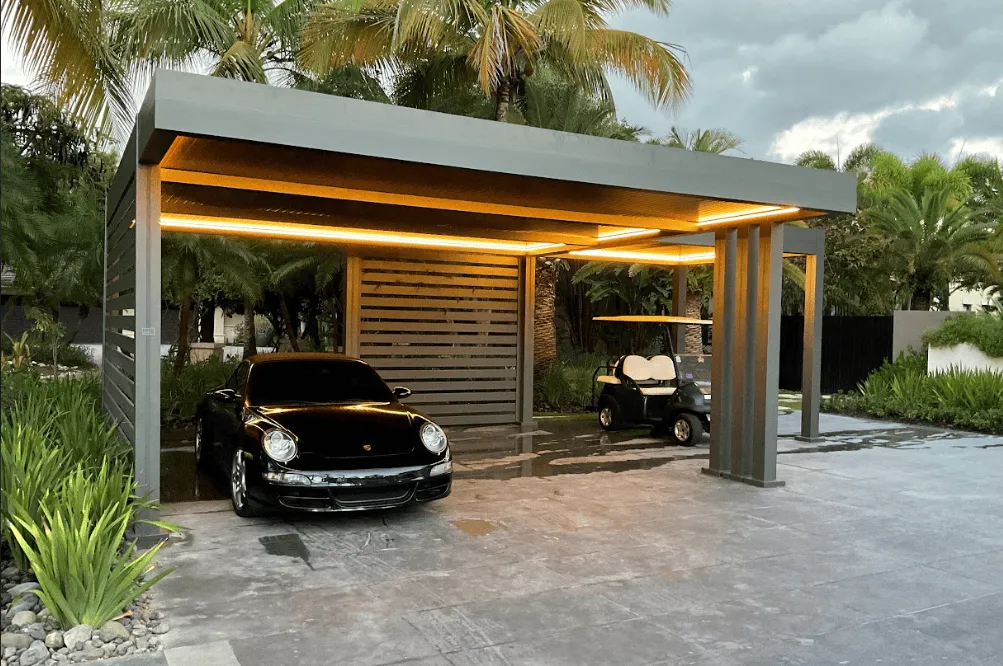
Car Port and Sun Shades
Protect your vehicles with durable aluminum carports, a sleek and modern alternative to traditional garages, creating curb appeal while shielding your car from the elements.
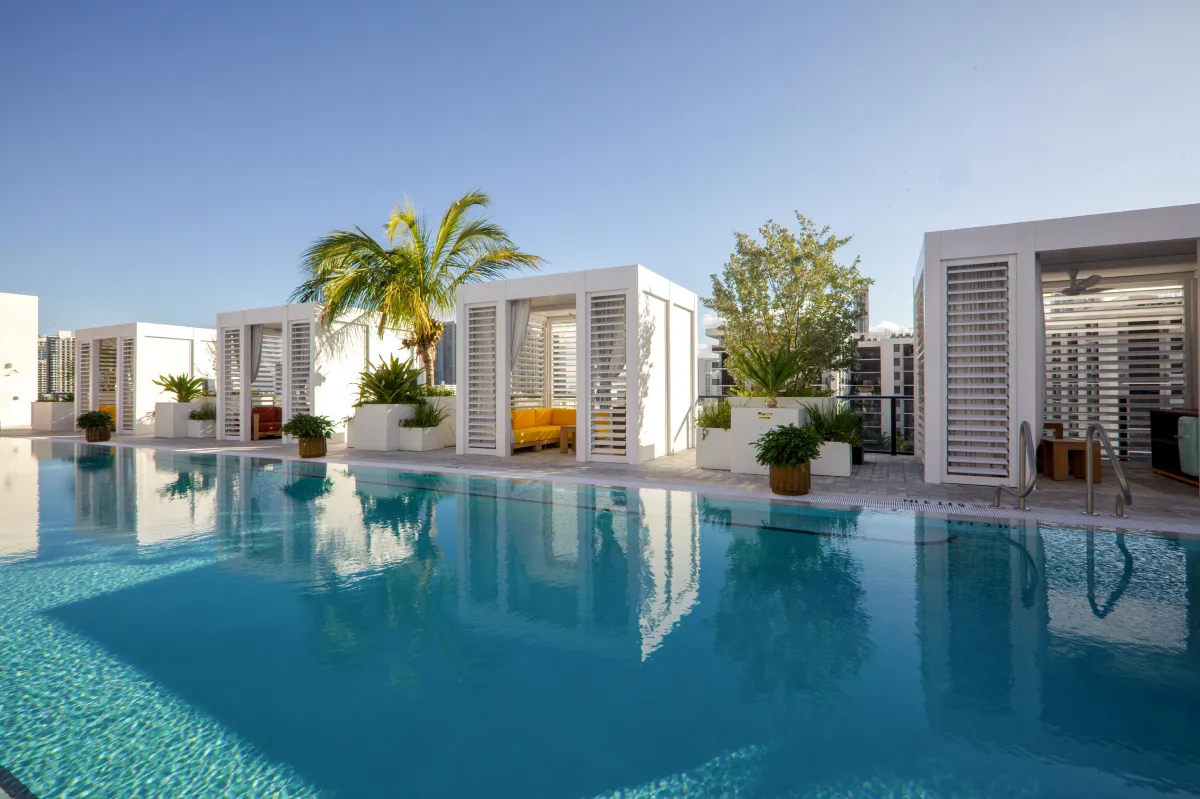
Aluminum Cabanas
Create a private, resort-style escape with aluminum cabanas, perfect for poolside lounging or outdoor entertaining. This pergola idea combines shade, style, and durability for a luxurious backyard retreat.
The Florida Living Outdoor Advantage

Luxury Products
Each product is chosen for quality — we proudly install only premium-grade systems that function well in creating those outdoor spaces. Our hurricane and motorized screens are engineered to truly enhance your outdoor living experience and deliver trouble-free performance year after year and long-lasting beauty.

Local Experts
As a family-veteran-owned, faith-based business, our team brings a personal touch to every project. We care. Our goal is to ensure your satisfaction and deliver unmatched service and outdoor luxury spaces.

Extensive Experience
FL Outdoors possesses a track record of 26 years of serving major clients; our extensive experience speaks for itself. Trust our licensed Class A contractor services for excellence in installation and customer satisfaction.

Superior Service
At Florida Living Outdoor, white-glove service is our hallmark. Your job is to dream and let us create a smile. We prioritize your needs, ensuring a hassle-free experience from consultation to installation.
The Florida Living Outdoor Advantage
Luxury Products
Each product is chosen for quality — we proudly install only premium-grade systems that function well in creating those outdoor spaces. Our hurricane and motorized screens are engineered to truly enhance your outdoor living experience and deliver trouble-free performance year after year and long-lasting beauty.
Local Experts
As a family-veteran-owned, faith-based business, our team brings a personal touch to every project. We care. Our goal is to ensure your satisfaction and deliver unmatched service and outdoor luxury spaces.
Extensive Experience
FL Outdoors possesses a track record of 26 years of serving major clients; our extensive experience speaks for itself. Trust our licensed Class A contractor services for excellence in installation and customer satisfaction.
Superior Service
At Florida Living Outdoor, white-glove service is our hallmark. Your job is to dream and let us create a smile. We prioritize your needs, ensuring a hassle-free experience from consultation to installation.
Your Vision Deserves
A Partner,
Not Just A Vendor
Florida Living Outdoors Solutions
Dual Specialties
Residential Solutions
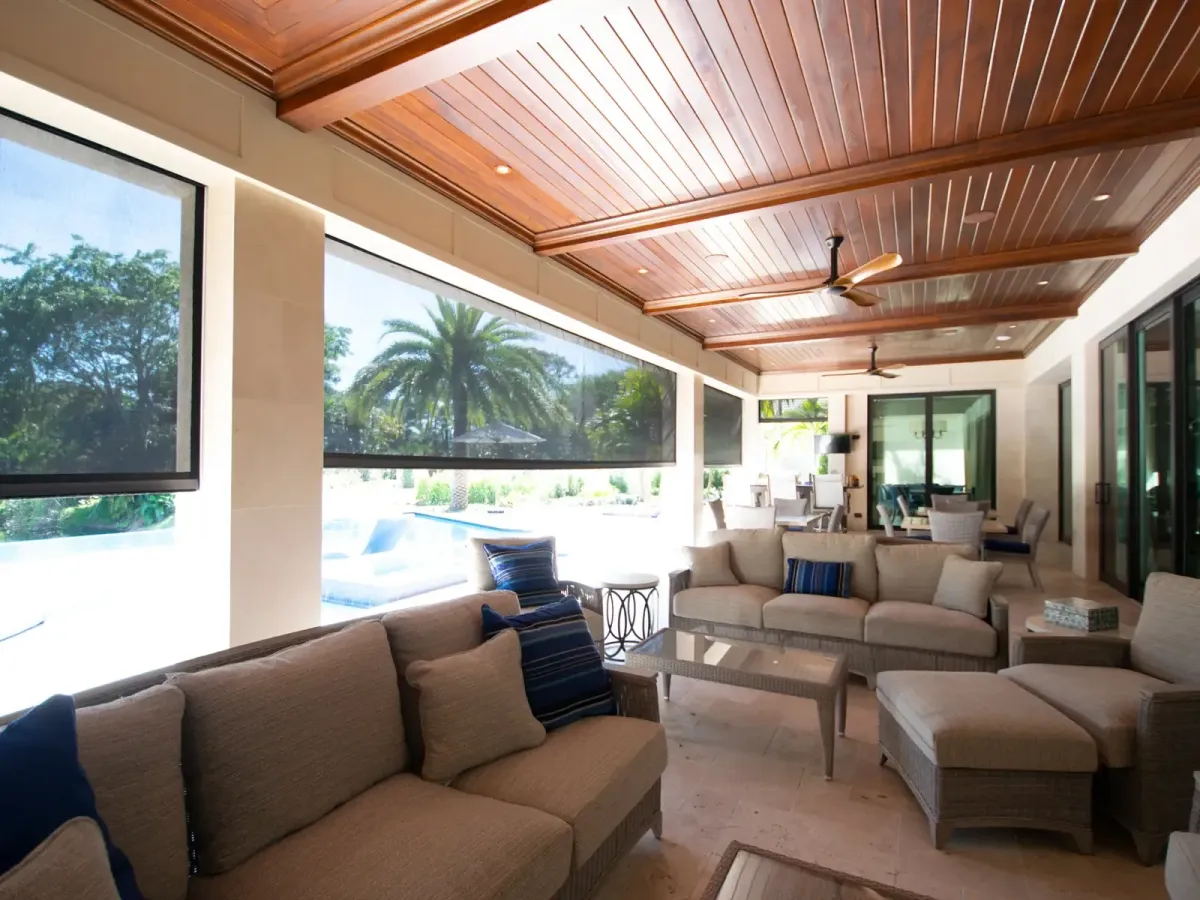
Your Florida home should be a sanctuary for relaxation, family time, and maybe even entertaining. Adding Motorized Screens to patios empowers you to curate any outdoor space to complement your aesthetics and meet your needs.
From Lanai Living to patio perfection, poolside cabanas to garages, and windows to doors, there are motorized screen options for every situation. Need motorized design ideas or a price check? Check out our motorized screen residential design guides and calculator.
Commercial Solutions
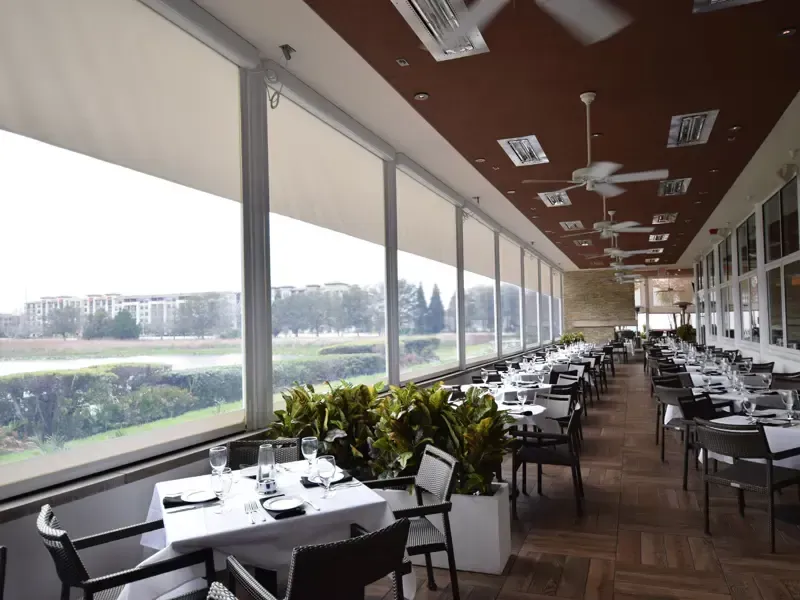
Whether you're investing in your restaurant's patio seating or weatherproofing your outdoor event space, ensuring those areas remain usable and enjoyable for guests is critical to your bottom line and ultimate business success.
Does your restaurant’s patio contend with glaring sun? Or maybe the luxury outdoor kitchen area is being invaded by bugs? Maybe the upcoming hurricane season has you concerned. Whatever the challenge, Florida Living Outdoor, Fenetex, and MagnaTrack Motorized got you covered.
Your Vision Deserves
A Partner,
Not Just A Vendor
Florida Living Outdoors Solutions
Dual Specialties
Residential Solutions
Your Florida home should be a sanctuary for relaxation, family time, and maybe even entertaining. Adding Motorized Screens to patios empowers you to curate any outdoor space so it complements your aesthetics and meets your needs.
From Lanai Living to patio perfection, poolside cabanas to garages, and windows to doors, there are motorized screen options for every situation. Need motorized design ideas or a price check?
Check out our motorized screen residential design guides and calculator.
Commercial Solutions
Whether you're investing in your restaurant's patio seating or weather-proofing your outdoor event space, making sure those areas remain usable and enjoyable for guests is critical to the bottom line and your business' ultimate success.
Does your restaurant's patio contend with glaring sun? Or maybe the luxury outdoor kitchen at your home is being invaded by bugs? Maybe the upcoming hurricane season has you concerned.
Whatever the challenge, Fenetex Motorized screens and our full outdoor solutions line are engineered to keep your commercial space open, comfortable, and operational year-round.
Outdoor Living Explained
Real Advice From 26 Years of Florida Outdoor Living
The outdoor resource Floridians trust for expert tips on shade solutions, hurricane preparedness, product reviews, and patio and lanai transformations. Be in the know before you decide.
FL Outdoor News
Stay up to date with the latest news.
FAQ - FLORIDA LIVING OUTDOORS
What does Florida Living Outdoor install?
Florida Living Outdoor designs and installs motorized hurricane screens, retractable awnings, luxury louvered pergolas, custom fencing, outdoor lighting, and insect and solar screen systems. We serve Florida homeowners and commercial properties from Daytona Beach through Orlando, Tampa, the Treasure Coast, and South Florida. Every system is installed by our in-house crews — never subcontracted — and backed by a 3-year craftsmanship warranty.
How much do motorized hurricane screens cost in Florida?
Motorized hurricane screen pricing in Florida typically ranges from $3,500 to $9,500 per opening, depending on size, mesh weave, motor type, and structural attachment. Larger openings, integrated smart-home controls, and impact-rated installations move toward the upper end. We provide written, itemized quotes after an on-site measurement — no estimates over the phone, because hurricane screens are engineered to your specific opening, not sold off a shelf.
What is MaxForce 365 and when does it launch?
MaxForce 365 is the world's first motorized hurricane screen with a spring retention and self-correcting tensioning system, eliminating the manual recalibration conventional screens require over their lifespan. Manufactured by Fenetex with patent pending, MaxForce 365 carries the same Miami-Dade County Notice of Acceptance approval as the existing MaxForce line — the most demanding hurricane protection certification in the United States. The system launches June 29, 2026, and Florida Living Outdoor is a launch-day certified dealer.
How long does a hurricane screen installation take?
Most residential hurricane screen installations take one to three days on-site, depending on the number of openings and structural complexity. Lead time from contract signing to installation is typically four to eight weeks, accounting for engineering, permit approval, and manufacturing. Commercial projects and multi-unit installations follow a project-managed timeline scoped during design. We handle all permitting, HOA submittals, and final inspection coordination.
What's the difference between a hurricane screen, an insect screen, and a solar screen?
Each is engineered for a different job. Hurricane screens withstand Category-5 winds and debris impact, deploying for storm protection. Insect screens block mosquitoes, no-see-ums, and flying debris while allowing breeze through — ideal for daily lanai and patio use. Solar screens use a denser weave to reduce solar heat gain by up to 80%, lowering cooling costs and protecting interior furnishings from UV damage. Many Florida Living Outdoor customers install two systems on the same opening — one for daily comfort, one for storms.
What service areas does Florida Living Outdoor cover?
Florida Living Outdoor serves homeowners and commercial properties across Central Florida, the Space Coast, the Treasure Coast, Tampa Bay, and South Florida — including Orlando, Oviedo, Winter Park, Cocoa Beach, New Smyrna Beach, Vero Beach, Stuart, Jupiter, Tampa, Sarasota, Naples, Deerfield Beach, Lighthouse Point, Plantation, and Southwest Ranches. We coordinate larger commercial and coastal projects statewide. All work is performed under DBPR licensure CGC1532839.
How much does a retractable awning cost in Florida?
Retractable awning pricing in Florida typically ranges from $2,800 to $8,500 installed, depending on projection width, motor and remote configuration, fabric grade, and wind sensors. Motorized models with sun, wind, and rain sensors deploy and retract automatically based on conditions. A properly sized awning lowers patio temperatures by 15 to 20 degrees, reduces sun-driven interior fading, and pays for itself in expanded usable outdoor square footage faster than most homeowners expect.
What is a louvered pergola and how is it different from a regular pergola?
A louvered pergola has motorized aluminum slats in the roof that rotate from fully open to fully closed at the press of a button — letting you control sun, shade, and rain in real time. A traditional fixed pergola has decorative beams with no weather control. Florida Living Outdoor installs Azenco louvered pergolas, engineered for Florida wind loads and integrated with lighting, heaters, screens, and smart-home controls. They function year-round in Florida's climate, unlike fixed pergolas which become unusable in rain or peak summer sun.
Your Vision Deserves
A Partner
Who Listens...
FL Outdoor News
Stay up to date with the latest news.
FL Outdoor News
Stay up to date with the latest news.
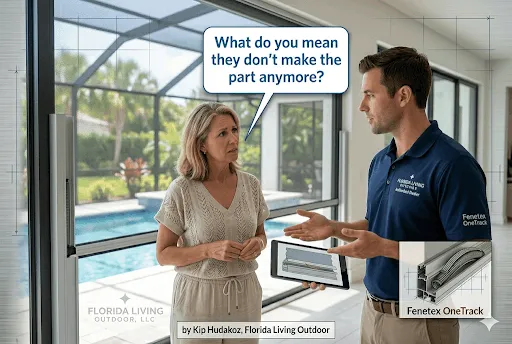
Motorized Screen Design Philosophy: One Concept, Many Iterations
One Concept, Many Iterations: The Engineering Case for Design Restraint
The motorized screen industry is still young. Not at the underlying product-category level — screens have been around for a century — but at the level of the modern free-floating articulating track architecture that now defines the premium segment. That architecture is maybe fifteen years into serious commercial deployment. Which means the manufacturers building products today are still making design-philosophy decisions that will play out over the next twenty years of the category. Some have chosen to iterate through generational redesigns, releasing meaningfully different versions of their flagship product every few years. Others have chosen a different path: refine one core concept incrementally, hold the engineering DNA stable across iterations, keep the old units compatible with the new parts. Both approaches have merit. Neither is the obviously correct answer. But the choice shows up in the ownership experience in ways most shoppers never think about until year eight.
Some motorized screen manufacturers have released multiple generations of their flagship product, each with meaningful design changes. Other manufacturers — OneTrack among them — have chosen a different path: one core concept, refined incrementally, always backward-compatible. Both approaches reflect legitimate motorized screen design philosophy. The choice between them shows up most clearly in long-term investment outcomes — parts availability at year ten, warranty language durability, and resale consistency across iterations. Here is what each approach actually commits the manufacturer to.
Where the Motorized Screen Industry Sits Right Now
The category is mature enough to have premium brands, standardized regulatory credentials through the Florida Building Code, and genuine engineering competition between architectural categories — magnetic pull versus mechanical spring push, as we covered in Post 2. It is young enough that manufacturers are still actively refining how these systems should be built.
The tension every manufacturer in this space sits inside is real. Iterate too slowly, and your product falls behind competitors who are shipping meaningful engineering improvements. Iterate too aggressively, and your existing customers lose parts availability, warranty durability, and the resale value that comes with a stable product platform. Every motorized screen manufacturer has made a decision about where to sit on that spectrum, and the decision shapes everything downstream — the warranty language, the dealer network structure, the service-call economics, and the fifteen-year total cost of ownership that Post 8 covers in detail.
What a shopper needs to understand before signing is that both ends of this spectrum are legitimate engineering strategies. Neither is a criticism of the other. The question is which strategy best fits how you intend to own the product.
The Case for Generational Redesign
Some of the most respected brands in the premium motorized screen category have released multiple generations of their flagship products over the past decade. Each generation reflects real engineering work — improvements to the track geometry, tighter tolerances on the articulating mechanism, better thermal behavior in the aluminum extrusions, updated electronic controls, and refinements to the weather-seal architecture. When you look at a current-generation system from one of these manufacturers, you are looking at engineering that has been progressively improved through deliberate iteration.
The advantages of this approach are real. Generational redesign lets a manufacturer fold new materials science into the product as it becomes available. Aluminum alloys have improved. Motor electronics have miniaturized. Neodymium magnet field strength has gotten more uniform across production batches. Weather seals last longer than they did five years ago. A manufacturer that iterates through generations gets to incorporate these advances the moment they become economically viable — and the customer who buys the current generation gets a better product than the one their neighbor bought six years ago.
The approach also gives manufacturers the freedom to correct engineering decisions that have not aged well. If a weight bar geometry proved vulnerable to a specific failure mode in year six, a generational redesign is the cleanest way to fix it. The manufacturer can engineer a better answer and ship it as the new standard without carrying the old geometry forward. The old geometry becomes a legacy product, the new geometry becomes the flagship, and the product family moves forward.
This is how most consumer technology works. Cars get redesigned on roughly six-year cycles. Phones get redesigned annually. Appliances get redesigned every few years. The model is familiar to anyone who buys anything.
The Case for Single-Concept Evolution
Not every product category rewards the same approach. Some products — durable infrastructure items installed in homes for decade-plus ownership horizons — reward the opposite philosophy. Build one concept well. Hold the engineering DNA stable. Refine incrementally. Keep the old parts available.
This is the motorized screen design philosophy Fenetex has chosen for its OneTrack screen system — one core concept, refined incrementally, always backward-compatible with older installations. A OneTrack installed in 2018 and a OneTrack installed in 2026 share enough engineering DNA that the critical parts can be interchanged. The manufacturer has not released successive distinct generations of the product with breaking changes between them. The product is the product. Improvements happen inside the single-concept envelope.
The advantages of this approach are also real. Parts availability at year ten is not a question — the parts that shipped in 2018 are still being produced in 2026 because the current production line is engineered to stay compatible with older units. Warranty language durability is not a question — the contract that was written in 2018 maps onto the 2026 product because the core architecture has not broken compatibility. Resale is not a question — a prospective buyer evaluating a seven-year-old OneTrack installation in a home purchase can see that the product on the manufacturer's current catalog is the same product family as the one already installed.
None of that is automatic. A manufacturer choosing single-concept evolution has to exercise real engineering discipline. New materials become available. Tolerances can be tightened. Electronic controls can be miniaturized. All of those advances are available to a single-concept product family too — but each one has to be folded in without breaking backward compatibility with older units. That is harder engineering than a clean generational redesign. It is also what makes the product family durable across a fifteen-year ownership horizon.
The Real-World Consequences for Homeowners
Here is where the abstract design philosophy question becomes a concrete question of ownership. Consider four scenarios that unfold across the typical arc of owning a motorized screen.
Scenario 1: Year Seven, Weight Bar Damage
A storm throws a palm frond against your motorized screen. The weight bar at the bottom of the fabric takes the hit and needs to be replaced. The fabric is fine. The track is fine. The motor is fine. You just need a new weight bar.
Under a generational redesign model, the question is: Does the current production line still meet your generation's weight bar? If yes, fast repair. If the manufacturer has moved to a new weight bar geometry that is not compatible with your system's side track and fabric channel, you are looking at a larger repair — potentially a full track-and-weight-bar upgrade to bring the installation to current spec. The cost difference between "replacement part" and "system upgrade" at year seven is typically a factor of five or more.
Under a single-concept evolution model, the question is: Does the current production line still make this weight bar? Yes. Because the current production line is engineered to stay compatible with older units, the weight bar that shipped in 2018 is still being produced in 2026. Fast repair. This is what the backward-compatibility warranty language from Post 3 commits the manufacturer to in writing.
Scenario 2: Year Ten, Motor Replacement
Motors on motorized screens have finite duty cycles. In normal residential use, a motor should last fifteen years. In heavy-use installations — a covered lanai used multiple times a day — motors sometimes reach end of life around year 10. When that happens, the motor has to come out and a new motor has to go in.
Under a generational-redesign model, the motor mount on your older system may or may not match the current motor inventory. If the manufacturer has updated the mounting geometry between generations, you may need a mount adapter, a housing modification, or a full motor-assembly replacement that carries costs well beyond the motor itself.
Under a single-concept evolution model, the motor mount is the same mount it was in 2018. The current motor drops in. The repair is straightforward.
Scenario 3: Year Eight, Selling the Home
You are selling your Florida home in year eight of your motorized screen installation. The prospective buyer asks whether the screens are still supported — whether parts are available, whether the warranty transfers, and whether the installation will still make it to year fifteen. These questions come up in Florida real estate constantly, because motorized screens are a significant line item on the inspection report.
Under a generational-redesign model, the answer depends on how the manufacturer has structured obsolescence for older generations. Some manufacturers offer strong transition paths. Others quietly let older generations slide off the parts list.
Under a single-concept evolution model, the answer is simple: the product in the manufacturer's current catalog is the same product family as the one installed in your home. Parts are available. The warranty transfers according to its original terms. The installation will be serviceable into year fifteen and beyond.
Scenario 4: Year Twelve, Fabric Replacement
Fabric has a shorter service life than aluminum or electronics. At some point between year eight and year twelve, most motorized screens need a fabric replacement — usually the clear vinyl, which takes the most UV damage. The fabric pulls out of the weight bar channel at the bottom and out of the roll tube attachment at the top. A new fabric panel goes in.
Under a generational-redesign model, the fabric channel geometry may have changed between generations. The replacement fabric may or may not fit your system's weight bar and roll tube without modifications.
Under a single-concept evolution model, the fabric channel has not changed. Replacement fabric fits.
None of this is to say that generational redesign is a bad model. It is simply a different model, with different consequences at year seven, year eight, year ten, and year twelve. A shopper who plans to own the installation for twenty years benefits from the single-concept approach. A shopper who plans to renovate on a shorter cycle may value the improved engineering of a current-generation redesign more than the long-horizon compatibility of a single-concept product.
OneTrack's Positioning: The Engineering Discipline
Fenetex has built OneTrack as a deliberate single-concept product family. The mechanical spring-based articulating track, the specific side track cross-section, the weight bar attachment, the housing architecture — these core elements are the product. Iteration happens inside the envelope, not by replacing the envelope.
The screen material efficiency story — OneTrack's 1.625-inch daily-use side track versus MagnaTrack's 2.560-inch daily-use side track, an approximately thirty-seven percent cross-section reduction — is an outcome of this discipline rather than a separate product decision. The narrower track was arrived at through iteration on the original spring-based concept, rather than through a generational redesign that would break compatibility with older units.
The warranty language from Post 3 — "lifetime means as long as the system or compatible systems are in production and parts are available" — is the contract enforcement of this discipline. The engineering team cannot ship a breaking change without the warranty department catching it, because the warranty department's own contract language forbids it. The design philosophy and the warranty contract are structurally aligned.
This is what the Fenetex design discipline actually means in practice. It is not that the product never changes. Products change. It is that the changes occur under a constraint — backward compatibility — that protects the customer's long-term investment even as the manufacturer's engineering team actively improves the design.
How to Evaluate a Motorized Screen Manufacturer's Design Philosophy
If you are shopping for motorized screens right now and want to understand which design philosophy a manufacturer has chosen, there are three questions worth asking directly.
First: how many distinct product generations has this flagship gone through, and what is the oldest generation still supported with OEM parts? A manufacturer that has released multiple generations and still supports all of them with parts is exercising strong generational discipline. A manufacturer that has released multiple generations and only supports the current one is exercising a different kind of discipline. Either answer is defensible — you just want to know which one you are buying into.
Second: Does the warranty contract language commit the manufacturer to backward compatibility in future product iterations? This is the Post 3 question. Fenetex has explicitly written this commitment into OneTrack's warranty. Other manufacturers' warranty language may or may not include equivalent provisions. The language is public — ask for the full warranty document and read it.
Third: when your installer services older units, what is the typical experience of ordering parts? An installer who has been in the market for ten years has seen the parts-availability story play out across multiple manufacturers and multiple product generations. They can tell you which manufacturers keep older generations in stock and which ones quietly phase older parts out. That field knowledge is more valuable than any marketing claim about design philosophy.
A good installer will walk a prospective customer through all three questions without hesitation. Browse our motorized screen options to see the full product families we install and service across Central and South Florida.
About the Author
Kip Hudakoz is the owner of Florida Living Outdoor LLC, a BBB A+ accredited, veteran-owned Florida outdoor services company specializing in motorized screens, retractable awnings, and pergola systems. Kip has spent twenty-six years in the Florida outdoor services industry, operating companies in Central Florida and South Florida. He is also the owner of Paramount Fencing and Custom Fence Orlando, and was a former co-host of "Ask the Experts" on News 96.5 Florida Home and Garden. Florida Living Outdoor was founded in December 2021 and earned its BBB A+ accreditation in October 2024. The company installs and services both MagnaTrack and OneTrack motorized screen systems across Central and South Florida.
Frequently Asked Questions
What is a motorized screen design philosophy?
A motorized screen design philosophy is the approach a manufacturer takes to iterating its flagship product over time. Some manufacturers release multiple generations of their product, each with meaningful design changes. Others hold one core concept stable and refine it incrementally, keeping new product iterations backward-compatible with older installations. Both approaches are legitimate engineering strategies. The difference shows up in parts availability, warranty durability, and ownership experience at year seven through year fifteen.
How many generations of motorized screens exist?
The premium motorized screen category is still young, and different manufacturers have taken different approaches to product evolution. Some manufacturers in the category have iterated through multiple distinct generations of their flagship product. Others — OneTrack among them — have chosen to refine a single concept without breaking compatibility between iterations. Ask your installer how many generations a specific manufacturer has released and which older generations are still supported with OEM parts.
Is my motorized screen outdated?
The answer depends on the design philosophy of the manufacturer who built it. On a single-concept product family like OneTrack, older installations remain current — the same engineering DNA is still in production, and replacement parts interchange. On a generational-redesign product family, the answer depends on how the manufacturer structures obsolescence for older generations. Some manufacturers offer strong transition paths. Others do not. A qualified installer can tell you exactly where your specific system sits.
What is the best motorized screen for long-term use?
For ownership horizons past ten years, the most important factors are parts-availability commitment, warranty contract language addressing backward compatibility, and the manufacturer's demonstrated discipline around product iteration. These factors matter more than spec-sheet differences between current-generation products, because spec-sheet differences become invisible when the product you actually own falls off the parts list.
Why does backward compatibility matter?
Backward compatibility means a manufacturer's new product iterations are engineered to remain compatible with older units already installed in the field. This protects the customer's long-term investment by ensuring replacement parts remain available, the warranty remains enforceable, and the installation retains resale value deep into the ownership horizon. Post 3 of this series covers the specific warranty contract language that commits manufacturers to backward-compatibility in writing.
How do I evaluate a motorized screen manufacturer before buying?
Three questions matter most. First, how many distinct product generations has the flagship gone through, and what is the oldest generation still supported with OEM parts? Second, does the warranty contract language commit the manufacturer to backward compatibility in future iterations? Third, what does your installer's field experience tell you about parts availability on older units from this manufacturer? A good installer will answer all three questions without flinching.
Which design philosophy is better — generational redesign or single-concept evolution?
Neither is universally better. Generational redesign lets manufacturers incorporate new materials and technologies more quickly and correct engineering decisions that have not aged well. Single-concept evolution protects the customer's long-term investment through parts availability and warranty durability. The right answer depends on the ownership horizon. Shorter horizons favor generational-redesign products with current-generation engineering advantages. Longer horizons favor single-concept products with demonstrated backward-compatibility discipline.
Ready to Talk Through Your Own Design Philosophy Fit?
To walk through the design philosophy of every motorized screen manufacturer in the Florida market — and see how each approach plays out in the service work we do every month — contact Florida Living Outdoor for a free in-home consultation in Central or South Florida. We install and service both MagnaTrack and OneTrack systems, and we will show you what each manufacturer's design philosophy has actually meant for the homes we service.
Sources and Further Reading
Fenetex / OneTrack — manufacturer of OneTrack motorized screens, a single-concept product family. https://onetrackscreens.com
Fenetex Warranty Rev 03.08.2023 — source document for the backward-compatibility warranty language covered in Post 3.
Fenetex Design Guide v120253 — engineering specification document for OneTrack and MaxForce product families.
Progressive Screens (a Hunter Douglas Company) — manufacturer of MagnaTrack. https://progressivescreens.com
US Patent 9,719,292 — MagnaTrack magnetic track system. https://patents.google.com/patent/US9719292
US Patent 11,421,474 — MagnaTrack continuation patent. https://patents.google.com/patent/US11421474
Florida Product Approval F30798 — MagnaTrack Defender hurricane screen. https://www.floridabuilding.org
Florida Product Approval FL8637 — Fenetex MaxForce hurricane screen. https://www.floridabuilding.org
Hunter Douglas acquisition of Progressive Screens (2020) — public corporate record. https://www.hunterdouglas.com
Florida Living Outdoor LLC — installer and service provider for both MagnaTrack and OneTrack systems in Central and South Florida. https://floridalivingoutdoor.com

Your Vision Deserves
A Partner
Who Listens...
COMPANY
MOTORIZED SCREENS
SHADE SOLUTIONS
FENCING & LIGHTING
DESIGN IDEAS
SUPPORT



Copyright 2026. FL OUTDOOR. All Rights Reserved.
Powered and Built By