Motorized Hurricane Screens & Shade Solutions
Does Mother Nature Spend More Time On Your
Florida Patio or Lanai Than You Do?
Protect your outdoor space from hurricanes, bugs, and blazing sun,
so you can enjoy Florida living 365 days a year with a click of a button.

BBB Accredited

26 Years Experience

Veteran Owned

Cat 5 Certified Screens
You Didn't Buy A Home to Stay Inside
You invested in the patio. The lanai. The view.
But somehow, you're not the one enjoying it.
The sun is relentless. The mosquitoes own the evenings. Every hurricane season brings the same scramble—plywood, panic, and prayers. And that outdoor furniture you splurged on? It's already fading.
Mother Nature has taken over your outdoor space. And every month you don't act, you're paying for square footage you can't use.
It doesn't have to be this way. One button changes everything.
You Didn't Buy A Home to
Stay Inside
You invested in the patio. The lanai. The view.
But somehow, you're not the one enjoying it.
The sun is relentless. The mosquitoes own the evenings. Every hurricane season brings the same scramble—plywood, panic, and prayers. And that outdoor furniture you splurged on? It's already fading.
Mother Nature has taken over your outdoor space. And every month you don't act, you're paying for square footage you can't use.
It doesn't have to be this way. One button changes everything.
One Button. Total Control
Premium motorized screens for every Florida challenge
Magna Track Defender Hurricane Screens
We've installed more than 1,000 magnetic hurricane screens across Florida. The MagnaTrack Defender is Category-5 rated with impact absorption.
Retractable & Motorized Insect and Bug Screens
Do pesky insects evict you from your patio 30 minutes before dusk? Avoid the itch; click a button and watch OneTrack Motorized insect screens deploy.
OneTrack Motorized Solar & Shade Screens
Beat the Heat. Getting chased off your patio or lanai. Our OneTrack Motorized Shade Solutions for patios and lanais blocks up to 80% -97% of harmful UV rays
Fenetex MaxForce Cat-5 Hurricane Screens
Are you worried about a hurricane? Harness the ultimate protection with a click a button & watch the MaxForce Hurricane Screens deploy. Rated for 185+ MPH
One Button. Total Control
Premium motorized screens for every Florida challenge
MagnaTrack Defender Hurricane Screens
Our MagnaTrack Defender Hurricane Screens are rated for a Category-5, offering impact absorption. Storm prep for Patios & Lanais made simple.
Retractable Insect & Bug Screens
Do pesky insects evict you from your patio 30 minutes before dusk? Avoid the itch; click a button and watch OneTrack Motorized insect screens deploy.
OneTrack Motorized Solar & Shade Screens
Beat the Heat. Getting chased off your patio or lanai. Our OneTrack Motorized Shade Solutions for patios and lanais blocks up to 80% -97% of harmful UV rays
Fenetex MaxForce Cat-5 Hurricane Screens
Are you worried about a hurricane? Harness the ultimate protection with a click a button & watch the MaxForce Hurricane Screens deploy. Rated for 185+ MPH
Your Vision Deserves
A Partner
Who Listens...
Your Vision Deserves
A Partner
Who Listens...
Take Total Control of Your Outdoors.
Block the sun. Light up the nights. The perfect backdrop
Retractable Awnings
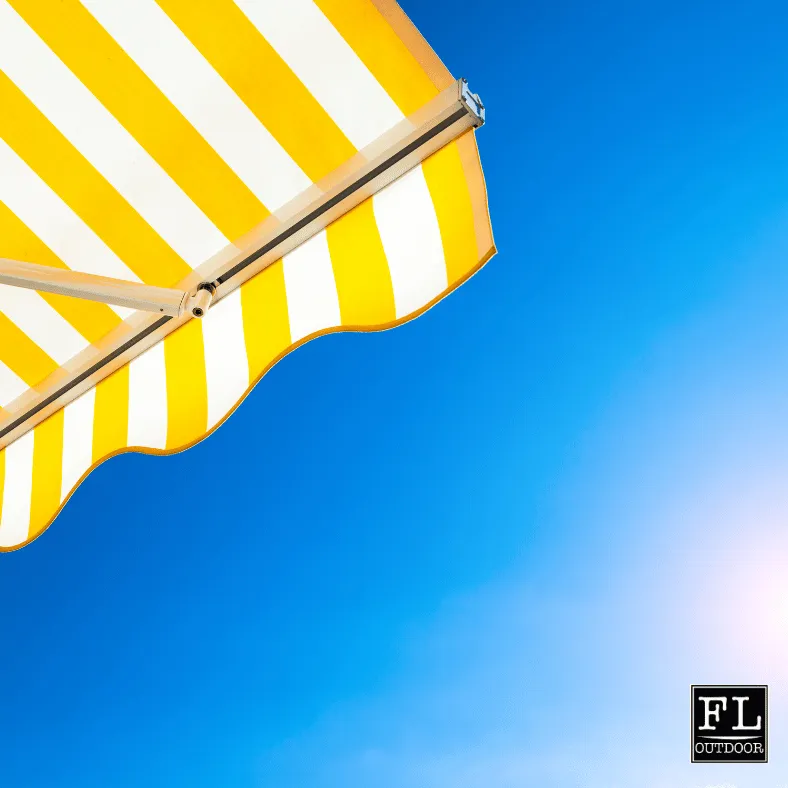
Enjoy on-demand sun protection with retractable awnings, offering shade when you need it and open skies when you don't.
Motorized Awnings: Upgrade your outdoor space with motorized awnings, providing effortless sun protection at the touch of a button.
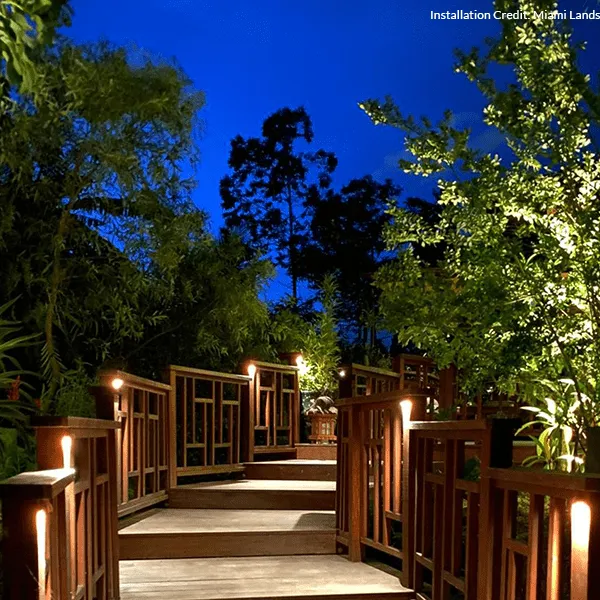
Landscape Lighting
Light up your home at night with beautiful, customized outdoor landscape lighting from Garden LED Lighting.
It doesn't matter whether you're looking to increase your home's security or boost its curb appeal; our team is here to bring your vision to life.
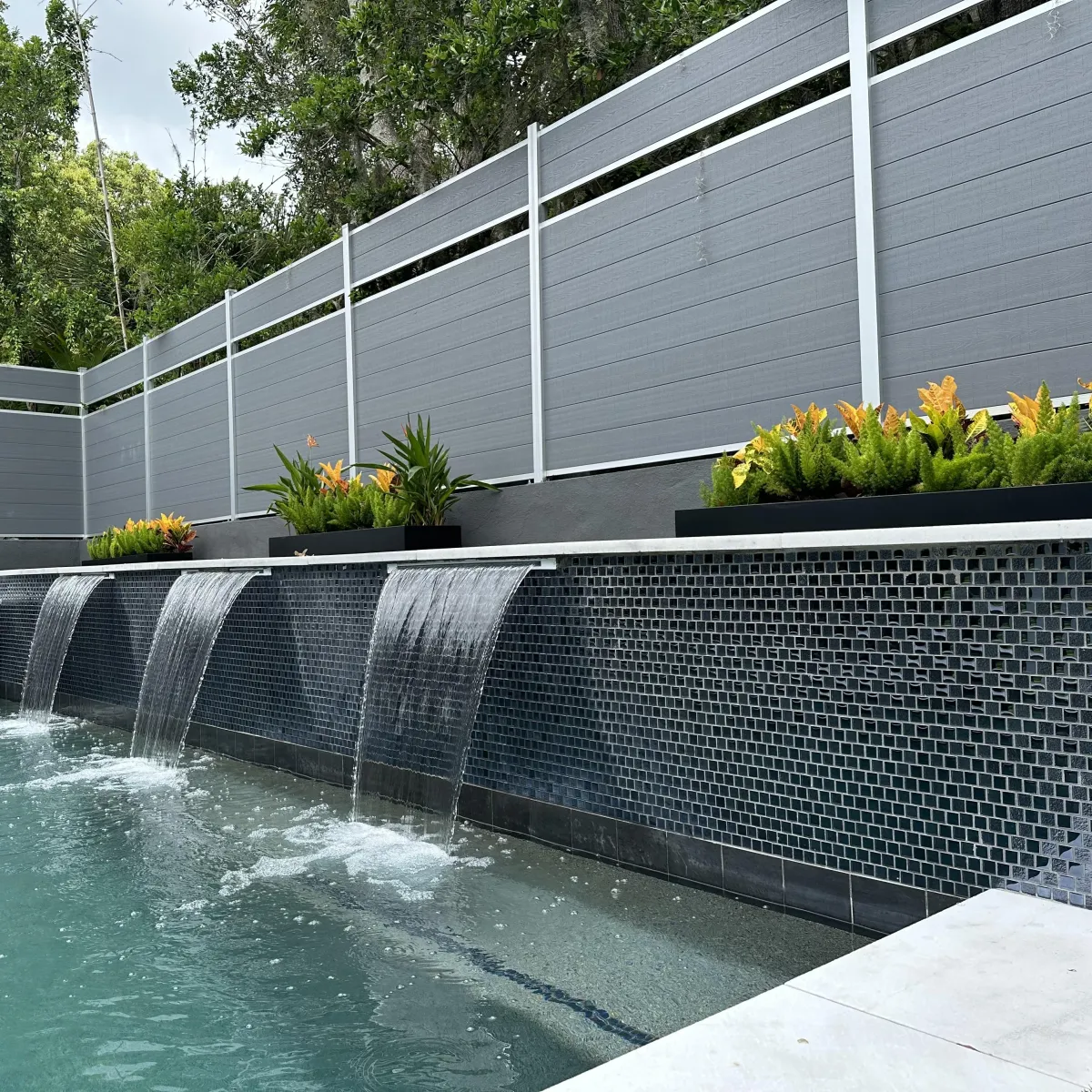
Greenwood Composite Fence
Need privacy in your backyard that combines aesthetics with durability and requires very little maintenance?
Welcome to Greenwood Fence. High-quality modern European-style fencing for the residential, commercial
Your Vision Deserves
A Partner
Who Cares...
WHY FLORIDA LIVING OUTDOOR...?
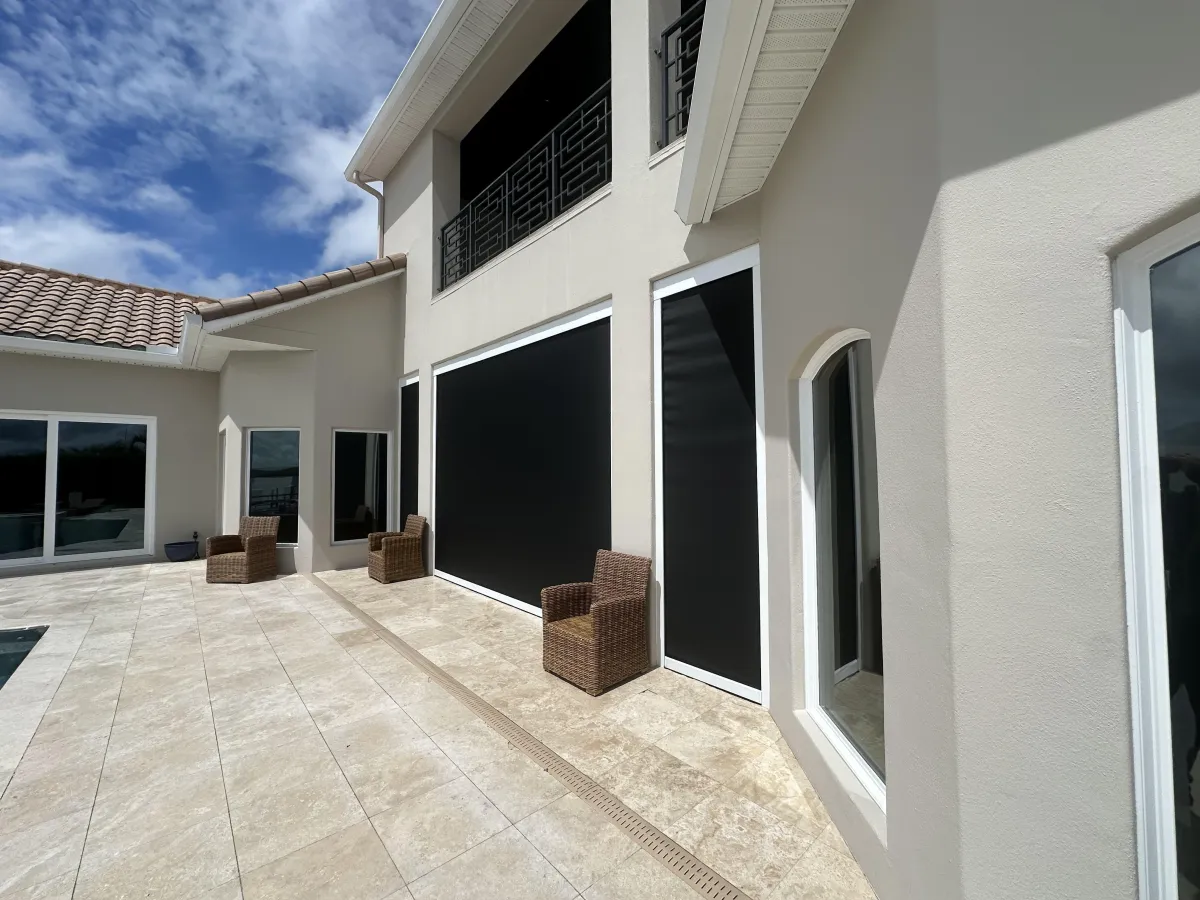
At Florida Living Outdoor, we specialize in enhancing, expanding, and protecting your outdoor living spaces, making them more functional and enjoyable. It does not matter if it is an open space, patio, or lanai. We offer top-of-the-line solutions, including motorized retractable screens, sun awnings, and aluminum pergolas.
At Florida Living Outdoor, we understand. When it comes to enhancing your outdoor living spaces or making them more functional, you're not just looking for a product. You are looking for a partner to help complete your vision.
The bottom line is that nobody knows Sun Pro Awnings, MagnaTrack Motorized Screens, and Fenetex Motorized Screens better than Florida Living Outdoor. We are Florida's number one Trusted resource for Motorized Screens and Awnings.
Don't Take Our Word For It.
Here Is What People Are Saying About Florida Living Outdoor.
Take Total Control of Your Outdoors.
Block the sun. Light up the nights. The perfect backdrop
Retractable Awnings
Enjoy on-demand sun protection with retractable awnings, offering shade when you need it and open skies when you don't.
Motorized Awnings: Upgrade your outdoor space with motorized awnings, providing effortless sun protection at the touch of a button.
Landscape Lights
Light up your home at night with beautiful, customized outdoor landscape lighting from Garden LED Lighting.
It doesn't matter whether you're looking to increase your home's security or boost its curb appeal; our team is here to bring your vision to life.
Greenwood Composite Fence
Need privacy in your backyard that combines aesthetics with durability and requires very little maintenance?
Welcome to Greenwood Fence. High-quality modern European-style fencing for the residential, commercial
Your Vision Deserves
A Partner
Who Cares...
WHY FLORIDA LIVING OUTDOOR...?
At Florida Living Outdoor, we specialize in enhancing, expanding, and protecting your outdoor living spaces, making them more functional and enjoyable. It does not matter if it is an open space, patio, or lanai. We offer top-of-the-line solutions, including motorized retractable screens, sun awnings, and aluminum pergolas.
Bottom line, we install the products that actually win their job. For Category-5 hurricane protection, the Defender Hurricane Screen by MagnaTrack — built by Progressive Screens, a Hunter Douglas Company, in Sarasota, Florida. For everyday shade, insect, UV, and privacy protection, OneTrack motorized screens — engineered with a patented self-adjusting tension system, welded seams, and UV-stable fabrics made for long-term Florida exposure. For daily-use premium screens that need the patented magnetic-track system, MagnaTrack.
For the full picture of outdoor living — Sun Pro awnings, Azenco-Outdoor pergolas, Greenwood Fence, and Garden LED lighting — all under one veteran-owned roof.
Don't Take Our Word For It.
Here Is What People Are Saying About Florida Living Outdoor.
Your Vision Deserves
A Partner
Who Delivers...
Your Vision Deserves
A Partner
Who Delivers...
Aluminum Pergolas -Turn Your Patio Into the Room Everyone Wants
An aluminum pergola gives you shade, structure, and a reason to stay outside longer.
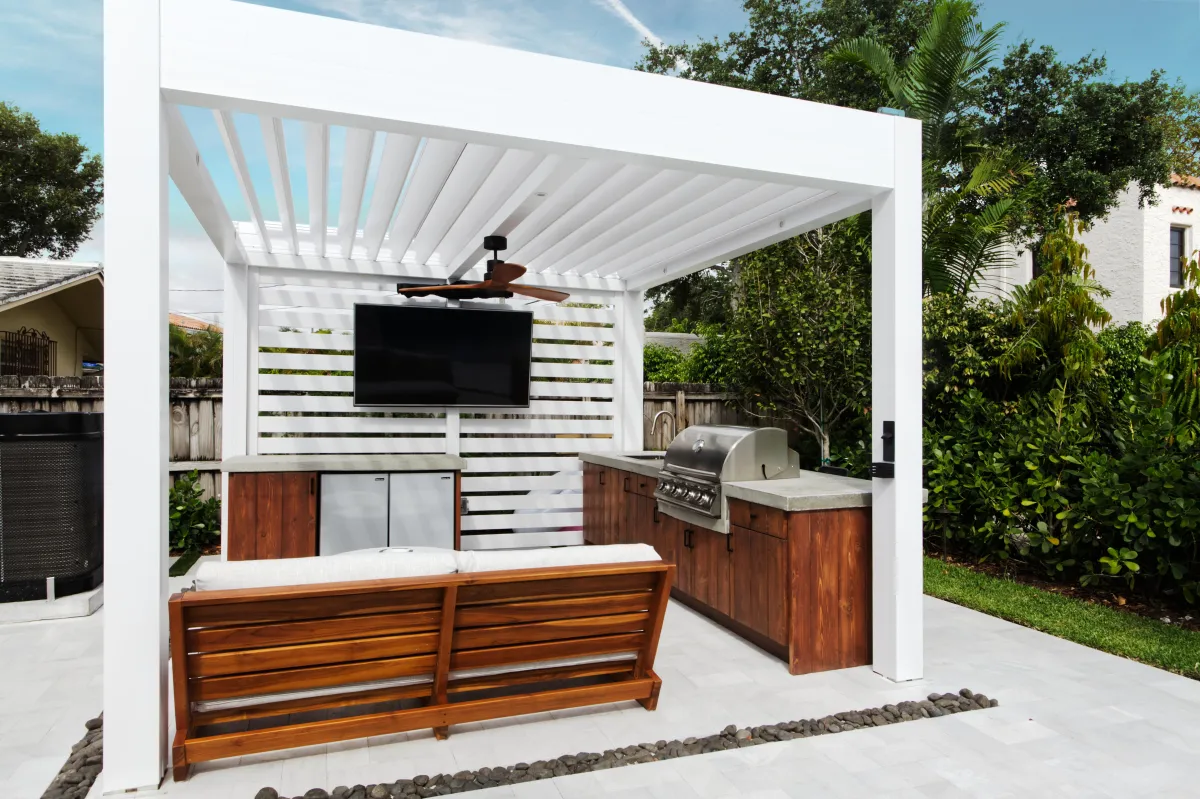
Louver Roof Pergolas
Enhance your outdoor space with aluminum pergolas with louvers, This modern pergola idea lets you control sunlight and airflow, creating the perfect ambiance year-round.
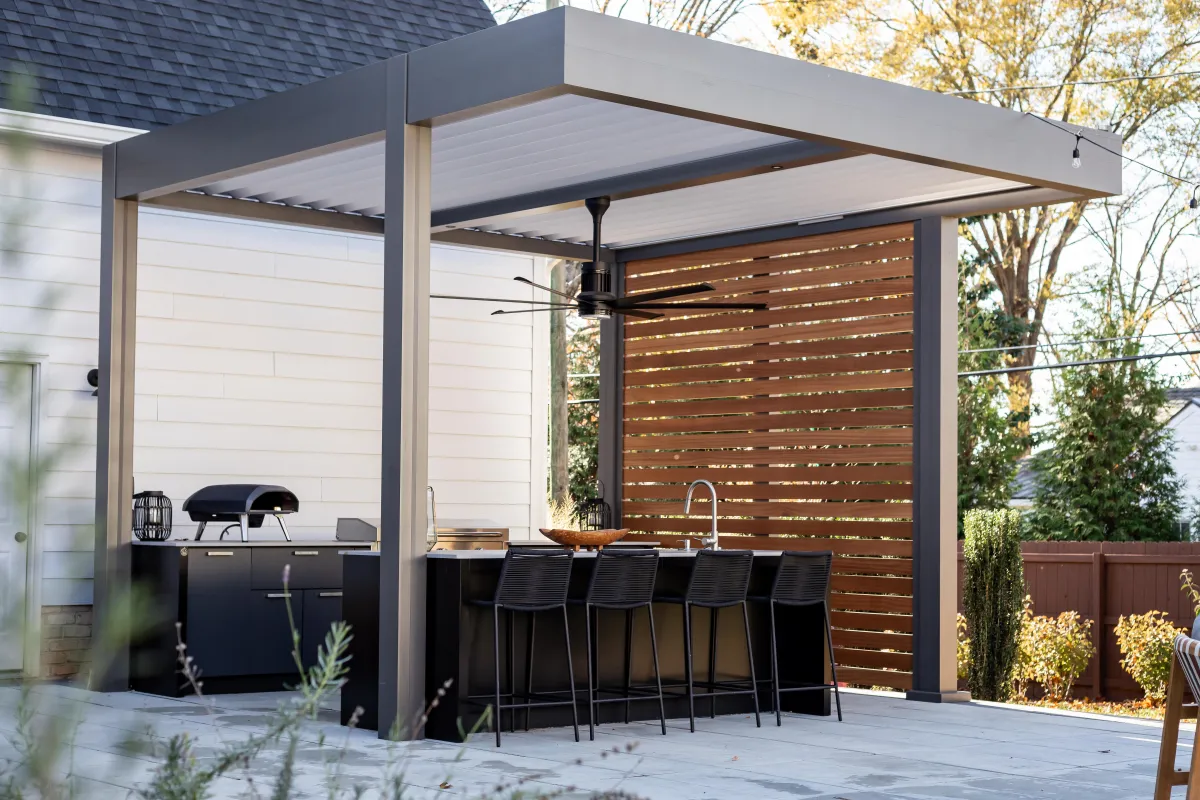
Insulated Roof Pergolas
For a cooler, more comfortable outdoor retreat, insulated roof pergolas provide superior protection from heat and rain. This pergola idea blends style and function, making your patio usable in any season.
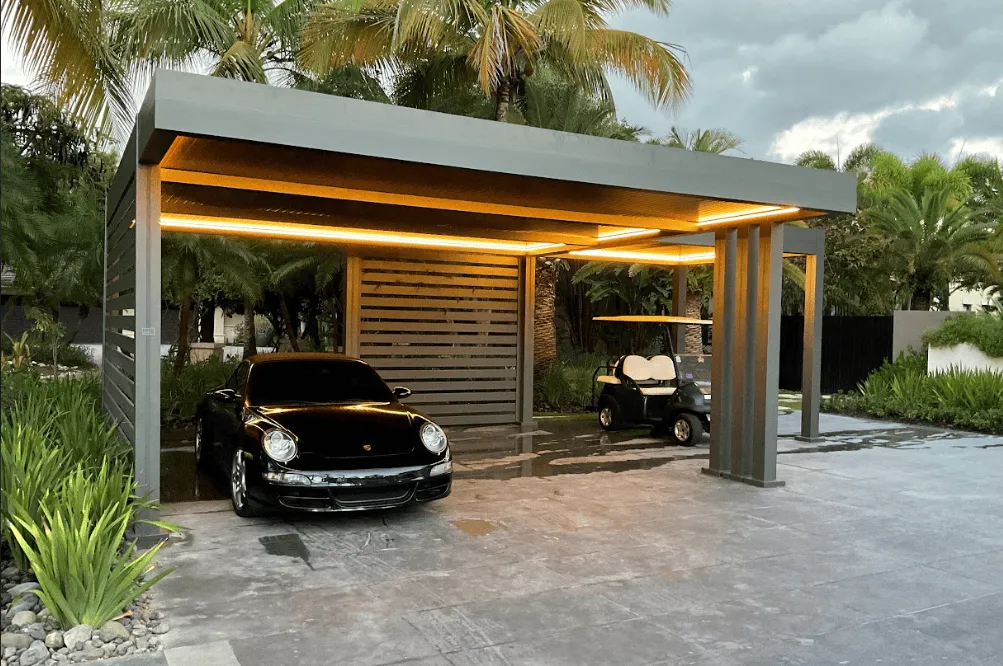
Car Port and Sun Shades
Protect your vehicles with durable aluminum carports, a sleek and modern alternative to traditional garages, creating curb appeal while shielding your car from the elements.
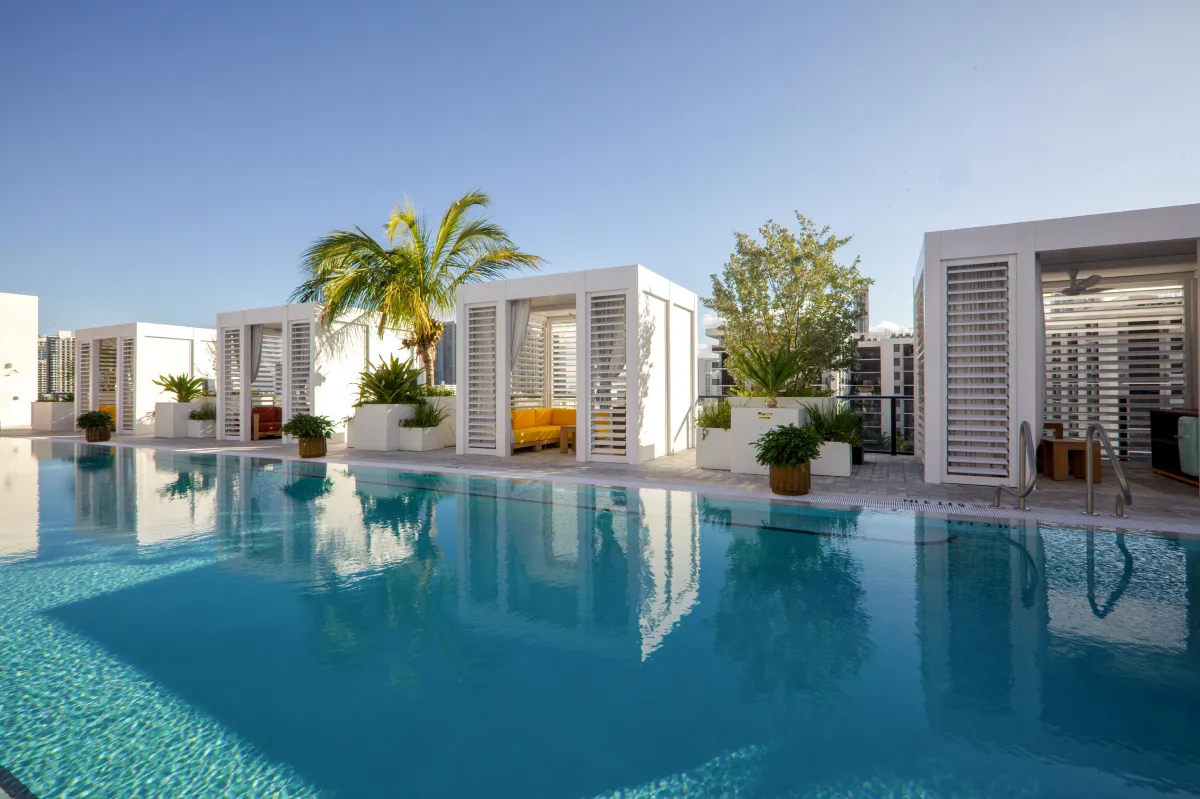
Aluminum Cabanas
Create a private, resort-style escape with aluminum cabanas, perfect for poolside lounging or outdoor entertaining. This pergola idea combines shade, style, and durability for a luxurious backyard retreat.
The Florida Living Outdoor Advantage

Luxury Products
Each Awning is designed for Quality and we proudly install only premium grade product that function well in creating those outdoor spaces. MagnaTrack screens are designed to truly enhance your outdoor living experience and deliver trouble-free performance year after year and long-lasting beauty.

Local Experts
As a family-veteran-owned, faith-based business, our team brings a personal touch to every project. We care. Our goal is to ensure your satisfaction and deliver unmatched service and outdoor luxury spaces.

Extensive Experience
FL Outdoors possesses a track record of 26 years of serving major clients; our extensive experience speaks for itself. Trust our licensed Class A contractor services for excellence in installation and customer satisfaction.

Superior Service
At Florida Living Outdoor, white-glove service is our hallmark. Your job is to dream and let us create a smile. We prioritize your needs, ensuring a hassle-free experience from consultation to installation.
The Florida Living Outdoor Advantage
Luxury Products
Each Awning is designed for Quality and we proudly install only premium grade product that function well in creating those outdoor spaces. MagnaTrack screens are designed to truly enhance your outdoor living experience and deliver trouble-free performance year after year and long-lasting beauty.
Local Experts
As a family-veteran-owned, faith-based business, our team brings a personal touch to every project. We care. Our goal is to ensure your satisfaction and deliver unmatched service and outdoor luxury spaces.
Extensive Experience
FL Outdoors possesses a track record of 26 years of serving major clients; our extensive experience speaks for itself. Trust our licensed Class A contractor services for excellence in installation and customer satisfaction.
Superior Service
At Florida Living Outdoor, white-glove service is our hallmark. Your job is to dream and let us create a smile. We prioritize your needs, ensuring a hassle-free experience from consultation to installation.
Your Vision Deserves
A Partner,
Not Just A Vendor
Florida Living Outdoors Solutions
Dual Specialties
Residential Solutions
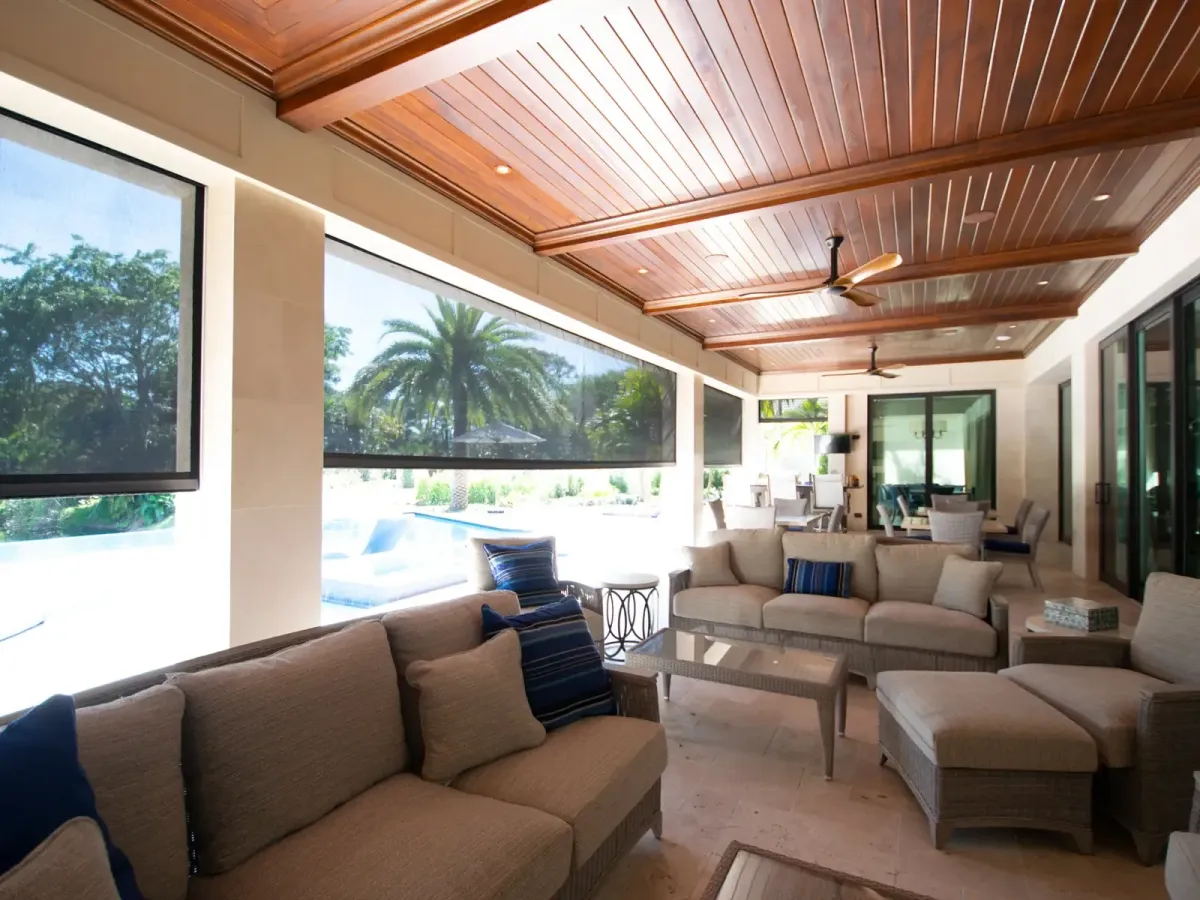
Your Florida home should be a sanctuary for relaxation, family time, and maybe even entertaining. Adding Motorized Screens to patios empowers you to curate any outdoor space to complement your aesthetics and meet your needs.
From Lanai Living to patio perfection, poolside cabanas to garages, and windows to doors, there are motorized screen options for every situation. Need motorized design ideas or a price check? Check out our motorized screen residential design guides and calculator.
Commercial Solutions
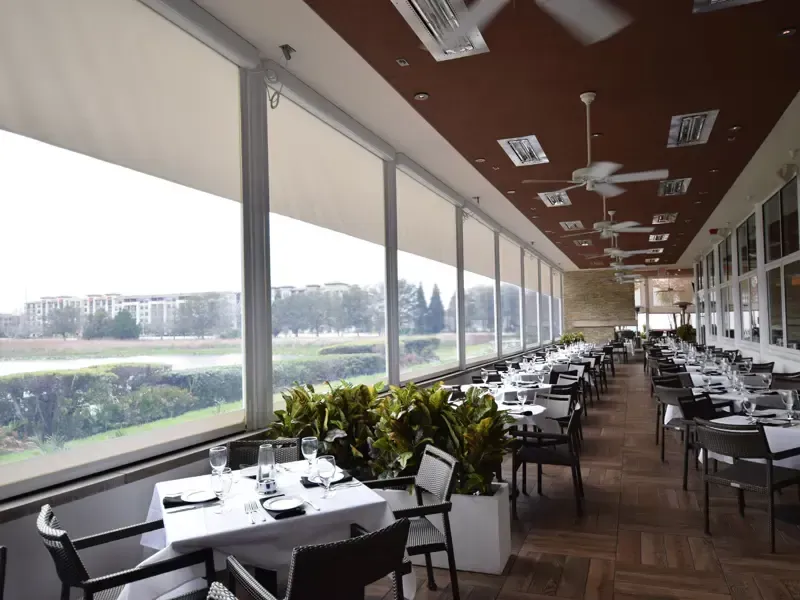
Whether you're investing in your restaurant's patio seating or weatherproofing your outdoor event space, ensuring those areas remain usable and enjoyable for guests is critical to your bottom line and ultimate business success.
Does your restaurant’s patio contend with glaring sun? Or maybe the luxury outdoor kitchen area is being invaded by bugs? Maybe the upcoming hurricane season has you concerned. Whatever the challenge, Florida Living Outdoor, Fenetex, and MagnaTrack Motorized got you covered.
Your Vision Deserves
A Partner,
Not Just A Vendor
Florida Living Outdoors Solutions
Dual Specialties
Residential Solutions
Your Florida home should be a sanctuary for relaxation, family time, and maybe even entertaining. Adding Motorized Screens to patios empowers you to curate any outdoor space so it complements your aesthetics and meets your needs.
From Lanai Living to patio perfection, poolside cabanas to garages, and windows to doors, there are motorized screen options for every situation. Need motorized design ideas or a price check?
Check out our motorized screen residential design guides and calculator.
Commercial Solutions
Whether you're investing in your restaurant's patio seating or weather-proofing your outdoor event space, making sure those areas remain usable and enjoyable for guests is critical to the bottom line and your business' ultimate success.
Does your restaurant's patio contend with glaring sun? Or maybe the luxury outdoor kitchen at your home is being invaded by bugs? Maybe the upcoming hurricane season has you concerned.
Whatever the challenge, Fenetex Motorized screens and our full outdoor solutions line are engineered to keep your commercial space open, comfortable, and operational year-round.
Outdoor Living Explained
Real Advice From 26 Years of Florida Outdoor Living
The outdoor resource Floridians trust for expert tips on shade solutions, hurricane preparedness, product reviews, and patio and lanai transformations. Be in the know before you decide.
FL Outdoor News
Stay up to date with the latest news.
FAQ - FLORIDA LIVING OUTDOORS
What does Florida Living Outdoor install?
Florida Living Outdoor designs and installs motorized hurricane screens, retractable awnings, luxury louvered pergolas, custom fencing, outdoor lighting, and insect and solar screen systems. We serve Florida homeowners and commercial properties from Daytona Beach through Orlando, Tampa, the Treasure Coast, and South Florida. Every system is installed by our in-house crews — never subcontracted — and backed by a 3-year craftsmanship warranty.
How much do motorized hurricane screens cost in Florida?
Motorized hurricane screen pricing in Florida typically ranges from $3,500 to $9,500 per opening, depending on size, mesh weave, motor type, and structural attachment. Larger openings, integrated smart-home controls, and impact-rated installations move toward the upper end. We provide written, itemized quotes after an on-site measurement — no estimates over the phone, because hurricane screens are engineered to your specific opening, not sold off a shelf.
What is MaxForce 365 and when does it launch?
MaxForce 365 is the world's first motorized hurricane screen with a spring retention and self-correcting tensioning system, eliminating the manual recalibration conventional screens require over their lifespan. Manufactured by Fenetex with patent pending, MaxForce 365 carries the same Miami-Dade County Notice of Acceptance approval as the existing MaxForce line — the most demanding hurricane protection certification in the United States. The system launches June 29, 2026, and Florida Living Outdoor is a launch-day certified dealer.
How long does a hurricane screen installation take?
Most residential hurricane screen installations take one to three days on-site, depending on the number of openings and structural complexity. Lead time from contract signing to installation is typically four to eight weeks, accounting for engineering, permit approval, and manufacturing. Commercial projects and multi-unit installations follow a project-managed timeline scoped during design. We handle all permitting, HOA submittals, and final inspection coordination.
What's the difference between a hurricane screen, an insect screen, and a solar screen?
Each is engineered for a different job. Hurricane screens withstand Category-5 winds and debris impact, deploying for storm protection. Insect screens block mosquitoes, no-see-ums, and flying debris while allowing breeze through — ideal for daily lanai and patio use. Solar screens use a denser weave to reduce solar heat gain by up to 80%, lowering cooling costs and protecting interior furnishings from UV damage. Many Florida Living Outdoor customers install two systems on the same opening — one for daily comfort, one for storms.
What service areas does Florida Living Outdoor cover?
Florida Living Outdoor serves homeowners and commercial properties across Central Florida, the Space Coast, the Treasure Coast, Tampa Bay, and South Florida — including Orlando, Oviedo, Winter Park, Cocoa Beach, New Smyrna Beach, Vero Beach, Stuart, Jupiter, Tampa, Sarasota, Naples, Deerfield Beach, Lighthouse Point, Plantation, and Southwest Ranches. We coordinate larger commercial and coastal projects statewide. All work is performed under DBPR licensure CGC1532839.
How much does a retractable awning cost in Florida?
Retractable awning pricing in Florida typically ranges from $2,800 to $8,500 installed, depending on projection width, motor and remote configuration, fabric grade, and wind sensors. Motorized models with sun, wind, and rain sensors deploy and retract automatically based on conditions. A properly sized awning lowers patio temperatures by 15 to 20 degrees, reduces sun-driven interior fading, and pays for itself in expanded usable outdoor square footage faster than most homeowners expect.
What is a louvered pergola and how is it different from a regular pergola?
A louvered pergola has motorized aluminum slats in the roof that rotate from fully open to fully closed at the press of a button — letting you control sun, shade, and rain in real time. A traditional fixed pergola has decorative beams with no weather control. Florida Living Outdoor installs Azenco louvered pergolas, engineered for Florida wind loads and integrated with lighting, heaters, screens, and smart-home controls. They function year-round in Florida's climate, unlike fixed pergolas which become unusable in rain or peak summer sun.
Your Vision Deserves
A Partner
Who Listens...
FL Outdoor News
Stay up to date with the latest news.
FL Outdoor News
Stay up to date with the latest news.
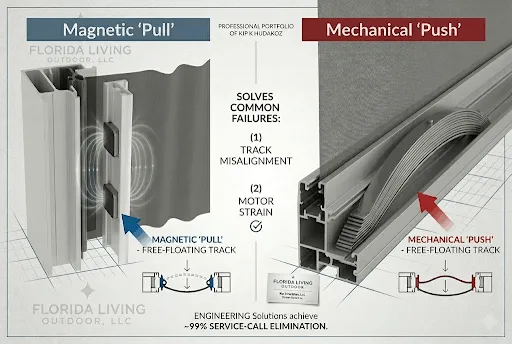
Why Motorized Screens Fail: A Homeowner's Engineering Guide
Why These Failures Happen
Every failure mode above traces back to one root cause: a rigid track cannot accommodate the physics that a motorized screen is always living inside of.
The Rigid-Track Design Problem
Think about what actually happens when wind hits a deployed screen. The fabric catches air. The edge of the fabric pulls on the track. A rigid track has no give. It does not flex. It does not absorb. So the force — wind, thermal expansion, a branch against the weave — transmits straight into the mechanism. The screen tears at the edge. Or the track binds against the frame. Or the motor strains to run a screen through a track that resists. Rigid is the opposite of what the application needs.
For years, the dominant architecture was the zipper-track system — the previous generation of the category. It held the screen edge in place with a toothed rail and solved the wind-gap problem of the fixed track. But zipper architecture still shares the same underlying limitation. The screen is locked into the track, so any force applied to the screen has to go somewhere. Usually, that somewhere is the zipper teeth, the motor, or the fabric itself.
The Free-Floating Articulating Track Solution
Two engineering teams, working independently, arrived at the same answer. If the inner track can flex and reseat itself under load — if the track itself moves out of the wind's way and returns to true when the wind stops — the screen stops fighting its environment. The screen bends with the wind instead of resisting it. The motor runs inside its duty spec. The fabric is not torqued against a track that cannot move.
This is what "free-floating articulating track" means in plain language. One side of the category uses magnets. The other does it with springs. Both teams arrived at the same functional outcome through opposite physical principles. Those two solutions are what the rest of this post is about.
Solution One: Magnetic Pull (MagnaTrack)
MagnaTrack, manufactured by Progressive Screens (a Hunter Douglas Company, acquired in 2020), uses magnetic tension to solve the articulating-track problem.
How the System Works
Neodymium magnets are embedded at regular intervals along the side track assembly, beneath a snap-on cover. Under normal operation, the magnetic field holds the inner track against the outer track with enough force to keep the system aligned. When wind, debris, or thermal expansion pushes the screen outward, the magnetic bond releases just enough to let the inner track flex. When the force subsides, the magnetic field pulls the inner track back to its seated position. The screen remains attached to the track. The motor continues to operate inside its rated resistance. And the fabric is not asked to absorb forces it was not built to absorb.
This is a legitimate engineering answer to the category problem. The self-correcting behavior is real, tested, and documented.
Credentials
MagnaTrack is protected under US Patent 9,719,292 per the Progressive Screens 2023 Gen 4 CAD documentation dated 08.16.23. The hurricane-rated MagnaTrack Defender system holds Florida Product Approval F30798 — the regulatory credential required for hurricane-category installations in Florida. Progressive Screens was acquired by Hunter Douglas in 2020 — the kind of corporate parentage that tells you a product line is backed by a manufacturer with the reach to honor warranty and parts commitments. These are not small details. They establish MagnaTrack as a serious, engineered, and regulated product. Any homeowner shopping for motorized screen reliability will see MagnaTrack on the list, and MagnaTrack belongs there.
Solution Two: Mechanical Spring Push (OneTrack)
OneTrack, manufactured by Fenetex, solves the same problem through the opposite physical principle. Where MagnaTrack pulls, OneTrack pushes.
How the System Works
Precision mechanical springs embedded in the side track hold the inner track under constant tension. The springs are engineered to a specific spring rate — stiff enough to hold the track in alignment under normal load, compliant enough to allow the track to flex when wind or debris applies force. When the force subsides, the spring pressure pushes the inner track back to its seated position. The functional outcome matches MagnaTrack's: the screen self-corrects, the motor stays inside duty spec, and the fabric is not torqued. The physics of how it gets there is different. The result for the homeowner is the same.
Spring-based systems have an engineering pedigree across industrial applications that predates magnetic designs by a century. The springs have no electrical component, no field strength to measure, and no degradation curve tied to temperature cycling. They do one job — return to position under load — and they do it through a mechanism that has been well understood since the Industrial Revolution.
Credentials
OneTrack is documented in the Fenetex Design Guide v120253 — the engineering specification file every Fenetex dealer references during system design. The hurricane-rated Fenetex:
Why Motorized Screens Fail — and the Two Engineering Solutions Solving It
A homeowner in Delray Beach called us last April. Her lanai screen — installed six years earlier, not by us — had stopped cooperating. The first pull of the season bound halfway down. The motor strained. Something in the housing made a sound she described as "grinding, but slower." She was afraid to keep running it. She was also right to be afraid. That moment — repeated across thousands of Florida installations every spring — is what motorized screen problems actually look like. Most of them are preventable. A few are not. The difference lies in the engineering and in two specific solutions now competing in the category.
Motorized screens fail from four primary causes: track misalignment, motor strain, fabric binding in the track, and weather-seal failure. Two engineering solutions — free-floating articulating track systems that allow the inner track to flex and re-seat itself — eliminate approximately ninety-nine percent of these failures. Here is how each works.
The Common Failure Modes of Motorized Retractable Screens
The failure pattern arrives in a recognizable order. The track goes first. The motor suffers second. The fabric gives out third. And the housing — the part most homeowners never think about — decides whether the whole system survives a decade or dies in year five.
Track Misalignment
This is the one homeowners describe with their hands before they describe it with words. The track drifts. The screen hangs just slightly crooked. The motor fights against something that should not be there. In a rigid-track system, the inner track has nowhere to go when the aluminum expands in August heat or when wind pushes the fabric sideways. So the track binds. Or the screen torques. Or both at once.
Most homeowners notice it first in year three or four. The screen works — mostly — but the rhythm is off. It runs slower on one side. It hesitates at the same spot every time. Those are the early issues with motorized retractable screens worth taking seriously.
Motor Strain and Premature End-of-Life
Every motorized screen motor has a duty cycle. Rated at twenty-second cycles against a specified resistance, a quality motor should deliver fifteen thousand cycles or more across its service life. That is roughly fifteen years of normal use. True, though, only if the resistance stays inside the spec. When a rigid track binds or a screen fabric catches, the motor does not refuse — it works harder. Harder work burns bearing life. A motor rated for fifteen years of easy cycles can be exhausted in four under sustained strain. This is one of the most common motorized screen failures we are called to service, and it is almost always secondary to a track problem the homeowner never noticed.
Fabric Binding
The fabric-to-track interface is where most of the visible damage shows up. Misalignment compounds into fabric wear. The fabric edge is drawn through a gap that is no longer within its tolerance, and the reinforced edge begins to fray. Homeowners blame the screen fabric itself. Most of the time, the fabric is the casualty, not the culprit. The cause is upstream, in the track.
Weather-Seal and Housing Failure
This is the slower, quieter failure. Weather seals at the top of the housing degrade over time — UV, salt air, and daily thermal expansion all take their toll. Water finds its way in. The motor electronics take damage they were never designed to take. By the time the homeowner notices, the repair is often larger than the problem would have been if it had been caught early. An aging system flagged for seal wear can often be stabilized with a housing service call in year seven or eight. A system that has been ignored for the past ten years is frequently beyond economic repair. Housing failure is almost always the end-of-life event for an older motorized retractable screen.
MaxForce system holds Florida Product Approval FL8637, the same regulatory credential MagnaTrack Defender carries, issued by the same Florida authority. Fenetex's warranty is the other important document in the OneTrack credentials file. The lifetime aluminum warranty is written with specific contract language tying coverage to parts compatibility across product generations — a backward-compatibility commitment I will have more to say about in the posts that follow. These credentials make OneTrack the peer, not a knockoff.
What This Means for Motorized Screen Reliability
Here is where most comparison articles oversimplify, and here is where honesty matters most.
The Service-Call Elimination: Both Systems Achieve
Progressive Screens reports approximately 98% service-call elimination for MagnaTrack. Fenetex publishes approximately ninety-nine percent for OneTrack. Both figures are defensible. The reason both figures are defensible is that both systems solve the category problem through the same underlying engineering architecture: obstacle-detection motors that halt the screen when something is in the way, free-floating articulating tracks that self-adjust on the roll tube, and self-refeeding track alignment so the screen does not wrap unevenly even if it is briefly dislodged. Both products do all three of these things. Both products perform as promised. The one-percent difference in published figures is statistical noise inside the real-world reliability band — not the deciding factor for a homeowner.
What a Florida Dealer Has Observed Installing Both
We have installed both products for years. Florida Living Outdoor carries MagnaTrack as our featured hurricane brand, and we also install OneTrack for daily-use applications. The service-call record on both is rare. Rare enough that when a call does come in, it is usually not about the track mechanism at all — it is about a power-line interruption resetting a controller, or a remote pairing that drifted, or a storm debris strike that bent a weight bar. The tracks on both products do what the engineering claims they will.
Which means the question of "which system is more reliable" is not really the right question. Both are reliable. The right question is which one fits your application, your ownership horizon, and the specific trade-offs each engineering approach carries. That is the conversation the rest of this series addresses.
How to Choose Between the Two Systems
Application-First — Daily Use vs Storm Protection
Both brands offer daily-use systems for shade, insect control, UV reduction, and privacy. Both offer hurricane-rated product lines built to different standards for storm-category protection — MagnaTrack Defender and Fenetex MaxForce. Both hurricane products carry Florida Product Approvals. For a homeowner making a decision, step one is deciding what the screen is for. A daily-use insect-and-shade application on a covered lanai is a different conversation from a storm-category screen on an exposed second-story balcony. The engineering tradeoffs that differentiate MagnaTrack from OneTrack show up most clearly in the daily-use category — which is the subject of Post 2 (push vs pull, in engineering detail) LINK PENDING — Post 3], and Posts 6 through 8 (material efficiency, service calls, and fifteen-year total cost of ownership).
Questions to Ask Before You Sign
If I were a homeowner at the shopping stage tomorrow, here are the five questions I would ask any motorized screen installer before signing:
What is the aluminum warranty—lifetime —and is it prorated?
What is the warranty on the electronic controls — how many years?
What is the parts availability commitment at year ten?
Which engineering category does the track use — magnetic pull, or mechanical spring push?
What is the side track width, and what does that tell me about material mass and load?
The answers to those five questions will tell you more about the system you are buying than any marketing brochure. They also set up the next seven posts in this series, each of which develops one of the five questions into the full answer the question deserves. Post 7 covers how both systems eliminate service calls — and what happens in the last one percent [LINK PENDING — Post 7]. Post 8 closes the series with the fifteen-year total cost of ownership math [LINK PENDING — Post 8].
About the Author
Kip Hudakoz is the owner of Florida Living Outdoor LLC, a BBB A+ accredited, veteran-owned Florida outdoor services company specializing in motorized screens, retractable awnings, and pergola systems. Kip has spent twenty-six years in the Florida outdoor services industry, operating companies in Central Florida and South Florida. He is also the owner of Paramount Fencing and Custom Fence Orlando, and was a former co-host of "Ask the Experts" on News 96.5 Florida Home and Garden. Florida Living Outdoor was founded in December 2021 and earned its BBB A+ accreditation in October 2024. The company installs and services both MagnaTrack and OneTrack motorized screen systems, and carries both manufacturers' hurricane-rated product lines as featured brands.
Frequently Asked Questions
Why do motorized screens fail?
Motorized screens fail from four primary causes: track misalignment, motor strain, fabric binding, and weather-seal failure. Most of these trace to one root cause — rigid-track design that cannot absorb the wind, thermal, and debris loads a screen experiences in normal outdoor use.
How long do motorized screens last?
A well-designed motorized screen should last fifteen years or more. Systems built on free-floating articulating tracks — magnetic or spring-based — commonly reach that mark. Systems built on rigid or zipper tracks often fail in year four through six from accumulated track strain.
What is a free-floating articulating track?
A free-floating articulating track is a screen track system in which the inner track can flex and re-seat itself under load. When wind or debris applies force, the track moves with the force and returns to its position. The screen, motor, and fabric are spared from stresses they were not engineered to absorb.
Are MagnaTrack and OneTrack the same thing?
No. MagnaTrack, manufactured by Progressive Screens (a Hunter Douglas Company), uses embedded neodymium magnets. OneTrack, manufactured by Fenetex, uses precision mechanical springs. Both use the free-floating articulating track architecture. They differ in the physical principle that returns the track to position: magnetic pull versus mechanical spring push.
Which motorized screen system is more reliable?
Both achieve approximately 99% service-call elimination through shared engineering—obstacle-detection motors, self-adjusting tracks, and self-refeeding alignment. The difference in reliability is not large enough to be the deciding factor. Application fit, warranty terms, and parts-availability commitments are the more meaningful decision criteria.
Can motorized screens handle Florida hurricanes?
Yes, in their hurricane-rated product lines. MagnaTrack Defender holds Florida Product Approval F30798. Fenetex MaxForce holds Florida Product Approval FL8637. Daily-use motorized screens are not hurricane-rated and should be retracted ahead of named-storm events.
Are motorized screens covered by warranty?
Yes, with coverage varying by manufacturer. Verify before signing: aluminum coverage duration (and whether it is prorated), electronic-control coverage, parts-availability commitment at year ten, and fabric coverage across vinyl, shade, and hurricane fabric categories.
Ready to Talk About Your Own Motorized Screen Project?
To discuss a motorized screen system for your home, contact Florida Living Outdoor for a free in-home consultation in Central or South Florida. We install and service both MagnaTrack and OneTrack systems, and we will walk you through the engineering, the warranty differences, and the application fit — without a sales pitch.
Sources and Further Reading
Progressive Screens (a Hunter Douglas Company) — manufacturer of MagnaTrack. https://progressivescreens.com
Fenetex / OneTrack — manufacturer of OneTrack motorized screens. https://onetrackscreens.com
US Patent 9,719,292 — MagnaTrack magnetic track system. https://patents.google.com/patent/US9719292
US Patent 11,421,474 — MagnaTrack continuation patent. https://patents.google.com/patent/US11421474
Florida Product Approval F30798 — MagnaTrack Defender hurricane screen. https://www.floridabuilding.org
Florida Product Approval FL8637 — Fenetex MaxForce hurricane screen. https://www.floridabuilding.org
Progressive Screens 2023 Gen 4 CAD documentation (dated 08.16.23) — internal industry engineering reference for MagnaTrack side track specifications.
Fenetex Design Guide v120253 — internal industry engineering reference for OneTrack and MaxForce specifications.
Hunter Douglas acquisition of Progressive Screens (2020) — public corporate record. https://www.hunterdouglas.com
Florida Living Outdoor LLC — installer and service provider for both MagnaTrack and OneTrack systems in Central and South Florida. https://floridalivingoutdoor.com

Your Vision Deserves
A Partner
Who Listens...
COMPANY
MOTORIZED SCREENS
SHADE SOLUTIONS
FENCING & LIGHTING
DESIGN IDEAS
SUPPORT



Copyright 2026. FL OUTDOOR. All Rights Reserved.
Powered and Built By