Motorized Hurricane Screens & Shade Solutions
Does Mother Nature Spend More Time On Your
Florida Patio or Lanai Than You Do?
Protect your outdoor space from hurricanes, bugs, and blazing sun,
so you can enjoy Florida living 365 days a year with a click of a button.



BBB Accredited

26 Years Experience

Veteran Owned

Cat 5 Certified Screens
You Didn't Buy A Home to Stay Inside
You invested in the patio. The lanai. The view.
But somehow, you're not the one enjoying it.
The sun is relentless. The mosquitoes own the evenings. Every hurricane season brings the same scramble—plywood, panic, and prayers. And that outdoor furniture you splurged on? It's already fading.
Mother Nature has taken over your outdoor space. And every month you don't act, you're paying for square footage you can't use.
It doesn't have to be this way. One button changes everything.
One Button. Total Control
Premium motorized screens for every Florida challenge
Magnetic Hurricane Screens
We've installed more than 1,000 magnetic hurricane screens across Florida. These systems are Category-5 rated with impact absorption. Learn more before you buy.
Retractable Bug Screens
Do pesky insects evict you from your patio 30 minutes before dusk? Avoid the itch; click a button and watch OneTrack Motorized insect screens deploy.
Retractable Shades Screens
Beat the Heat. Getting Chased off your patio or lanai. Our OneTrack Motorized Shade Solutions for patios and lanais blocks up to 80% -97% of harmful UV rays
MaxForce Hurricane Screens
Are you worried hurricane? Harness the ultimate protection with a click a button & watch the MaxForce Hurricane Screens deploy. Rate for 185+ MPH
You Didn't Buy A Home to
Stay Inside
You invested in the patio. The lanai. The view.
But somehow, you're not the one enjoying it.
The sun is relentless. The mosquitoes own the evenings. Every hurricane season brings the same scramble—plywood, panic, and prayers. And that outdoor furniture you splurged on? It's already fading.
Mother Nature has taken over your outdoor space. And every month you don't act, you're paying for square footage you can't use.
It doesn't have to be this way. One button changes everything.
One Button. Total Control
Premium motorized screens for every Florida challenge
Magnetic Hurricane Screens
We've installed more than 1,000 magnetic hurricane screens across Florida. These systems are Category-5 rated with impact absorption.
Retractable Insect & Bug Screens
Do pesky insects evict you from your patio 30 minutes before dusk? Avoid the itch; click a button and watch OneTrack Motorized insect screens deploy.
OneTrack Motorized Solar & Shade Screens
Beat the Heat. Getting chased off your patio or lanai. Our OneTrack Motorized Shade Solutions for patios and lanais blocks up to 80% -97% of harmful UV rays
Fenetex MaxForce Cat-5 Hurricane Screens
Are you worried about a hurricane? Harness the ultimate protection with a click a button & watch the MaxForce Hurricane Screens deploy. Rated for 185+ MPH
Your Vision Deserves
A Partner
Who Listens...
Your Vision Deserves
A Partner
Who Listens...
Take Total Control of Your Outdoors.
Block the sun. Light up the nights. The perfect backdrop
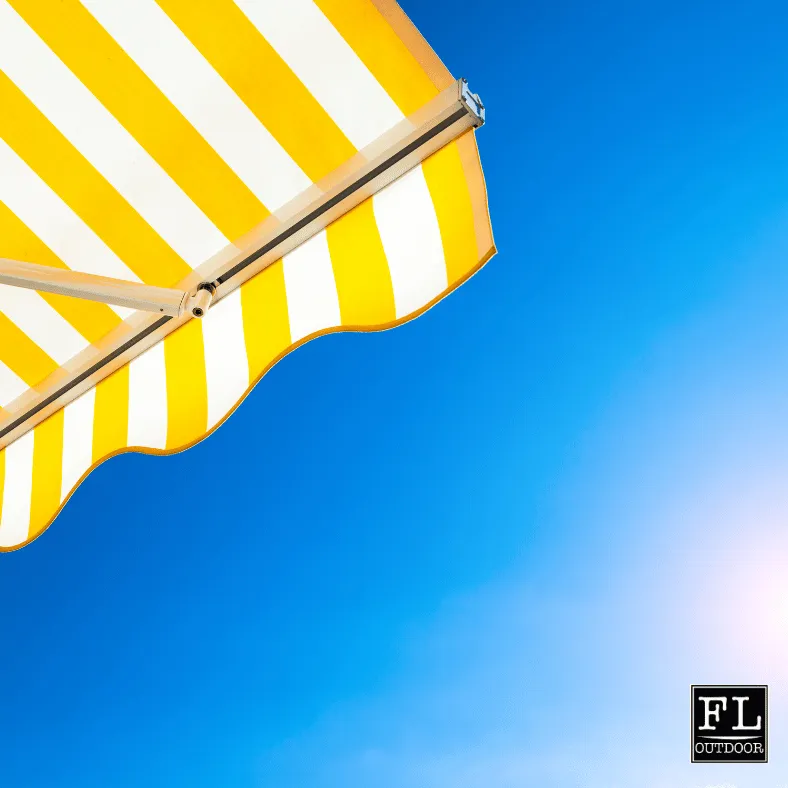
Retractable Awnings
Enjoy on-demand sun protection with retractable awnings, offering shade when you need it and open skies when you don't.
Motorized Awnings: Upgrade your outdoor space with motorized awnings, providing effortless sun protection at the touch of a button.
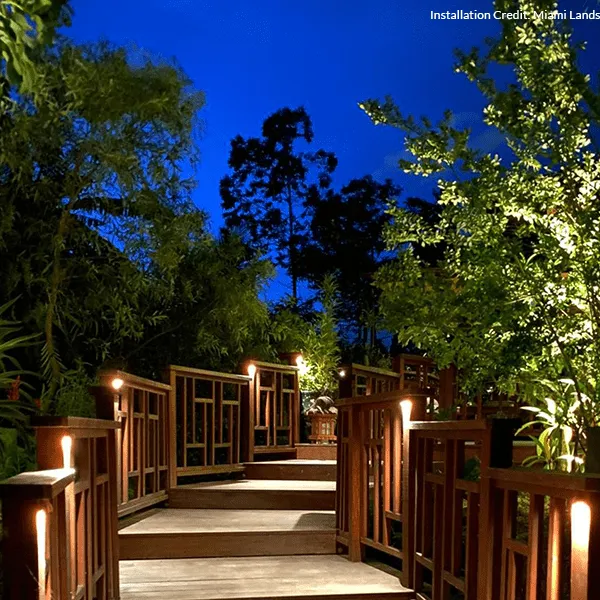
Landscape Lighting
Light up your home at night with beautiful, customized outdoor landscape lighting from Garden LED Lighting.
It doesn't matter whether you're looking to increase your home's security or boost its curb appeal; our team is here to bring your vision to life.
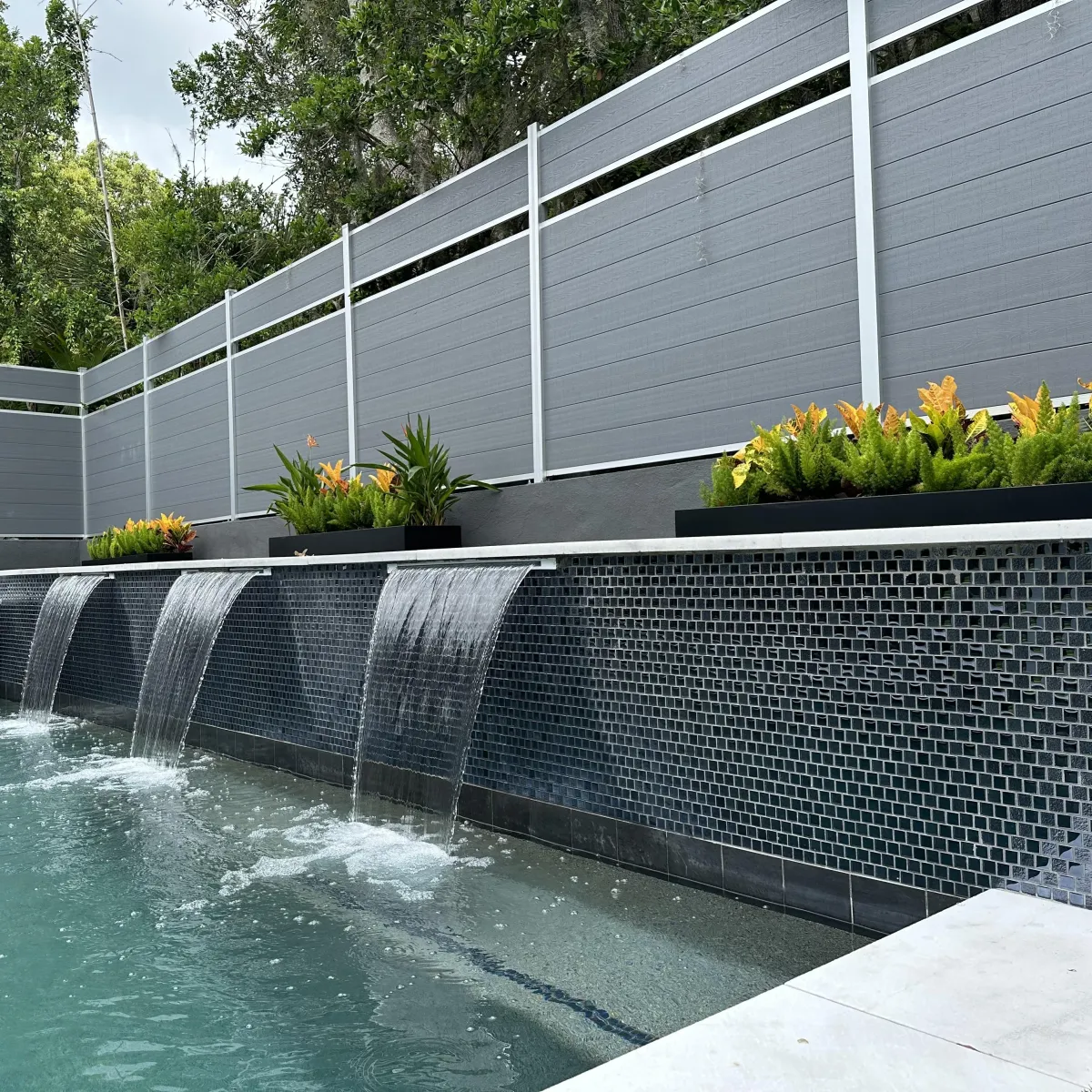
Greenwood Composite Fence
Need privacy in your backyard that combines aesthetics with durability and requires very little maintenance?
Welcome to Greenwood Fence. High-quality modern European-style fencing for the residential, commercial
Your Vision Deserves
A Partner
Who Cares...
WHY FLORIDA LIVING OUTDOOR...?
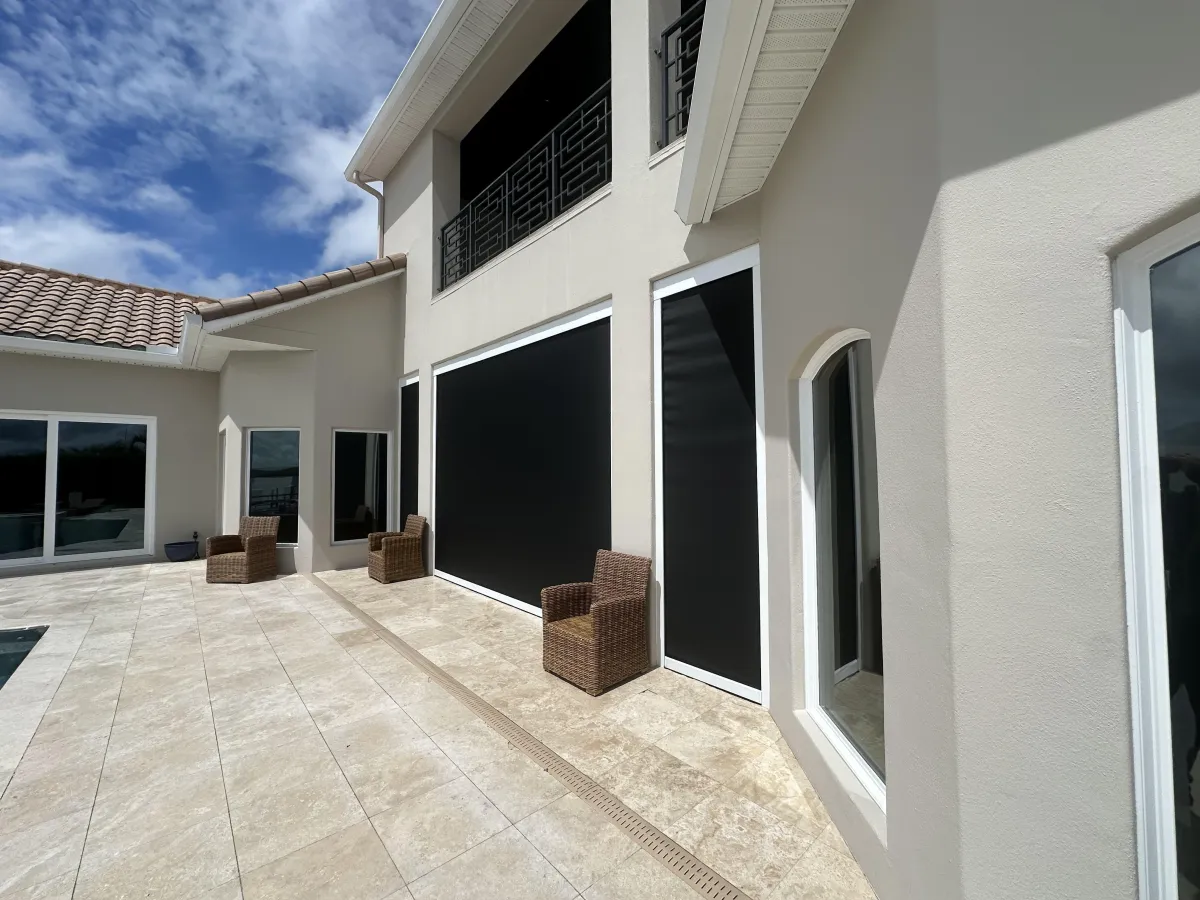
At Florida Living Outdoor, we specialize in enhancing, expanding, and protecting your outdoor living spaces, making them more functional and enjoyable. It does not matter if it is an open space, patio, or lanai. We offer top-of-the-line solutions, including motorized retractable screens, sun awnings, and aluminum pergolas.
At Florida Living Outdoor, we understand. When it comes to enhancing your outdoor living spaces or making them more functional, you're not just looking for a product. You are looking for a partner to help complete your vision.
The bottom line is that nobody knows Sun Pro Awnings, MagnaTrack Motorized Screens, and Fenetex Motorized Screens better than Florida Living Outdoor. We are Florida's number one Trusted resource for Motorized Screens and Awnings.
Don't Take Our Word For It.
Here Is What People Are Saying About Florida Living Outdoor.
Take Total Control of Your Outdoors.
Block the sun. Light up the nights. The perfect backdrop
Retractable Awnings
Enjoy on-demand sun protection with retractable awnings, offering shade when you need it and open skies when you don't.
Motorized Awnings: Upgrade your outdoor space with motorized awnings, providing effortless sun protection at the touch of a button.
Landscape Lights
Light up your home at night with beautiful, customized outdoor landscape lighting from Garden LED Lighting.
It doesn't matter whether you're looking to increase your home's security or boost its curb appeal; our team is here to bring your vision to life.
Greenwood Composite Fence
Need privacy in your backyard that combines aesthetics with durability and requires very little maintenance?
Welcome to Greenwood Fence. High-quality modern European-style fencing for the residential, commercial
Your Vision Deserves
A Partner
Who Cares...
WHY FLORIDA LIVING OUTDOOR...?
At Florida Living Outdoor, we specialize in enhancing, expanding, and protecting your outdoor living spaces, making them more functional and enjoyable. It does not matter if it is an open space, patio, or lanai. We offer top-of-the-line solutions, including motorized retractable screens, sun awnings, and aluminum pergolas.
Bottom line, we install the products that actually win their job. For Category-5 hurricane protection, MaxForce Hurricane Screens by Fenetex — engineered for daily-use, code-compliant storm protection. For everyday shade, insect, UV, and privacy protection, OneTrack motorized screens, engineered with a patented self-adjusting tension system, welded seams, and UV-stable fabrics made for long-term Florida exposure.
For the full picture of outdoor living — Sun Pro awnings, Azenco-Outdoor pergolas, Greenwood Fence, and Garden LED lighting — all under one veteran-owned roof.
Don't Take Our Word For It.
Here Is What People Are Saying About Florida Living Outdoor.
Your Vision Deserves
A Partner
Who Delivers...
Your Vision Deserves
A Partner
Who Delivers...
Aluminum Pergolas -Turn Your Patio Into the Room Everyone Wants
An aluminum pergola gives you shade, structure, and a reason to stay outside longer.
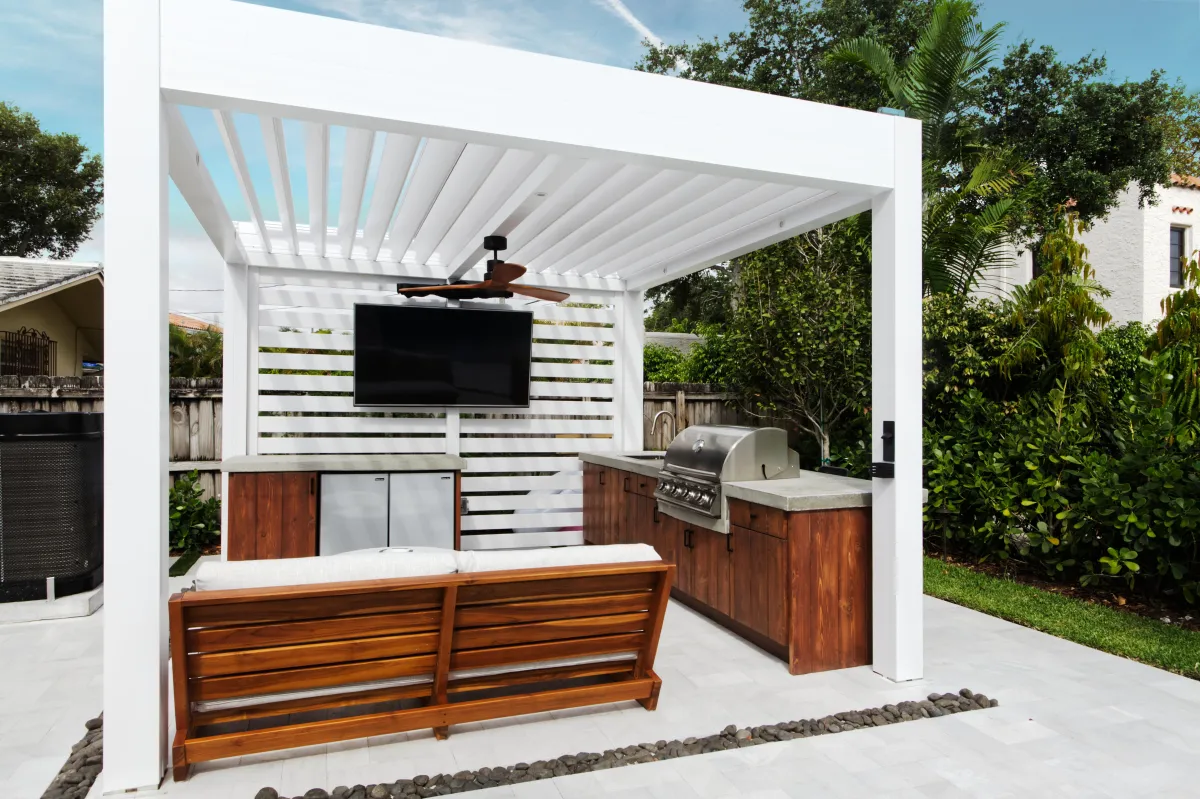
Louver Roof Pergolas
Enhance your outdoor space with aluminum pergolas with louvers, This modern pergola idea lets you control sunlight and airflow, creating the perfect ambiance year-round.
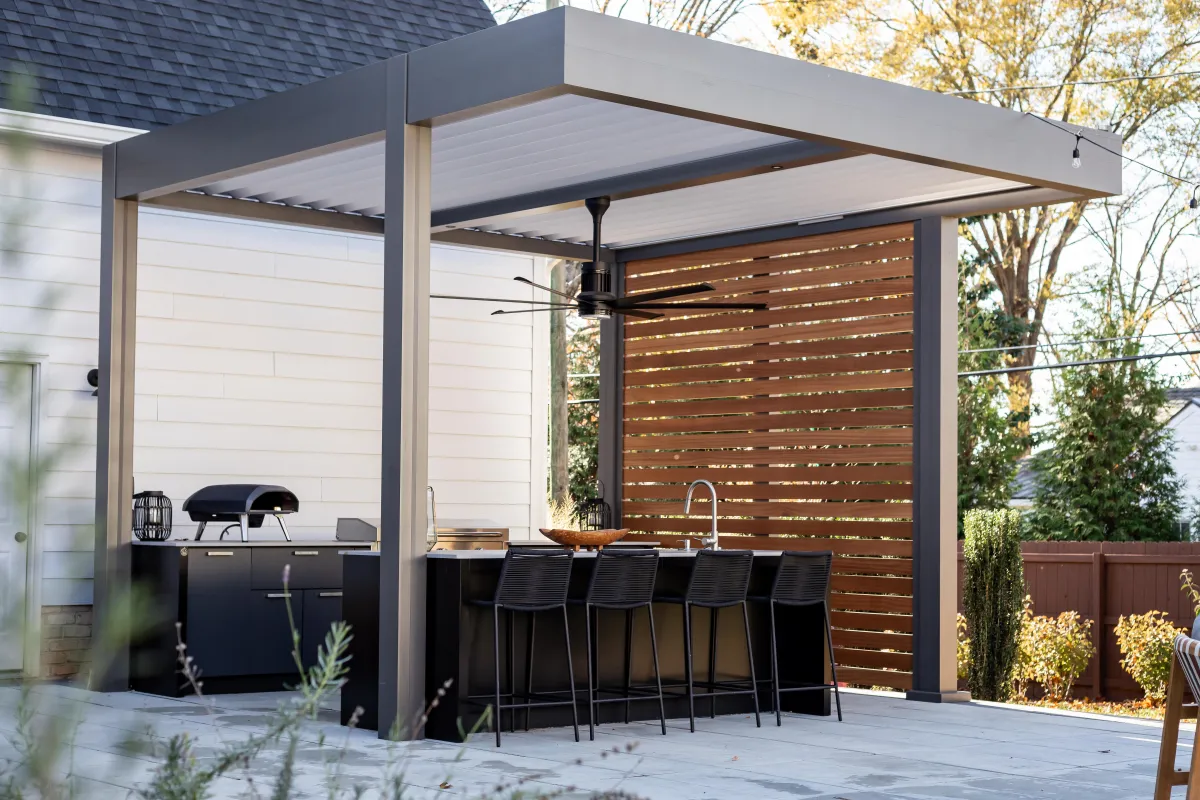
Insulated Roof Pergolas
For a cooler, more comfortable outdoor retreat, insulated roof pergolas provide superior protection from heat and rain. This pergola idea blends style and function, making your patio usable in any season.
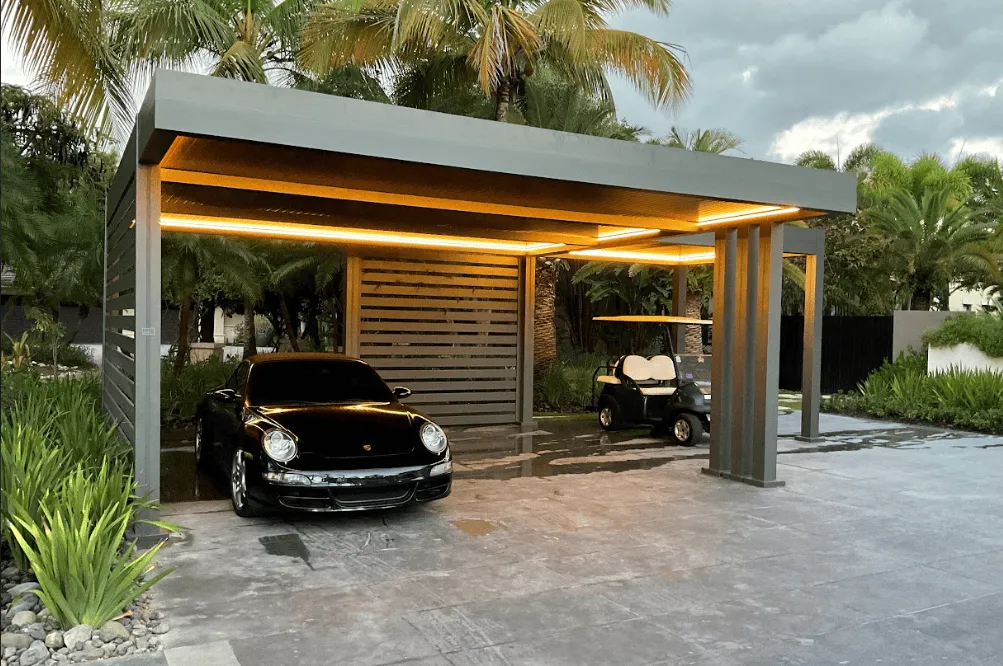
Car Port and Sun Shades
Protect your vehicles with durable aluminum carports, a sleek and modern alternative to traditional garages, creating curb appeal while shielding your car from the elements.
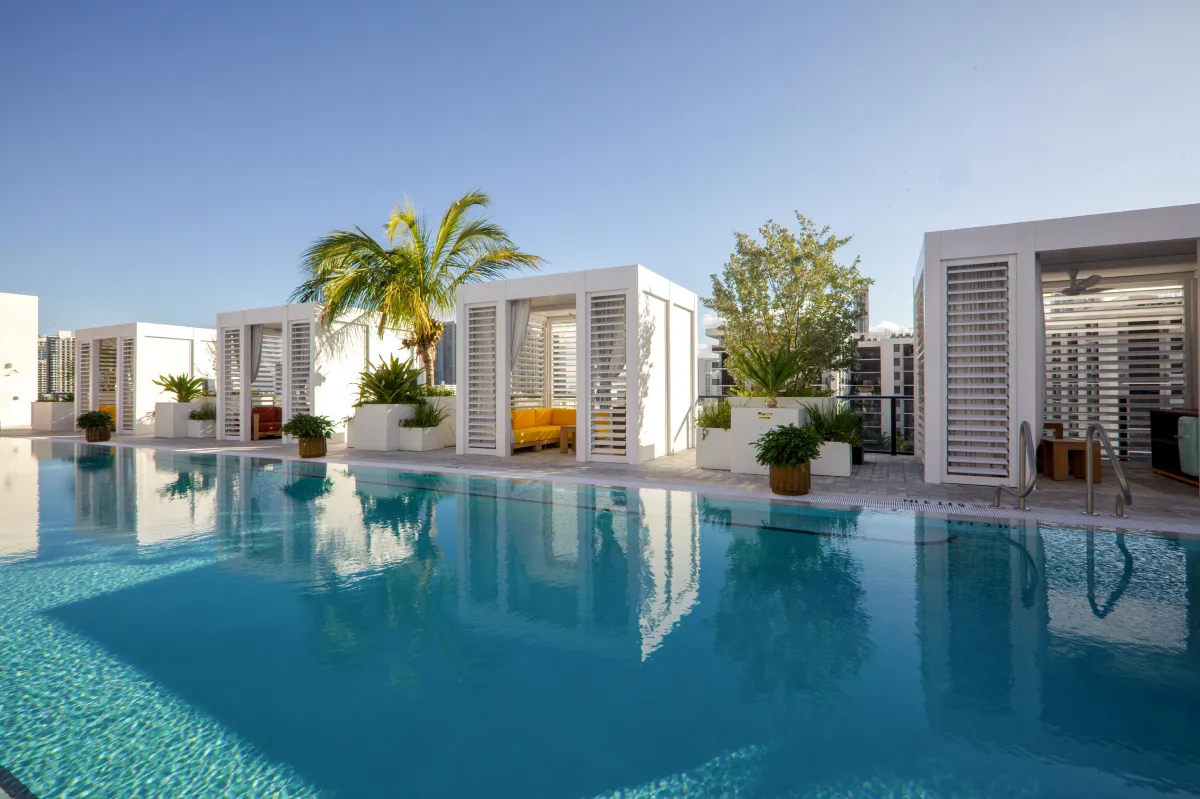
Aluminum Cabanas
Create a private, resort-style escape with aluminum cabanas, perfect for poolside lounging or outdoor entertaining. This pergola idea combines shade, style, and durability for a luxurious backyard retreat.
The Florida Living Outdoor Advantage

Luxury Products
Each product is chosen for quality — we proudly install only premium-grade systems that function well in creating those outdoor spaces. Our hurricane and motorized screens are engineered to truly enhance your outdoor living experience and deliver trouble-free performance year after year and long-lasting beauty.

Local Experts
As a family-veteran-owned, faith-based business, our team brings a personal touch to every project. We care. Our goal is to ensure your satisfaction and deliver unmatched service and outdoor luxury spaces.

Extensive Experience
FL Outdoors possesses a track record of 26 years of serving major clients; our extensive experience speaks for itself. Trust our licensed Class A contractor services for excellence in installation and customer satisfaction.

Superior Service
At Florida Living Outdoor, white-glove service is our hallmark. Your job is to dream and let us create a smile. We prioritize your needs, ensuring a hassle-free experience from consultation to installation.
The Florida Living Outdoor Advantage
Luxury Products
Each product is chosen for quality — we proudly install only premium-grade systems that function well in creating those outdoor spaces. Our hurricane and motorized screens are engineered to truly enhance your outdoor living experience and deliver trouble-free performance year after year and long-lasting beauty.
Local Experts
As a family-veteran-owned, faith-based business, our team brings a personal touch to every project. We care. Our goal is to ensure your satisfaction and deliver unmatched service and outdoor luxury spaces.
Extensive Experience
FL Outdoors possesses a track record of 26 years of serving major clients; our extensive experience speaks for itself. Trust our licensed Class A contractor services for excellence in installation and customer satisfaction.
Superior Service
At Florida Living Outdoor, white-glove service is our hallmark. Your job is to dream and let us create a smile. We prioritize your needs, ensuring a hassle-free experience from consultation to installation.
Your Vision Deserves
A Partner,
Not Just A Vendor
Florida Living Outdoors Solutions
Dual Specialties
Residential Solutions
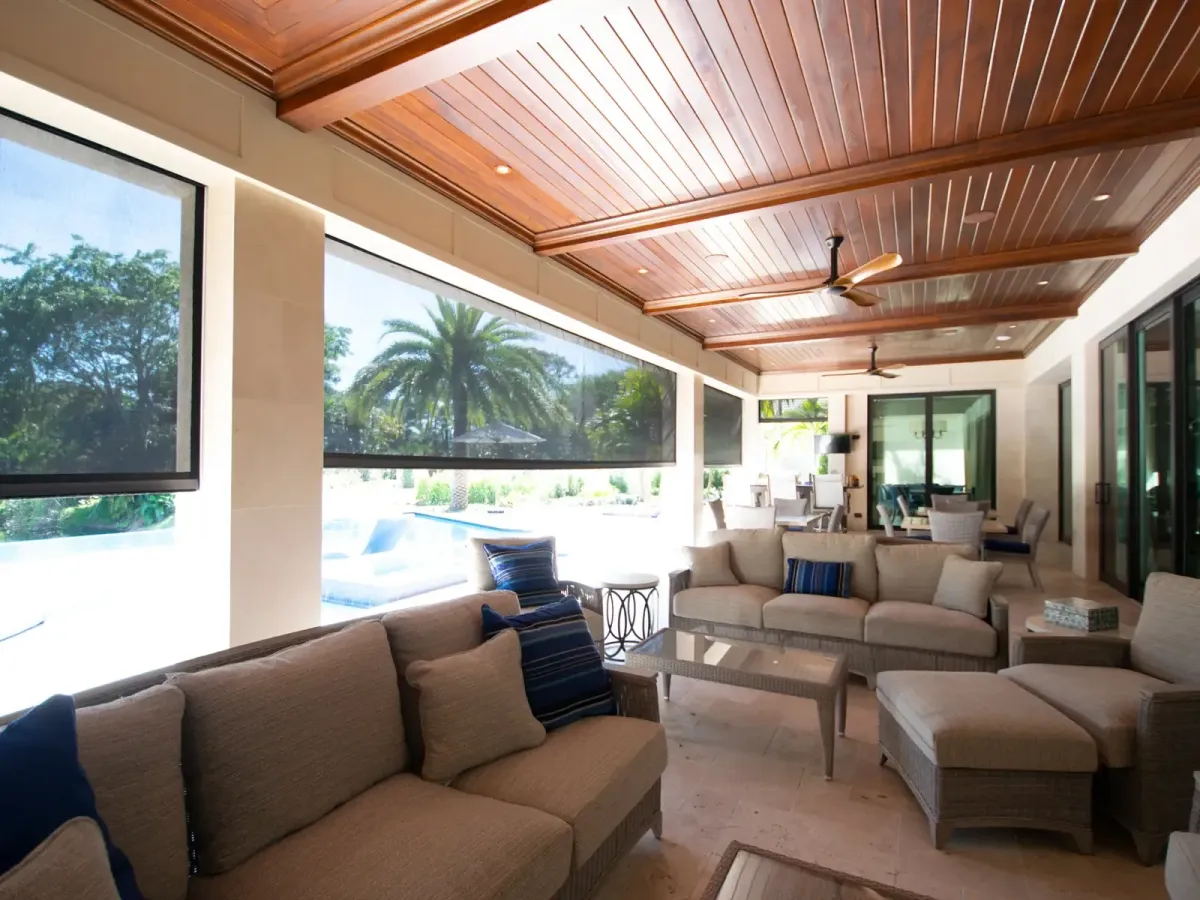
Your Florida home should be a sanctuary for relaxation, family time, and maybe even entertaining. Adding Motorized Screens to patios empowers you to curate any outdoor space to complement your aesthetics and meet your needs.
From Lanai Living to patio perfection, poolside cabanas to garages, and windows to doors, there are motorized screen options for every situation. Need motorized design ideas or a price check? Check out our motorized screen residential design guides and calculator.
Commercial Solutions
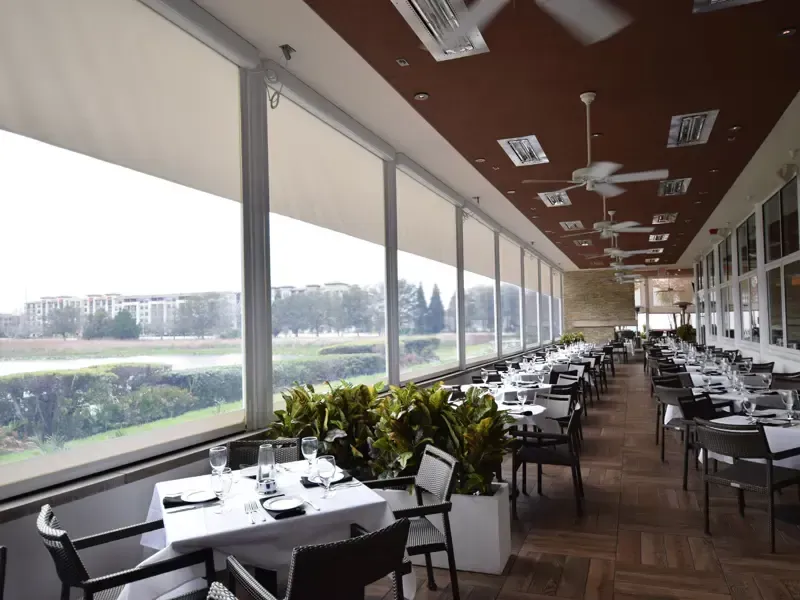
Whether you're investing in your restaurant's patio seating or weatherproofing your outdoor event space, ensuring those areas remain usable and enjoyable for guests is critical to your bottom line and ultimate business success.
Does your restaurant’s patio contend with glaring sun? Or maybe the luxury outdoor kitchen area is being invaded by bugs? Maybe the upcoming hurricane season has you concerned. Whatever the challenge, Florida Living Outdoor, Fenetex, and MagnaTrack Motorized got you covered.
Your Vision Deserves
A Partner,
Not Just A Vendor
Florida Living Outdoors Solutions
Dual Specialties
Residential Solutions
Your Florida home should be a sanctuary for relaxation, family time, and maybe even entertaining. Adding Motorized Screens to patios empowers you to curate any outdoor space so it complements your aesthetics and meets your needs.
From Lanai Living to patio perfection, poolside cabanas to garages, and windows to doors, there are motorized screen options for every situation. Need motorized design ideas or a price check?
Check out our motorized screen residential design guides and calculator.
Commercial Solutions
Whether you're investing in your restaurant's patio seating or weather-proofing your outdoor event space, making sure those areas remain usable and enjoyable for guests is critical to the bottom line and your business' ultimate success.
Does your restaurant's patio contend with glaring sun? Or maybe the luxury outdoor kitchen at your home is being invaded by bugs? Maybe the upcoming hurricane season has you concerned.
Whatever the challenge, Fenetex Motorized screens and our full outdoor solutions line are engineered to keep your commercial space open, comfortable, and operational year-round.
Outdoor Living Explained
Real Advice From 26 Years of Florida Outdoor Living
The outdoor resource Floridians trust for expert tips on shade solutions, hurricane preparedness, product reviews, and patio and lanai transformations. Be in the know before you decide.
FL Outdoor News
Stay up to date with the latest news.
FAQ - FLORIDA LIVING OUTDOORS
What does Florida Living Outdoor install?
Florida Living Outdoor designs and installs motorized hurricane screens, retractable awnings, luxury louvered pergolas, custom fencing, outdoor lighting, and insect and solar screen systems. We serve Florida homeowners and commercial properties from Daytona Beach through Orlando, Tampa, the Treasure Coast, and South Florida. Every system is installed by our in-house crews — never subcontracted — and backed by a 3-year craftsmanship warranty.
How much do motorized hurricane screens cost in Florida?
Motorized hurricane screen pricing in Florida typically ranges from $3,500 to $9,500 per opening, depending on size, mesh weave, motor type, and structural attachment. Larger openings, integrated smart-home controls, and impact-rated installations move toward the upper end. We provide written, itemized quotes after an on-site measurement — no estimates over the phone, because hurricane screens are engineered to your specific opening, not sold off a shelf.
What is MaxForce 365 and when does it launch?
MaxForce 365 is the world's first motorized hurricane screen with a spring retention and self-correcting tensioning system, eliminating the manual recalibration conventional screens require over their lifespan. Manufactured by Fenetex with patent pending, MaxForce 365 carries the same Miami-Dade County Notice of Acceptance approval as the existing MaxForce line — the most demanding hurricane protection certification in the United States. The system launches June 29, 2026, and Florida Living Outdoor is a launch-day certified dealer.
How long does a hurricane screen installation take?
Most residential hurricane screen installations take one to three days on-site, depending on the number of openings and structural complexity. Lead time from contract signing to installation is typically four to eight weeks, accounting for engineering, permit approval, and manufacturing. Commercial projects and multi-unit installations follow a project-managed timeline scoped during design. We handle all permitting, HOA submittals, and final inspection coordination.
What's the difference between a hurricane screen, an insect screen, and a solar screen?
Each is engineered for a different job. Hurricane screens withstand Category-5 winds and debris impact, deploying for storm protection. Insect screens block mosquitoes, no-see-ums, and flying debris while allowing breeze through — ideal for daily lanai and patio use. Solar screens use a denser weave to reduce solar heat gain by up to 80%, lowering cooling costs and protecting interior furnishings from UV damage. Many Florida Living Outdoor customers install two systems on the same opening — one for daily comfort, one for storms.
What service areas does Florida Living Outdoor cover?
Florida Living Outdoor serves homeowners and commercial properties across Central Florida, the Space Coast, the Treasure Coast, Tampa Bay, and South Florida — including Orlando, Oviedo, Winter Park, Cocoa Beach, New Smyrna Beach, Vero Beach, Stuart, Jupiter, Tampa, Sarasota, Naples, Deerfield Beach, Lighthouse Point, Plantation, and Southwest Ranches. We coordinate larger commercial and coastal projects statewide. All work is performed under DBPR licensure CGC1532839.
How much does a retractable awning cost in Florida?
Retractable awning pricing in Florida typically ranges from $2,800 to $8,500 installed, depending on projection width, motor and remote configuration, fabric grade, and wind sensors. Motorized models with sun, wind, and rain sensors deploy and retract automatically based on conditions. A properly sized awning lowers patio temperatures by 15 to 20 degrees, reduces sun-driven interior fading, and pays for itself in expanded usable outdoor square footage faster than most homeowners expect.
What is a louvered pergola and how is it different from a regular pergola?
A louvered pergola has motorized aluminum slats in the roof that rotate from fully open to fully closed at the press of a button — letting you control sun, shade, and rain in real time. A traditional fixed pergola has decorative beams with no weather control. Florida Living Outdoor installs Azenco louvered pergolas, engineered for Florida wind loads and integrated with lighting, heaters, screens, and smart-home controls. They function year-round in Florida's climate, unlike fixed pergolas which become unusable in rain or peak summer sun.
Your Vision Deserves
A Partner
Who Listens...
FL Outdoor News
Stay up to date with the latest news.
FL Outdoor News
Stay up to date with the latest news.
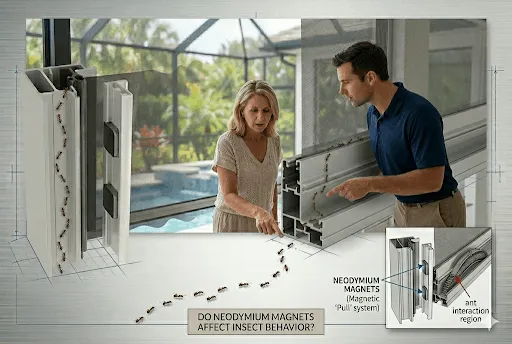
The Magnet Question: What the Industry Is Asking About Neodymium in Motorized Screens
The Magnet Question: What the Industry Is Asking About Neodymium in Motorized Screens
There is a question circulating in the motorized screen category right now that deserves a careful, honest, research-grounded answer. Do the neodymium magnets embedded in magnetic-pull track systems affect insect behavior in the surrounding outdoor living space? The short version is: we do not know. The science of insect magnetoreception is real and growing. Commercial insect-trap patents do use magnetic fields at specific strengths to attract certain pests. But no peer-reviewed study has specifically measured insect behavior around residential motorized screen installations, and the field strengths at work in those installations have not been characterized in a published experimental setting. What we can do is lay out what the peer-reviewed literature and the patent record actually say, and let homeowners think through the implications themselves.
Insects have documented magnetoreception — a biological sensitivity to magnetic fields that ants, bees, planthoppers, and mosquitoes use for orientation and navigation. A commercial insect-trap patent held by the USPTO describes using low-strength magnetic fields between 0.0001 and 1.0 millitesla to attract specific crawling pests. Residential motorized screen systems that incorporate neodymium magnets operate at different field strengths, and no peer-reviewed study has specifically measured insect behavior around motorized screen installations. The question the industry is asking is legitimate and unresolved. Here is what the science says, what the patents show, and why OneTrack's spring-based design sidesteps the question entirely.
What Magnetoreception Is — and Which Insects Have It
Magnetoreception is the biological ability to detect and respond to magnetic fields. It is well-documented across the animal kingdom in birds, sea turtles, and honeybees, and has been confirmed experimentally in several insect groups over the past three decades.
A 2010 review published in the Journal of the Royal Society Interface by Wajnberg and colleagues summarized the evidence for magnetoreception in eusocial insects — ants, bees, wasps, and termites. The review documented behavioral experiments showing that honeybees and several ant species use the geomagnetic field to orient and navigate around their nests and along migratory paths, and characterized the magnetic nanoparticles found in insect tissue through SQUID magnetometry and electron microscopy. Most of the magnetic material was concentrated in the abdomens and antennae of bees and ants, pointing to these body regions as candidate sites for the magnetoreceptive apparatus. (Wajnberg et al., J R Soc Interface 2010; DOI: 10.1098/rsif.2009.0526.focus; PMC2843992)
A 2016 study in Scientific Reports by Pan and colleagues extended this body of research to the brown planthopper — a major nocturnal migratory pest. The researchers used SQUID magnetometry, Prussian Blue staining, and electron microscopy to identify biogenic magnetic particles, probably magnetite, in the abdomens of both nymph and adult planthoppers. Particle sizes ranged from 50 to 450 nanometers, and the amount varied with the insect's developmental stage and wing form. The study was the first reported evidence of biogenic magnetic material in this particular pest species. (Pan et al., Sci Rep 2016, 6:18771; DOI: 10.1038/srep18771)
The research establishes a few things clearly. Magnetoreception in insects is real. The biological infrastructure for sensing magnetic fields exists in a documented and growing list of species. The exact mechanisms — ferromagnetic, light-dependent cryptochrome, or some combination — are still being investigated, but the behavioral evidence for magnetic sensitivity is not in dispute among researchers working in the field.
What Research Has Shown About Mosquitoes and Magnetic Fields
Mosquitoes are the insect category most shoppers actually care about when they ask the magnet question in a Florida context. The research here is thinner than the social-insect literature, but there is one foundational study worth reading directly.
In 2000, researchers at the Walter Reed Army Institute of Research published an experimental study in the Journal of the American Mosquito Control Association that tested mosquitoes for behavioral responses to magnetic fields. Using SQUID analysis on three species of mosquitoes, the team reported that most mosquitoes placed in a 1.0-gauss uniform magnetic field oriented themselves parallel to the field. In a rotating magnetic field, two of three species tested took fewer blood meals than under the Earth's normal magnetic field. The study's takeaway was cautious: the researchers found that some species of mosquitoes orient themselves in an applied magnetic field, and that the application of a magnetic field can alter feeding behavior in some species. (Strickman et al., J Am Mosq Control Assoc 2000, 16(2):131-137; PubMed 10901636)
That is the peer-reviewed literature on mosquitoes and magnetic fields in a single paragraph. It is real data. It is also a single study, at a single field strength, under laboratory conditions with three specific species. It does not map directly onto the field environment of a residential motorized screen installation, and the researchers did not claim it did.
What the Patent Record Shows About Magnetic Insect Attraction
A separate line of evidence worth presenting is the USPTO patent record for magnetic insect-attraction devices.
US Patent 20070107297A1 — titled "Use of electromagnetic fields to affect insect movement" — was filed in 2006. The patent describes an insect trap that uses an electromagnetic field generator emitting field strengths between 0.0001 and 1.0 millitesla. The field may be produced by a permanent magnet or by a battery-powered generator. The patent claims the device attracts cockroaches and certain other crawling pests, with the inventors citing frequency ranges between 20 and 20,000 Hertz as particularly effective for German cockroaches. The field strengths specified are low — well below the surface field strength of a typical neodymium fridge magnet, and in the same general range as the field produced by power lines or household electronics. (US Patent US20070107297A1)
The patent is important for two reasons. First, it documents that the commercial pest-control industry has at least explored magnetic-field attraction of specific crawling insects — cockroaches, earwigs, firebrats, silverfish — at low field strengths within a specific frequency profile. Second, the field strengths claimed in the patent are orders of magnitude below what a neodymium magnet embedded in a motorized screen track produces at surface contact. The patent does not tell us whether residential motorized screen magnets affect insect behavior. It tells us that the idea of magnetic fields and insect behavior is real enough for a USPTO patent to have been granted on it.
What Is Not Claimed Here — Important Clarifications
This is the part of the post that matters most, and this is where other content in the motorized screen space has sometimes gotten it wrong.
The Mosquito Magnet® commercial product is not a magnetic device. Despite the name, the Mosquito Magnet brand of outdoor mosquito traps (originally manufactured by American Biophysics Corporation, now owned by Woodstream) uses carbon dioxide, heat, and octenol to attract mosquitoes through their olfactory receptors. The branding is a marketing name, not a description of the mechanism. A diligent reader who tries to verify a claim that "Mosquito Magnet uses magnets" will find the actual product documentation and will stop trusting the source that made the claim. Any honest discussion of magnets and insects has to get this right. Mosquito Magnet is an olfactory/thermal device. It has nothing to do with this conversation.
No peer-reviewed study has specifically measured insect behavior at the field strengths produced by residential motorized screen installations. The Walter Reed mosquito study tested field strengths of 1.0 gauss (0.1 millitesla) in laboratory conditions. Commercial insect-attraction patents specify 0.0001 to 1.0 millitesla. A neodymium magnet embedded in a motorized screen side track produces field strengths that are very different from either of these experimental conditions, in a very different geometry, in an uncontrolled outdoor environment with dozens of other variables at play. The science that would answer "do motorized screen magnets attract insects" has not been done.
This post is not a claim that MagnaTrack attracts insects. The evidence does not support that specific claim. What the evidence supports is that magnetoreception is real, that some crawling insects respond to low-strength magnetic fields in controlled experimental settings, and that the question of how this applies to residential motorized screen installations is open and unresolved. Homeowners who are interested in the topic should read the peer-reviewed studies directly and draw their own conclusions. We are here to point to the research, not to read into it something the research does not say.
How Each Motorized Screen System Addresses the Question
The two engineering categories in the premium motorized screen market handle the magnet question differently, and the difference is worth understanding before a homeowner signs a contract.
Magnet-based systems like MagnaTrack use neodymium magnets embedded in the side track as the return mechanism that pulls the inner flexing track back to alignment after wind or debris displaces it. The magnets are the engineering heart of the system. They are calibrated to the field strength needed to hold the track in position and release under transient load, and they are protected under US Patent 9,719,292. Progressive Screens, a Hunter Douglas Company, has built its flagship motorized screen product around this magnetic architecture for more than a decade. The magnets do real engineering work, and the product performs as promised — we covered the push-vs-pull framework in Post 2, and the reliability case for both systems in Post 1.
The question the research above raises is not whether the magnets work for their intended engineering purpose — they do. The question is whether the magnetic field they produce has any effect, intended or not, on insect behavior in the surrounding outdoor space. That question has not been answered by the scientific literature. It may never be answered, because running the experiment properly would require controlled field measurements at multiple installation geometries across multiple insect pressure conditions. It is not a trivial study to design, and it has not been done.
Spring-based systems like OneTrack use precision mechanical compression springs as the return mechanism. There are no magnets involved in the track engineering. The spring-based design is not a response to the magnet question — the engineering choice was made for other reasons, primarily material efficiency and a different long-term wear profile — but it has the incidental effect of sidestepping the magnet question entirely. A homeowner who wants a free-floating articulating track motorized screen without magnetic fields in the track architecture has exactly one engineering category to shop in, and OneTrack is the representative of that category in the Florida market.
This is an important distinction worth holding onto. OneTrack is not the engineering that solves a proven magnet-insect problem — because no proven magnet-insect problem has been established at residential motorized screen field strengths. OneTrack is the engineering that bypasses a question the science has not yet answered. Those are different claims. The second one is defensible. The first one is not.
How to Think About the Question for Your Own Home
If you are shopping motorized screens in Florida and the magnet question is on your mind, there are three ways to approach it thoughtfully.
The first is to read the research we have linked above. The peer-reviewed studies are available through PubMed, PMC, and the journal websites. Reading the original sources is the most reliable way to form your own view of what the science says and does not say, rather than trusting a summary from any vendor's marketing department, including ours.
The second is to think about your specific installation context. An insect pressure profile varies widely across Florida — a lanai in Palm Beach overlooking mangroves is a different environment than an open-plan patio in The Villages. The homeowners who ask the magnet question most often tend to be on the coast, in the mangrove-adjacent or pond-adjacent locations where insect pressure is already high and anything that might compound it feels like it deserves extra scrutiny. That is a reasonable instinct. It is also worth considering that the dominant drivers of local insect pressure in Florida — standing water, vegetation, humidity, time of day — swamp anything a motorized screen track magnetic field could plausibly contribute. If you are making decisions about insect exposure, those are the variables that matter most.
The third is to decide, separately from the unresolved magnet question, whether the engineering strengths of the magnetic-pull system or the mechanical-spring-push system fit your application better. Both are legitimate engineered answers to the motorized screen category problem. Both hold Florida Product Approvals on their hurricane lines — MagnaTrack Defender under F30798, Fenetex MaxForce under FL8637. Both perform as promised in the field. If the magnet question is a tiebreaker in an otherwise close decision for you, that is a reasonable personal choice to make. It should not be the primary engineering decision driver, because the science does not currently support elevating it that high.
A final note worth carrying into any contractor conversation. Sales language on this question tends to run hot in both directions. Vendors selling spring-based systems sometimes overstate what the research shows about magnetic fields and insects, leaning into uncertainty as if it were evidence. Vendors selling magnetic systems sometimes dismiss the question as marketing fear, skipping past the real peer-reviewed research that sits at the edge of the topic. Neither posture is honest. The honest answer is that the research we linked above is real, the question it raises is legitimate, and the specific residential-motorized-screen application has not been studied. A good installer will tell you exactly that — and will not push the conversation in either direction.
About the Author
Kip Hudakoz is the owner of Florida Living Outdoor LLC, a BBB A+ accredited, veteran-owned Florida outdoor services company specializing in motorized screens, retractable awnings, and pergola systems. Kip has spent twenty-six years in the Florida outdoor services industry, operating companies in Central Florida and South Florida. He is also the owner of Paramount Fencing and Custom Fence Orlando, and was a former co-host of "Ask the Experts" on News 96.5 Florida Home and Garden. Florida Living Outdoor was founded in December 2021 and earned its BBB A+ accreditation in October 2024. The company installs and services both MagnaTrack and OneTrack motorized screen systems across Central and South Florida.
Frequently Asked Questions
Do magnets attract insects?
Some research suggests that specific crawling insects — cockroaches, earwigs, firebrats, silverfish — can be attracted by low-strength magnetic fields between 0.0001 and 1.0 millitesla under specific frequency conditions, per US Patent 20070107297A1. Separate peer-reviewed research has documented magnetoreception in ants, bees, planthoppers, and mosquitoes at field strengths around the Earth's natural geomagnetic field. No peer-reviewed study has specifically measured insect behavior at the field strengths produced by residential motorized screen installations. The question is open.
Do motorized screen magnets attract bugs?
The honest answer is that the science has not directly addressed this question. Research on insect magnetoreception is real and documented. Commercial insect-trap patents do use magnetic fields to attract certain pests. But no peer-reviewed study has measured insect behavior around residential motorized screen installations at the field strengths those installations produce. A homeowner concerned about this uncertainty has one option to bypass the question entirely — spring-based motorized screen systems like OneTrack, which use no magnets in the track engineering.
What is insect magnetoreception?
Insect magnetoreception is the ability of certain insects to detect and respond to magnetic fields. It is documented in peer-reviewed research across ants, bees, planthoppers, and some mosquito species. The mechanism involves magnetic nanoparticles in insect tissue — usually concentrated in the abdomen and antennae — that respond to external magnetic fields. The exact cellular and neurological pathways are still being investigated, but the behavioral evidence for magnetic sensitivity in these insects is established in the scientific literature.
Does the Mosquito Magnet product use magnets?
No. Despite the product name, the Mosquito Magnet brand uses carbon dioxide, heat, and octenol to attract mosquitoes through olfactory and thermal cues. The product is not a magnetic device. The brand name is marketing, not mechanism. Any source claiming that the Mosquito Magnet is evidence of magnet-based insect attraction has made a factual error — the product documentation is public and contradicts the claim.
Are neodymium magnets in motorized screens safe?
Neodymium magnets in motorized screen applications are embedded in the aluminum side track under a snap-on cover, where they are not accessible or in contact with users. From a human-safety perspective, they pose no known risk at the field strengths used in this application. From an insect-behavior perspective, the research is less settled — the question of whether these field strengths affect insect behavior in outdoor living spaces has not been directly studied in peer-reviewed research.
What magnetic field strength do motorized screen magnets produce?
Manufacturer specifications vary, and precise field-strength measurements in consumer installations have not been published in peer-reviewed research. Neodymium magnets in this class of application produce field strengths that are strong at the magnet surface and drop off rapidly with distance, following the inverse cube law typical of permanent magnets. The field geometry inside a motorized screen side track is engineered for the track-retention application, not for external field projection.
Is there a motorized screen without magnets?
Yes. OneTrack, manufactured by Fenetex, uses precision mechanical compression springs as the return mechanism for the free-floating articulating track. There are no magnets in the OneTrack track engineering. Homeowners who prefer to sidestep the open magnet question can shop this engineering category directly.
Ready to Talk Through the Engineering Choice for Your Home?
To walk through both engineering categories on a project-specific basis — and look at the research behind the magnet question on your own schedule — contact Florida Living Outdoor for a free in-home consultation in Central or South Florida. We install and service both MagnaTrack and OneTrack systems, and we will give you the peer-reviewed studies directly so you can read them yourself.
Sources and Further Reading
Wajnberg E, Acosta-Avalos D, Alves OC, de Oliveira JF, Srygley RB, Esquivel DMS. Magnetoreception in eusocial insects: an update. J R Soc Interface 2010; 7(Suppl_2):S207–S225. DOI: 10.1098/rsif.2009.0526.focus. Open access via PMC2843992.
Pan W, Wan G, Xu J, Li X, Liu Y, Qi L, Chen F. Evidence for the presence of biogenic magnetic particles in the nocturnal migratory brown planthopper, Nilaparvata lugens. Sci Rep 2016; 6:18771. DOI: 10.1038/srep18771. Open access via PMC4700427.
Strickman D, Gaffigan T, Wirtz RA, Miller BR. Effects of magnetic fields on mosquitoes. J Am Mosq Control Assoc 2000; 16(2):131-137. PubMed 10901636.
US Patent Application Publication US20070107297A1 — "Use of electromagnetic fields to affect insect movement." USPTO. https://patents.google.com/patent/US20070107297A1/en
Fenetex / OneTrack — manufacturer of OneTrack motorized screens, the spring-based free-floating articulating track product family that does not use magnets in the track architecture. https://onetrackscreens.com
Progressive Screens (a Hunter Douglas Company) — manufacturer of MagnaTrack, the magnetic-pull free-floating articulating track product family protected under US Patents 9,719,292 and 11,421,474. https://progressivescreens.com
Florida Product Approval F30798 — MagnaTrack Defender hurricane screen. https://www.floridabuilding.org
Florida Product Approval FL8637 — Fenetex MaxForce hurricane screen. https://www.floridabuilding.org
Florida Living Outdoor LLC — Florida dealer and installer for both product families. https://floridalivingoutdoor.com

Your Vision Deserves
A Partner
Who Listens...
COMPANY
MOTORIZED SCREENS
SHADE SOLUTIONS
FENCING & LIGHTING
DESIGN IDEAS
SUPPORT



Copyright 2026. FL OUTDOOR. All Rights Reserved.
Powered and Built By