Florida Living Outdoor, Winter Springs...
TRANSFORM YOUR WINTER SPRINGS OUTDOOR WITH PREMIUM MOTORIZED SCREENS | PERGOLAS | LIGHTING | AWNINGS
OPTIMIZE YOUR WINTER SPRINGS HOME'S OUTDOOR LIVING SPACE
FLORIDA'S MOTORIZED SCREEN STORE
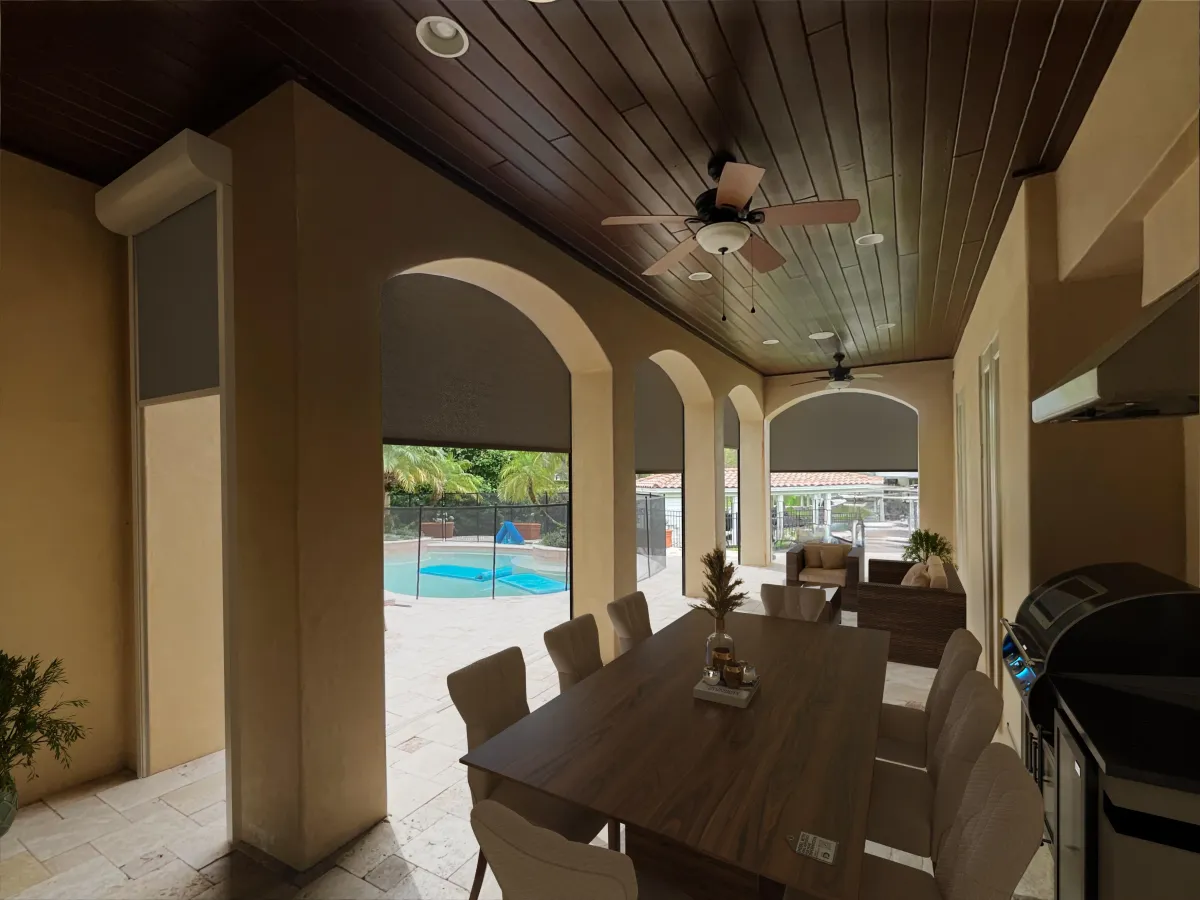
Defender Motorized Screens, Winter Springs
Our MagnaTrack Defender Hurricane Screens are rated for a Cat-5, offering impact absorption. Storm prep for Patios & Lanais made simple.
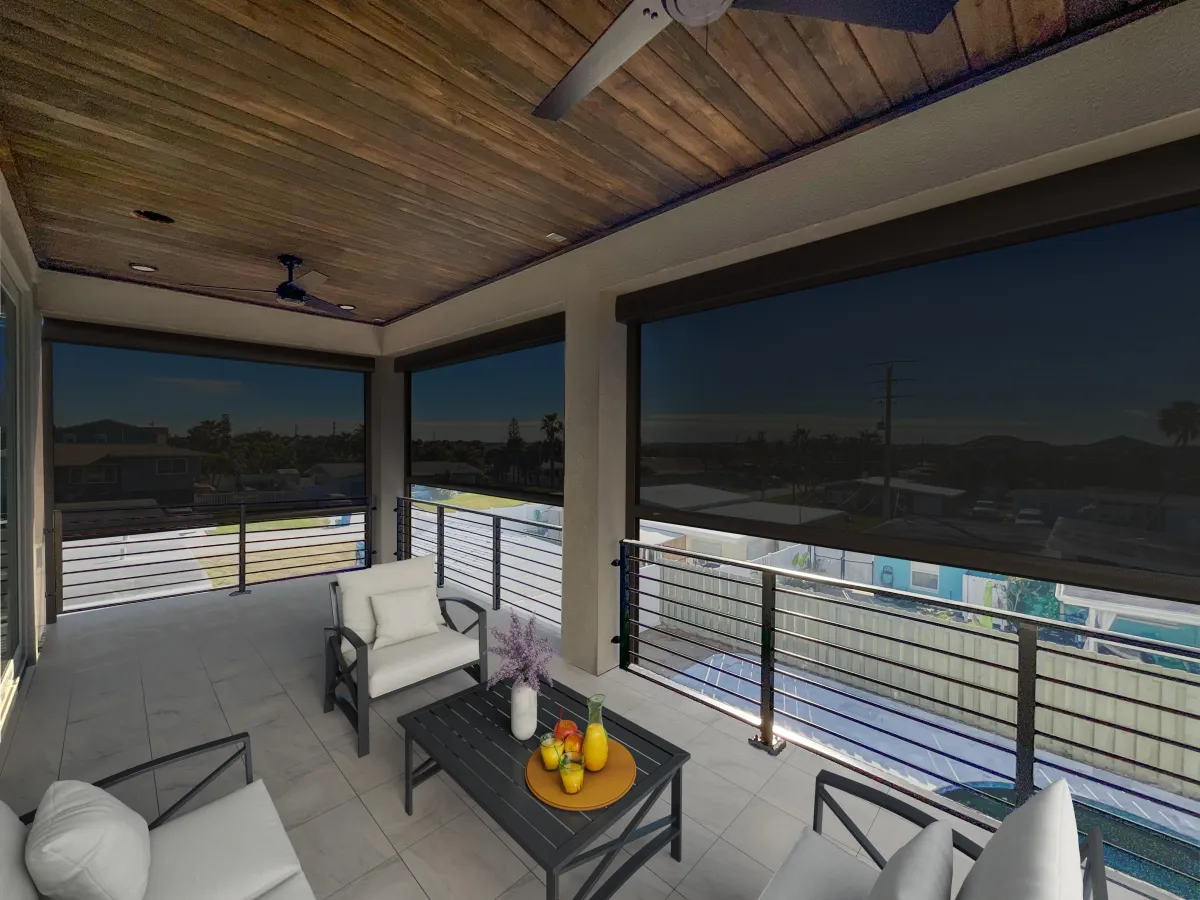
Retractable Bug Screens, Winter Springs
Do pesky insects evict you from your patio 30 minutes before dusk? Avoid the itch; click a button and watch Fenetex Motorized Screens deploy
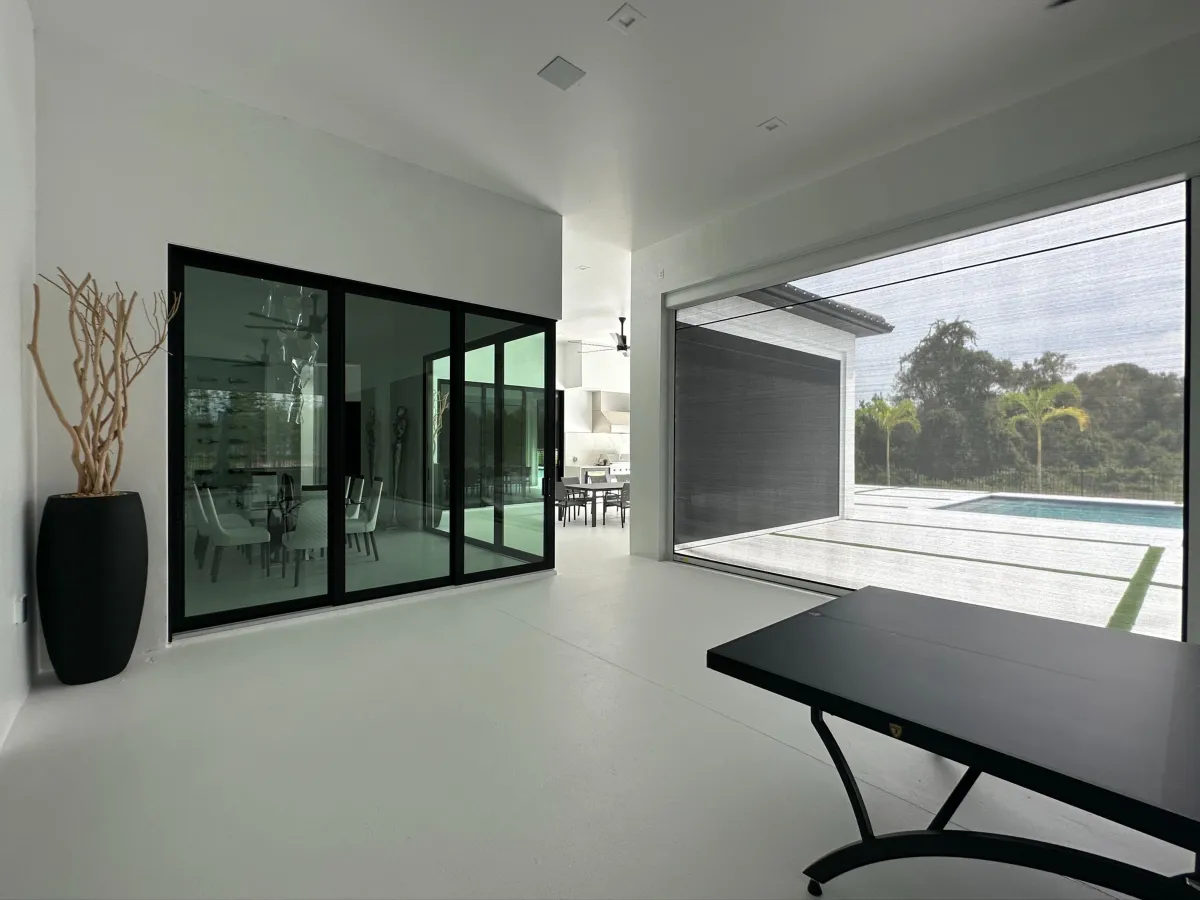
Retractable Sun Shades, Winter Springs
Beat the Heat. Getting Chased off your patio or lanai. Our MagnaTrack Solar shades for patios and lanais blocks up to 80% -97% of harmful UV rays
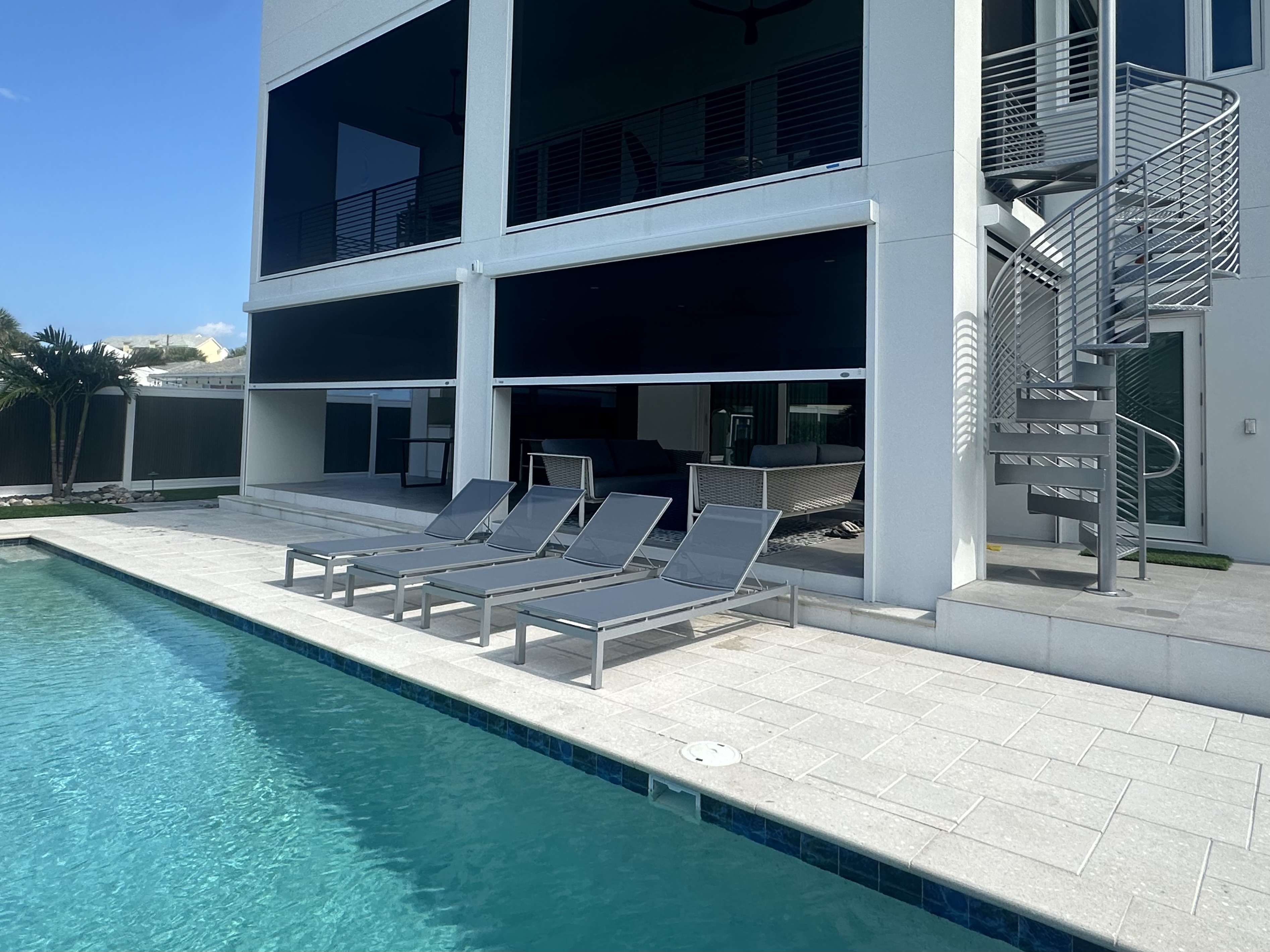
Retractable Privacy Screens, Winter Springs
Do your neighbor's see more of your patio than you do? Click a button & watch the MagnaTrack Privacy Screens deploy. You can see out, but they can't see in.
Best In Class
Motorized Screens...
Let's face it. Winter Springs, Florida is prone to extreme weather, hot sun, and pesky insects. The safety and protection of our home's lanai and patio spaces are critical.
Florida Living Outdoor is here to assist you in protecting your Patio and Lanai. Our patented design offers robust solutions such as retractable shade, insect, and hurricane protection. Our MagnaTrack Defender Screens provide exceptional defense against the Florida elements 365 days a year.
Whether you are looking for a motorized screen company inWinter Springs Florida, we are happy to announce a Partnership with MagnaTrack and Fenetex to bring you a motorized hurricane screen, providing peace of mind when it's needed most.
Best In Class
Motorized Screens...
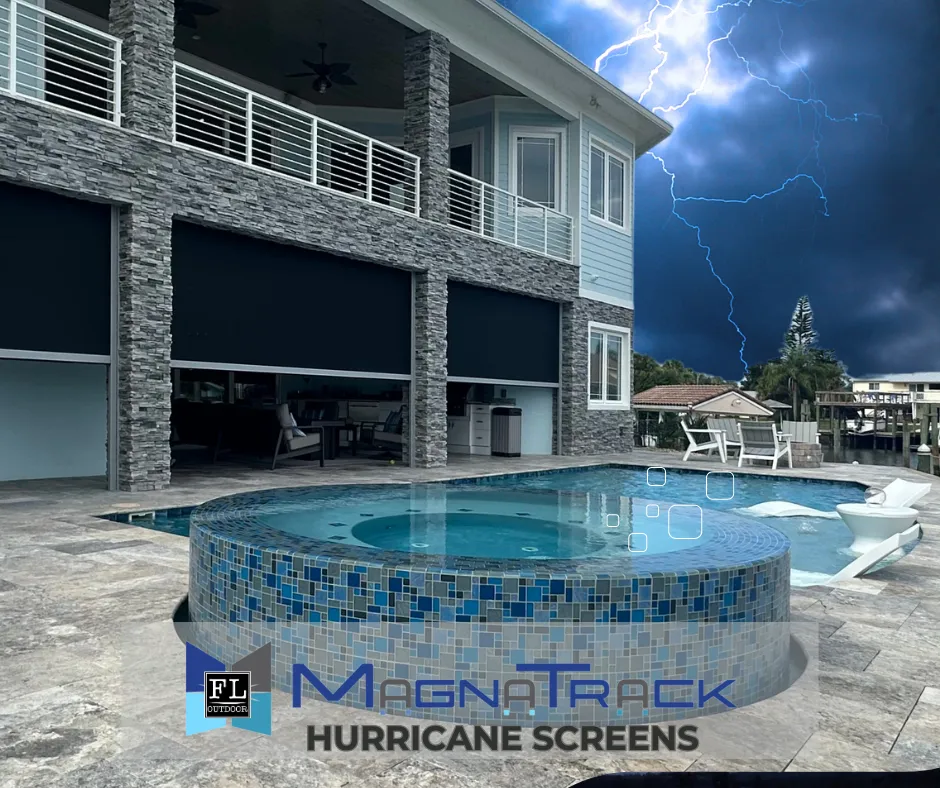
Let's face it. Winter Springs, Florida is prone to extreme weather, hot sun, and pesky insects. The safety and protection of our home's lanai and patio spaces are critical.
Florida Living Outdoor is here to assist you in protecting your Patio and Lanai. Our patented design offers robust solutions such as retractable shade, insect, and hurricane protection. Our MagnaTrack Defender Screens provide exceptional defense against the Florida elements 365 days a year.
Whether you are looking for a motorized screen company in Winter Springs Florida, we are happy to announce a Partnership with MagnaTrack and Fenetex to bring you a motorized hurricane screen, providing peace of mind when it's needed most.
WHY FLORIDA LIVING OUTDOOR, WINTER SPRINGS...?
When it comes to enhancing your Winter Springs Florida outdoor living spaces, making them a little more functional, or simply looking for a motorized screen company near you, choose Florida Living Outdoor with unmatched quality and expertise.
The bottom line is that nobody knows Azenco-Outdoor Pergolas, Sun Pro Awnings, and MagnaTrack Motorized Screens better than Florida Living Outdoor. We are Winter Springs Florida's number one Trusted resource for Motorized Screens and Pergolas.
Your Vision Deserves
A Partner
Who Listens...
Your Vision Deserves
A Partner
Who Listens...
PERGOLAS IDEAS
WINTER SPRINGS FLORIDA ALUMINUM PERGOLAS
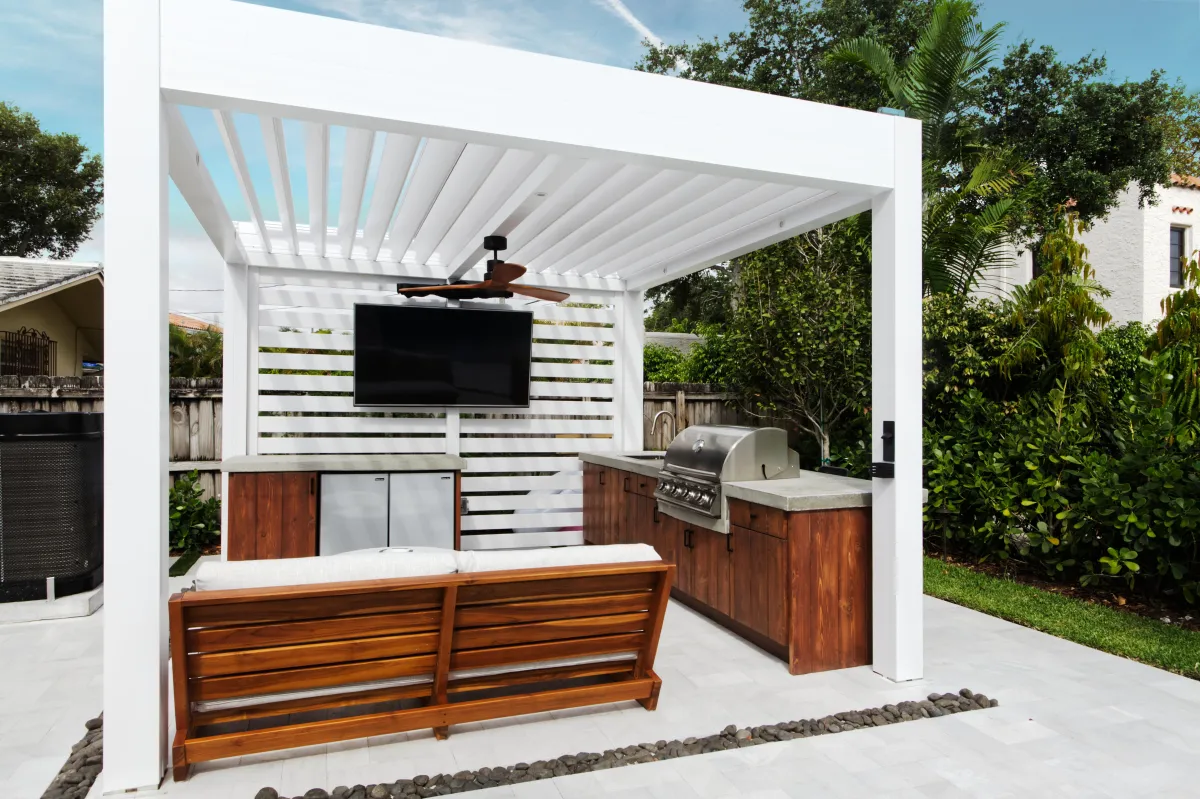
Louver Roof Pergolas, Winter Springs Florida
Enhance your Winter Springs outdoor space with aluminum pergolas with louvers, This modern pergola idea lets you control sunlight and airflow, creating the perfect ambiance year-round.
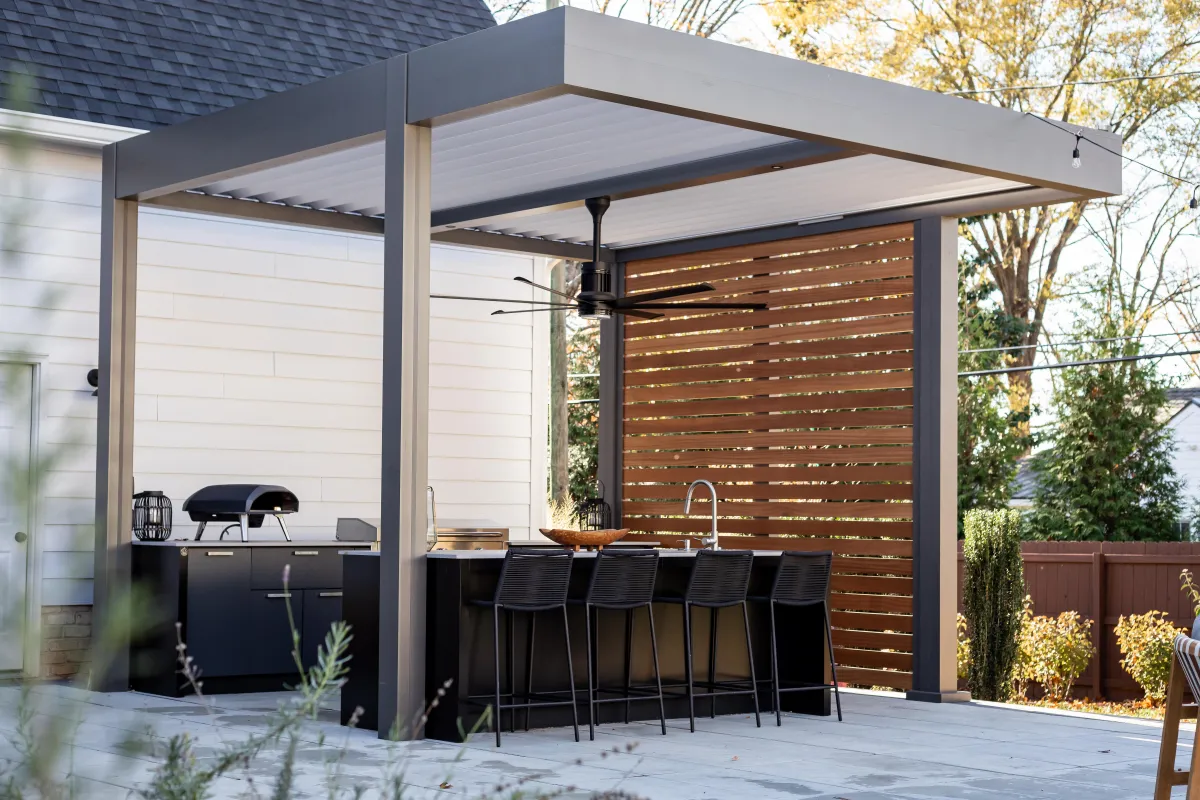
Insulated Roof Pergolas, Winter Springs Florida
For a cooler, more comfortable outdoor retreat, insulated roof pergolas provide superior protection from heat and rain in Winter Springs, Florida. This pergola idea blends style and function, making your patio usable in any season.
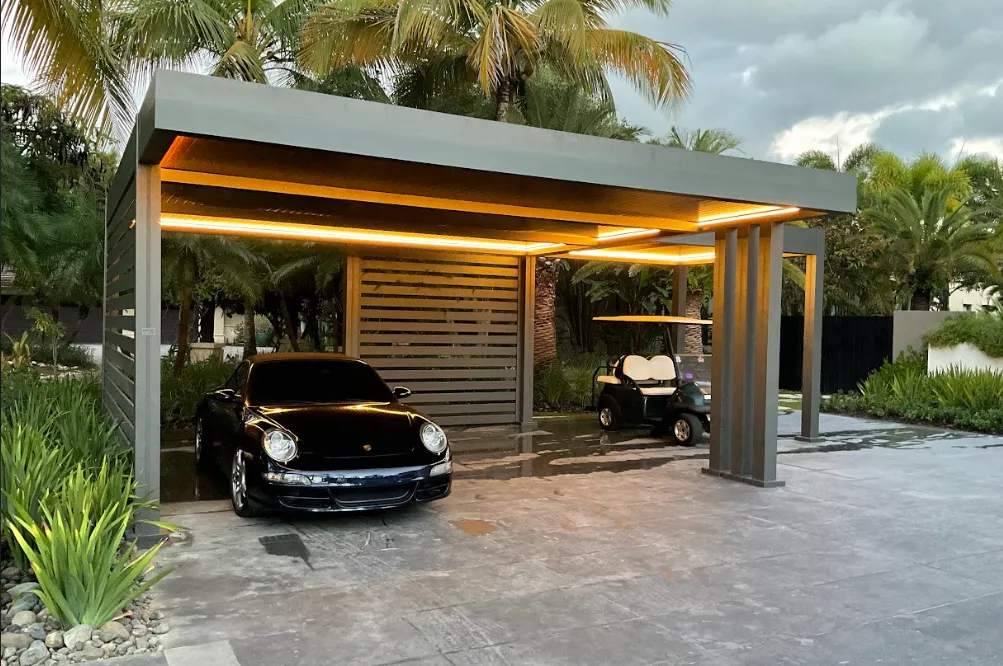
Aluminum Carports, Winter Springs Florida
Protect your vehicles with durable aluminum carports, a sleek and modern alternative to traditional garages, creating curb appeal while shielding your car from the elements.
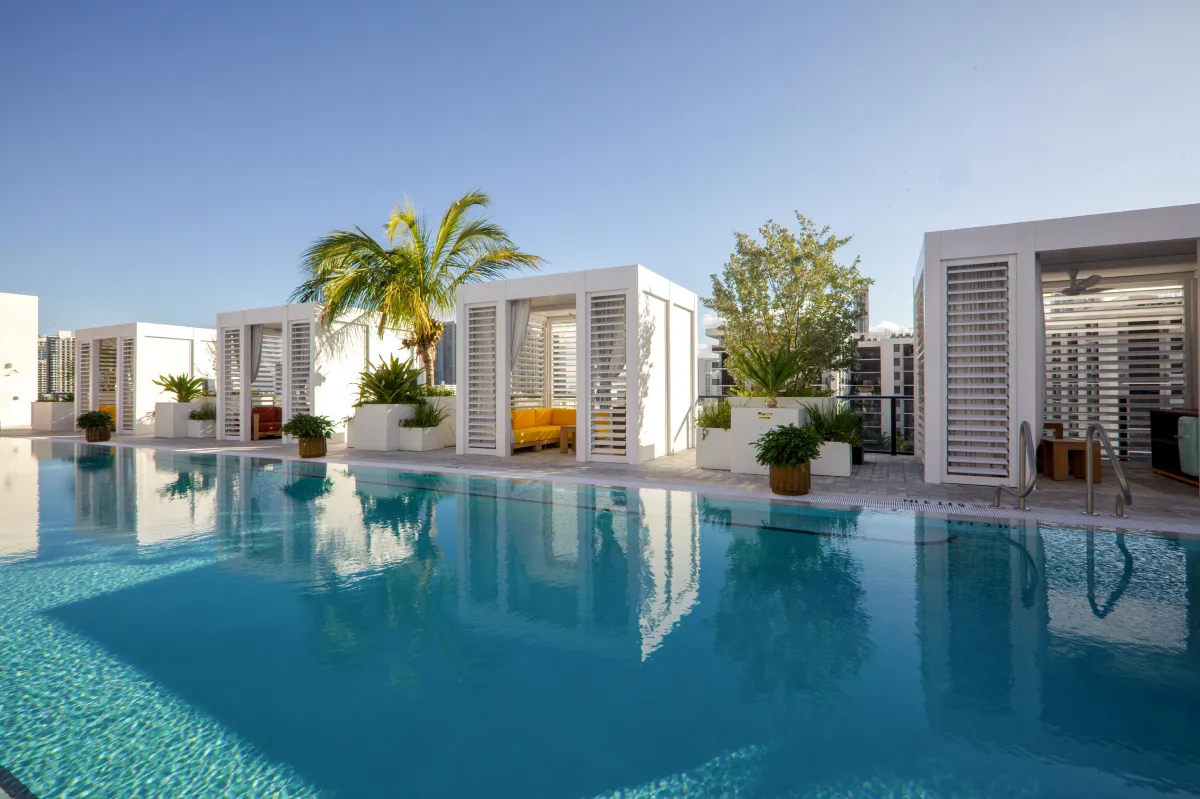
Aluminum Cabanas, Winter Springs Florida
Create a private, resort-style escape with aluminum cabanas, perfect for poolside lounging or outdoor entertaining. This pergola idea combines shade, style, and durability for a luxurious backyard retreat.
Creating
Functional Living Outdoors, Winter Springs Florida
At Florida Living Outdoor, we specialize in enhancing, expanding, and protecting your outdoor living spaces, making them more functional and enjoyable. It does not matter if it is an open space, patio, or lanai. We offer top-of-the-line solutions, including motorized retractable screens, sun awnings, and aluminum pergolas.
We serve Winter Springs and Winter Springs, Florida. We are Winter Springs Florida's preferred vendor of choice for both MagnaTrack motorized screens and Azenco Outdoor aluminum pergolas, louver or insulated roof. Florida Living Outdoor is the name Floridians' trust for Functional Outdoor Living.
Work requiring DBPR licensure in partnership with CGC1532839
Creating
Functional Living Outdoors, Winter Springs Florida
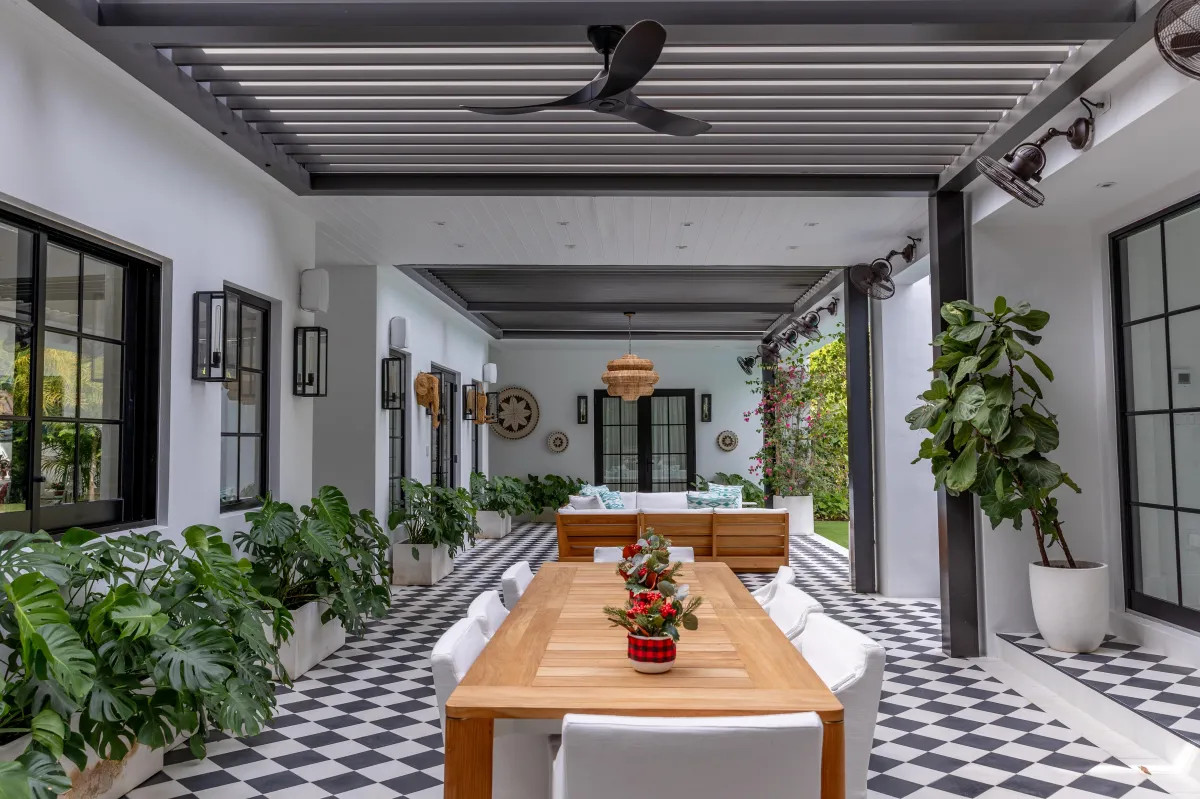
At Florida Living Outdoor, we specialize in enhancing, expanding, and protecting your outdoor living spaces, making them more functional and enjoyable. It does not matter if it is an open space, patio, or lanai. We offer top-of-the-line solutions, including motorized retractable screens, sun awnings, and aluminum pergolas.
We serve Winter Springs, Florida. We are Winter Springs Florida's preferred vendor of choice for both MagnaTrack motorized screens and Azenco Outdoor aluminum pergolas, louver or insulated roof. Florida Living Outdoor is the name Floridians' trust for Functional Outdoor Living.
Work requiring DBPR licensure in partnership with CGC1532839
European Quality
Luxury Pergolas
Enhance your Winter Springs outdoor living experience with a premium pergola installed by Florida Living Outdoor. Central and East the cost of Florida's, leading pergola contractor.
Our Winter Springs pergolas, crafted by Azenco-Outdoor, and possess the quality of European Manufacturing made right here in Florida. Each Resort Style Pergola are stylish outdoor structures; they are a lifestyle upgrade.
Our pergolas create the perfect blend of shade, comfort, and elegance, transforming your outdoor space into a year-round Functional outdoor space and haven.
European Quality
Luxury Pergolas
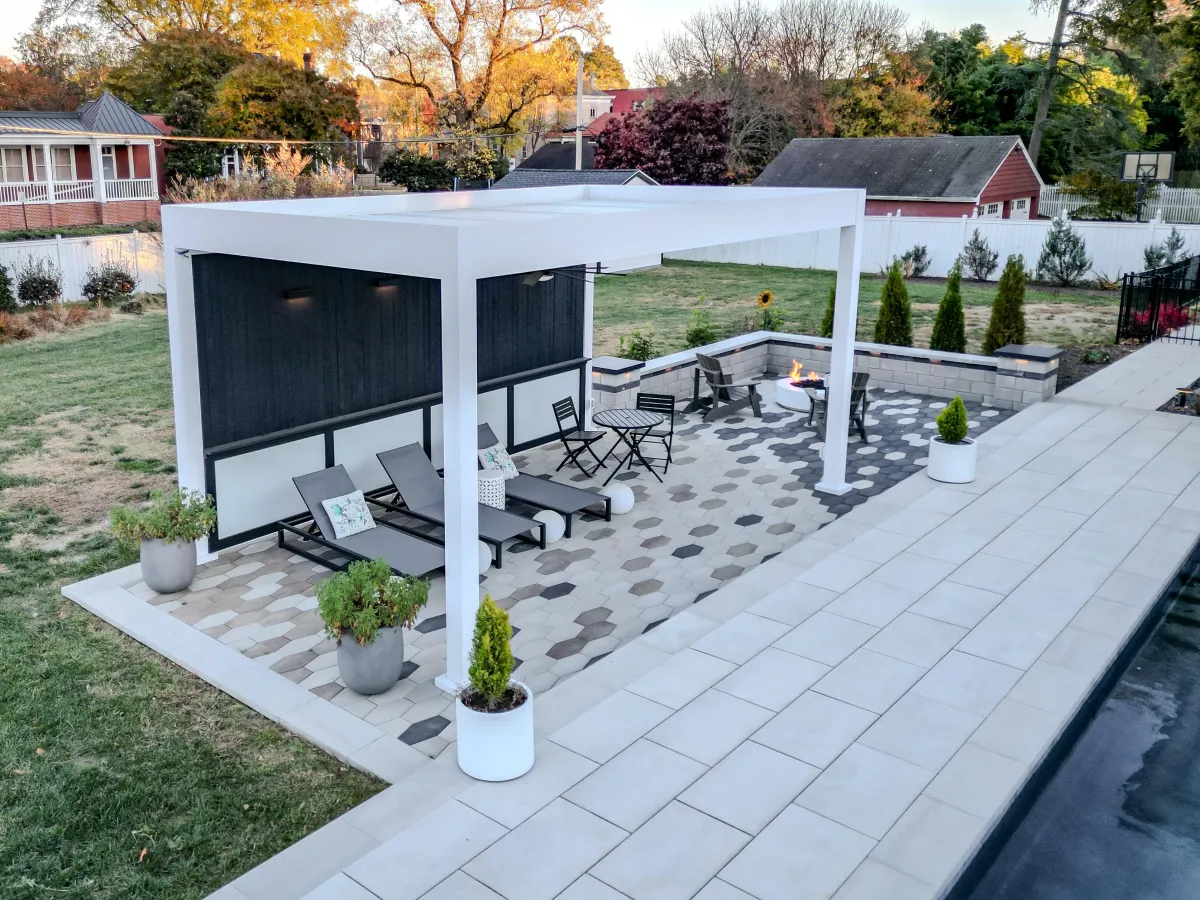
Enhance your Winter Springs outdoor living experience with a premium pergola installed by Florida Living Outdoor. Central and East the cost of Florida's, leading pergola contractor.
Our Winter Springs pergolas, crafted by Azenco-Outdoor, and possess the quality of European Manufacturing made right here in Florida. Each Resort Style Pergola are stylish outdoor structures; they are a lifestyle upgrade.
Our pergolas create the perfect blend of shade, comfort, and elegance, transforming your outdoor space into a year-round Functional outdoor space and haven.
The Florida Living Outdoor Advantage

Luxury Products
Each Awning is designed for Quality and we proudly install only premium grade product that function well in creating those outdoor spaces. MagnaTrack screens are designed to truly enhance your outdoor living experience and deliver trouble-free performance year after year.d long lasting beauty..

Local Experts
As a family-veteran-owned, faith-based business, our team brings a personal touch to every project. We care. Our goal is to ensure your satisfaction and deliver unmatched service and outdoor luxury spaces.

Extensive Experience
FL Outdoors possesses a track record of 26 years of serving major clients; our extensive experience speaks for itself. Trust our licensed Class A contractor services for excellence in installation and customer satisfaction.

Superior Service
At Florida Living Outdoor, white-glove service is our hallmark. Your job is to dream and let us create a smile. Out Educational We prioritize your needs, ensuring a hassle-free experience from consultation to installation.
Your Vision Deserves
A Partner
Who Cares...
SHADE AND PRIVACY
OTHER WINTER SPRINGS FLORIDA LIVING OUTDOOR PRODUCT LINES
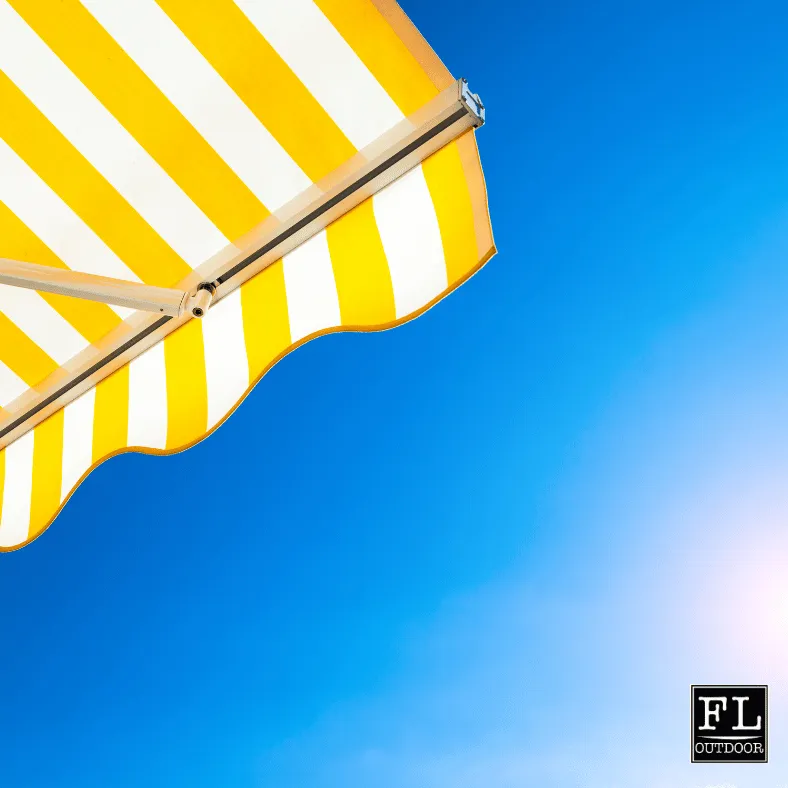
Retractable Awnings
Enjoy on-demand sun protection with retractable awnings, offering shade when you need it and open skies when you don't.
Motorized Awnings: Upgrade your outdoor space with motorized awnings, providing effortless sun protection at the touch of a button.
Commercial Awnings: Protect your business entrance or outdoor seating with commercial awnings designed for durability and superior sun protection.
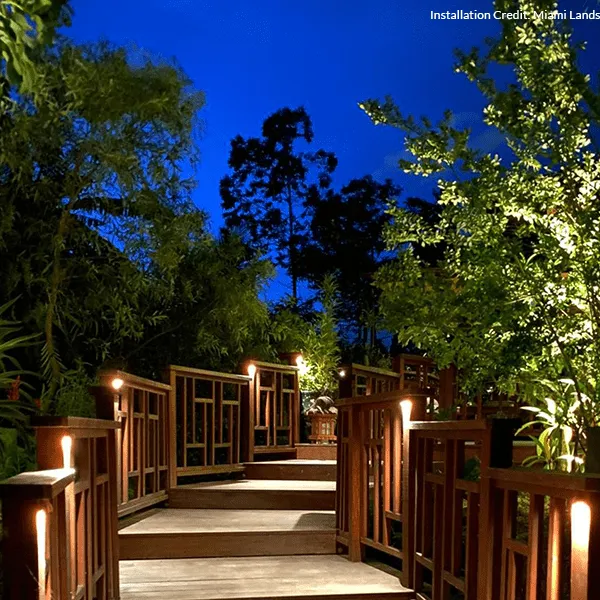
Garden LED Lights
At Florida Living Outdoors, we specialize in creating beautiful, customized outdoor lighting solutions.
We proudly serve homeowners and businesses across the Central Florida region, delivering high-quality installations with Garden Light LED products.
Whether you're looking to increase your home's security, boost curb appeal, or create a stunning outdoor ambiance, our team is here to bring your vision to life.
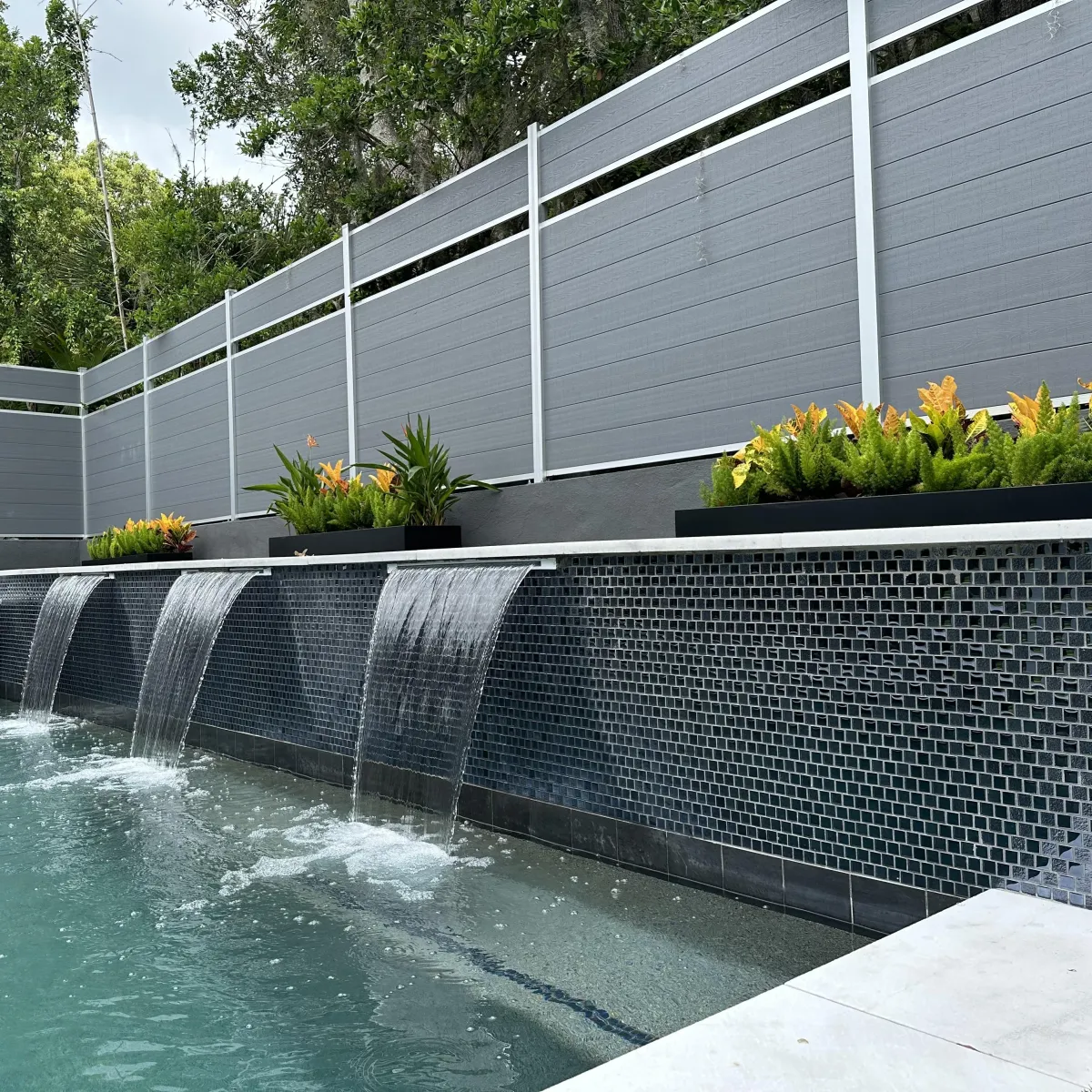
Custom Horizontal Fence
Florida Living Outdoors is Florida's Choice for Greenwood Fence. Greenwood is a distributor of high-quality modern European-style fencing for the residential, commercial, industrial, and agricultural sectors.
Need a fence that combines aesthetics with durability and requires very little maintenance? Welcome to wood plastic composite (WPC) fence solutions, an increasingly desirable, modern, and practical alternative to traditional fence options such as lumber.
The Florida Living Outdoor Advantage
Luxury Products
Each Awning is designed for Quality and we proudly install only premium grade product that function well in creating those outdoor spaces. MagnaTrack screens are designed to truly enhance your outdoor living experience and deliver trouble-free performance year after year.d long lasting beauty..
Local Experts
As a family-veteran-owned, faith-based business, our team brings a personal touch to every project. We care. Our goal is to ensure your satisfaction and deliver unmatched service and outdoor luxury spaces.
Extensive Experience
FL Outdoors possesses a track record of 26 years of serving major clients; our extensive experience speaks for itself. Trust our licensed Class A contractor services for excellence in installation and customer satisfaction.
Superior Service
At Florida Living Outdoor, white-glove service is our hallmark. Your job is to dream and let us create a smile. Out Educational We prioritize your needs, ensuring a hassle-free experience from consultation to installation.
SHADE AND PRIVACY
OTHER WINTER SPRINGS FLORIDA LIVING OUTDOOR PRODUCT LINES
Retractable Awnings
Enjoy on-demand sun protection with retractable awnings, offering shade when you need it and open skies when you don't.
Motorized Awnings: Upgrade your outdoor space with motorized awnings, providing effortless sun protection at the touch of a button.
Commercial Awnings: Protect your business entrance or outdoor seating with commercial awnings designed for durability and superior sun protection.
Garden LED Lights
At Florida Living Outdoors, we specialize in creating beautiful, customized outdoor lighting solutions.
We proudly serve homeowners and businesses across the Central Florida region, delivering high-quality installations with Garden Light LED products.
Whether you're looking to increase your home's security, boost curb appeal, or create a stunning outdoor ambiance, our team is here to bring your vision to life.
Custom Horizontal Fence
Florida Living Outdoors is Florida's Choice for Greenwood Fence. Greenwood is a distributor of high-quality modern European-style fencing for the residential, commercial, industrial, and agricultural sectors.
Need a fence that combines aesthetics with durability and requires very little maintenance? Welcome to wood plastic composite (WPC) fence solutions, an increasingly desirable, modern, and practical alternative to traditional fence options such as lumber.
Your Vision Deserves
A Partner
Who Cares...
SCHEDULE A FREE 20 MINUTE DESIGN CONSULT
Your Vision Deserves
A Partner
Who Delivers...
Your Vision Deserves
A Partner
Who Delivers...
No Mater Your Need.
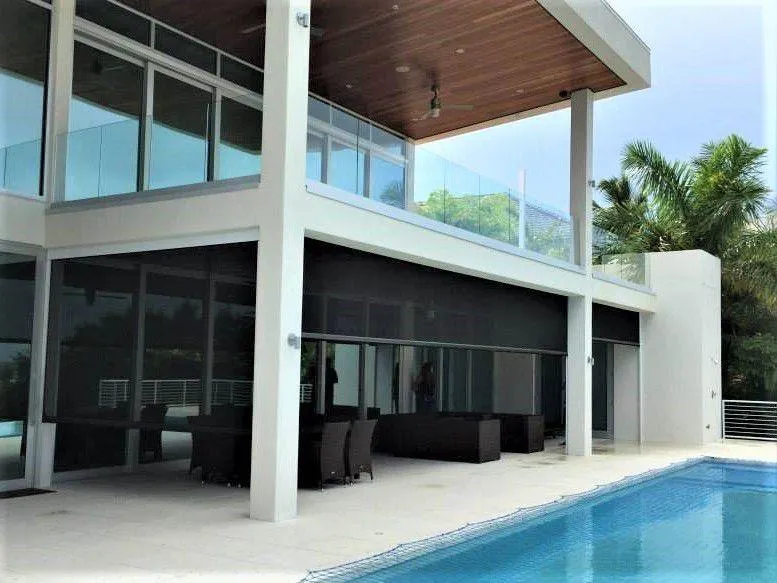
Residential Retractable Screen Application
It does not matter if you are trying to retrofit your existing patio or lanai or in the process of building your dream home- nothing beats enjoyable outdoor space.
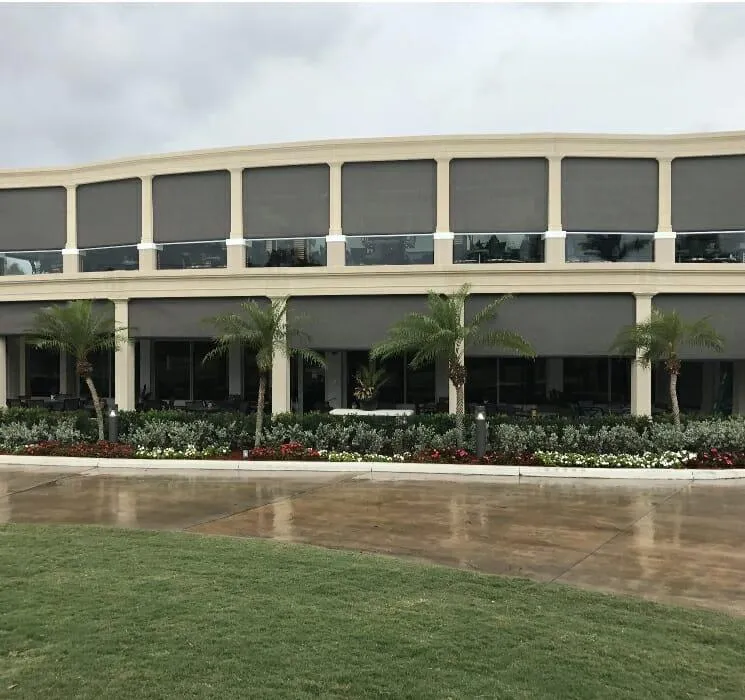
Commercial Screen Application
Made to your specifications to match any branding or themes you have. Large Buildings or Small American Light Can Show How Reduces Energy Cost
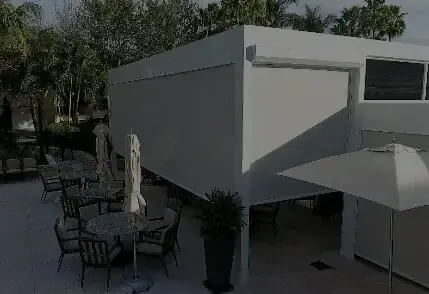
Hospitality Screen Application
Don't lose Revue when it rains. Motorized screens can span 26’ wide and 16’ tall, accommodating many openings.
FL Outdoor News
Stay up to date with the latest News.
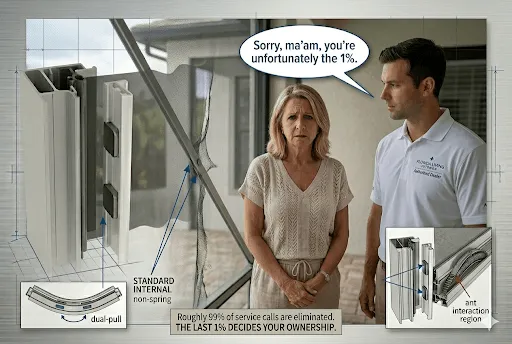
Motorized Screen Service Calls: How Both Systems Eliminate 99% — and Why the Last 1% Decides Year 10
Ninety-Nine Percent of Service Calls: How Both Systems Eliminate Them, and Why the Last One Percent Decides Your Ten-Year Warranty
For years, motorized screen service calls were a regular event. A bound track in year four. A strained motor at year six. A frayed fabric edge at year seven. A controller was water-damaged in year eight. Any homeowner who bought a motorized screen before 2015 has some version of this story, and so does any installer who was working the category back then. Then the free-floating articulating track category arrived, the category redesigned itself around magnetic pull and mechanical spring push, and the service-call economics changed almost overnight. Today, both leading engineered products in the premium segment eliminate roughly 99% of the service calls that used to be routine. This is not marketing. It is dealer experience across multiple years of field installations. The question is what lives in the last one percent — and why that rare one percent, more than the shared ninety-nine percent, decides how your ownership plays out across a fifteen-year horizon.
Roughly ninety-nine percent of motorized screen service calls disappear when a product uses three engineering principles: obstacle-detection motors, free-floating articulating tracks, and self-refeeding track alignment. Both OneTrack and MagnaTrack share these principles, and both products perform as promised in the field, which is why each publishes service-call elimination figures above 98%. The real question for a buyer is not which system eliminates more service calls. It is what happens in the rare one percent when a service call does occur, or when a replacement part is needed five, seven, or ten years into ownership. Here is what the math actually looks like.
The Three Shared Engineering Principles That Eliminate the 99%
Before the discussion about the last one percent makes sense, the shared ninety-nine percent has to be credited properly. Both OneTrack and MagnaTrack engineer around the same three principles, and it is the combination of all three — not any single one — that shuts down the service-call volume that once defined the category.
Obstacle-Detection Motors
The motor in a premium motorized screen is not a simple electric motor running on a timer. It is a smart motor that monitors the resistance it encounters during operation and halts the screen the moment something unexpected gets in the way. A cat on the track. A chair edge that the homeowner forgot about. A dog toy lodged in the channel. A branch that blew in overnight. Under the old rigid-track architecture, the motor would fight through these obstacles and either burn out or tear the fabric. Under modern obstacle-detection architecture, the motor stops, briefly reverses, and waits for the homeowner to clear the obstruction before completing the cycle. This one feature eliminates a measurable share of the service calls that used to come from fabric tears and motor burnout.
Both MagnaTrack and OneTrack use obstacle-detection motors sourced from the same small group of premium motor manufacturers that supply the European and American motorized-screen markets. The motor technology is not proprietary to either brand. It is a shared category standard that both manufacturers have folded into their current production.
Free-Floating Articulating Tracks
The engineering category we covered in Post 1 and broke down in detail in Post 2. The inner track flexes and reseats itself under wind or debris loads rather than resisting the force. MagnaTrack does this with neodymium magnets that pull the inner track back into alignment. OneTrack does this with precision compression springs pushing the inner track back. Both approaches produce the same functional outcome: the screen stops tearing at the edge, the motor stops straining against resistance that should not be there, and the service call that used to come at year four or five simply does not get made.
Self-Refeeding Track Alignment
This is the third principle and the one most homeowners have never heard of. When a screen is partly dislodged from its track — by wind, by a careless deployment, by a branch strike — both modern systems are engineered to self-correct as the screen rolls back up onto the roll tube. The screen does not wrap unevenly. It does not bunch. It does not require the installer to climb up and re-thread anything. The next time the homeowner operates the screen, the system realigns itself within the first full cycle. This eliminates a significant share of what was once called "the annual maintenance call" in the motorized-screen service economy.
Three engineering principles. Both products use all three. The ninety-nine percent service-call elimination figure is defensible for both, and for the same reason on both sides.
Why Both Published Figures Are Defensible — and What the Field Record Shows
Progressive Screens reports approximately 98% service-call elimination for MagnaTrack. Fenetex publishes approximately ninety-nine percent for OneTrack. Both figures are real. Both are defensible. The one-percent delta falls within the statistical noise of real-world installation variability — a rounding error in how each manufacturer collects field data, not a meaningful performance differential.
I own and operate Florida Living Outdoor. We install both MagnaTrack and OneTrack across Central and South Florida, across multiple years and hundreds of installations. I will tell you directly what the field record shows. Both products perform. Service calls on both are rare. Rare enough that when a call does come in, it is usually not about the track mechanism at all — it is a power-line interruption resetting a controller, or a remote pairing that drifted in an electrical storm, or a storm debris strike that bent a weight bar, or a house cat that wedged a toy into a track channel. The self-correcting tracks, on both products, do what the engineering claims. The obstacle-detection motors work. The self-refeeding alignment works.
When you install both brands over time, you stop thinking of service-call rate as a brand-level question. You start thinking of it as a category question that both brands have answered. Which is why the real question for a buyer is not which system eliminates more service calls. The right question is what happens in the rare one percent of cases when a service call occurs, or when a replacement part is needed five, seven, or ten years into ownership. That question has a different answer for each brand, and the difference is where the fifteen-year ownership experience actually lives.
What the Rare 1% Actually Looks Like
Set aside the shared ninety-nine percent and look closely at the one percent. What kinds of service events land there?
Four categories cover most of the remaining volume. The first is motor end-of-life — every motor has a duty cycle, and a motor installed in year zero will need replacement somewhere between year eight and year fifteen, depending on how heavily the screen is used. The second is physical damage from external events — a palm frond strike, a construction-site impact during a kitchen remodel ten years after the screen was installed, or an unusual storm. The third is clear vinyl fabric UV breakdown — the fabric itself has a service life shorter than the aluminum structure, and clear vinyl in particular needs replacement at some point during the ownership window. The fourth is electronic controller failure — the motor itself lasts a long time, but the receiver, the remote, and occasionally the wall switch take the abuse that Florida homes are known for.
None of these four categories is a failure of the free-floating articulating track engineering. They are what normal durable-goods ownership looks like on any premium outdoor product over a ten-to-fifteen-year window. The shared ninety-nine percent has eliminated the track-mechanism failures that once defined the category. What is left is the ordinary wear of components that have their own service lives independent of the track design.
And this is where the two product families diverge. Because when a motor has to be replaced, a weight bar has to be replaced, a fabric panel has to be re-ordered, or a controller has to be swapped, the question is: can you get the specific part your system was built with, ten years after you bought it?
Why Parts Availability at Year 5, 7, and 10 Is the Decisive Variable
Parts availability is the ownership variable that most motorized screen shoppers never think to ask about, and it is the one that determines whether the lifetime warranty on the aluminum means anything. If the part you need in year ten is still being manufactured, the repair is a few hundred dollars and an afternoon. If the part has been discontinued, the repair becomes either a full system upgrade or a non-OEM substitution that may or may not be compatible with the rest of your installation.
This is where the engineering discipline of the manufacturer's design philosophy — the subject of Post 4 — becomes the difference between a three-hundred-dollar repair and a three-thousand-dollar system upgrade. And it is where the warranty contract language from Post 3 earns its seat at the table in this post.
The Direct Fenetex Warranty Evidence
Fenetex's OneTrack warranty (Revision 03.08.2023) includes the specific sentence we covered in Post 3, and it applies directly to the parts-availability question:
"Lifetime means as long as the system or compatible systems are in production and parts are available."
This is the backward-compatibility commitment written directly into the warranty contract. The manufacturer cannot quietly obsolete your system without voiding its own warranty. New product iterations must remain compatible with older units. Parts must be kept in production. Both conditions must be met for the lifetime warranty to remain enforceable, and both are enforced by the contract language itself.
For a homeowner whose motorized screen was installed in 2018 and needs a replacement weight bar in 2028, the Fenetex language means the answer at the dealer's parts desk is simple. The weight bar that shipped in 2018 is still being produced in 2028, because the current production line is engineered to stay compatible with older units. The manufacturer's warranty requires it.
The MagnaTrack Generation History — What the Record Shows
MagnaTrack's product family has followed a different path. The current production specification is documented in the Progressive Screens 2023 Generation 4 CAD dated 08.16.23 — the engineering reference every Progressive Screens dealer uses to specify current-production MagnaTrack installations. This is a Generation 4 product. There have been earlier generations of MagnaTrack, and the history of those generations matters for anyone whose MagnaTrack installation is more than a few years old.
From the dealer service desk: parts for Generation 1 and Generation 2 MagnaTrack units are no longer manufactured. Installations from those earlier generations, if they need component-level service today, cannot source original OEM parts from Progressive Screens' current production line. Generation 3 MagnaTrack units are in a more complicated position — certain components can be replaced with current production parts, but the track, weight bar, and screen often need to be upgraded together to remain serviceable, because the dimensional tolerances shifted between generations.
None of this is a criticism of Progressive Screens. Every manufacturer in a still-maturing category makes its own decisions about how to evolve the product across generations, and Progressive Screens has made its choices for engineering and business reasons. What it means for a homeowner is that the age of the specific MagnaTrack installation, not just the brand name, determines which service options will be available at year ten.
For an owner of a current-generation MagnaTrack installed in 2024 or later, parts availability at year ten will be determined by Progressive Screens' decisions over the next decade regarding Generation 5 or future redesigns. For an owner of an older generation, the parts-availability question is already being answered by the current production catalog.
The Fenetex warranty language structurally ties the manufacturer's hands. The MagnaTrack warranty does not contain equivalent language, and the manufacturer retains the engineering freedom to continue its generational-redesign approach. Both approaches are legitimate. Both have trade-offs. The trade-off a homeowner should weigh is how that choice plays out over a 15-year ownership period.
The 15-Year Warranty Differential Math
This is where the specific warranty terms compound. Some of this we covered in Post 3 and some we will carry into Post 8 on total cost of ownership . Here is the summary at the warranty-coverage level.
Aluminum coverage: OneTrack is lifetime, non-prorated, and tied to parts availability commitment. MagnaTrack is lifetime prorated after two years — the homeowner's prorated share of any aluminum replacement cost increases each year after year two.
Electronic controls coverage: OneTrack is five years. MagnaTrack is two years. Controller failures at year three, four, or five are the homeowner's cost on MagnaTrack and the manufacturer's cost on OneTrack.
Clear vinyl fabric coverage: OneTrack is three years. MagnaTrack is one year. Clear vinyl is one of the most common fabric-replacement events across the ownership window, and the gap between one year and three years compounds meaningfully.
Hurricane fabric coverage: Both brands cover hurricane fabric for ten years. This is a genuine parity point — the most expensive fabric category gets identical coverage from both manufacturers.
Across a fifteen-year ownership horizon, these coverage differences compound into real out-of-pocket dollars at specific years — year three (controller), year four (clear vinyl), year seven (controller replacement cycle), year ten (aluminum service events, where the prorate clock has been running for eight years on the MagnaTrack warranty). The full TCO math lives in Post 8. The framework for reading those numbers starts here.
About the Author
Kip Hudakoz is the owner of Florida Living Outdoor LLC, a BBB A+ accredited, veteran-owned Florida outdoor services company specializing in motorized screens, retractable awnings, and pergola systems. Kip has spent twenty-six years in the Florida outdoor services industry, operating companies in Central Florida and South Florida. He is also the owner of Paramount Fencing and Custom Fence Orlando, and was a former co-host of "Ask the Experts" on News 96.5 Florida Home and Garden. Florida Living Outdoor was founded in December 2021 and earned its BBB A+ accreditation in October 2024. The company installs and services both MagnaTrack and OneTrack motorized screen systems across Central and South Florida.
Frequently Asked Questions
How often do motorized screens need repairs?
Premium motorized screens with free-floating articulating tracks, obstacle-detection motors, and self-refeeding alignment — the three shared engineering principles behind both OneTrack and MagnaTrack — eliminate approximately ninety-nine percent of the service calls that used to be routine on older rigid-track and zipper systems. In practice, service calls on modern premium systems are rare events, usually tied to electrical system disruptions, physical damage from external events, or normal end-of-life component replacement after a decade or more of use.
What percentage of service calls do modern motorized screens eliminate?
Both OneTrack and MagnaTrack publish service-call elimination figures above ninety-eight percent. Fenetex publishes approximately ninety-nine percent for OneTrack. Progressive Screens publishes approximately ninety-eight percent for MagnaTrack. Both figures are defensible and both rest on the same underlying engineering — obstacle-detection motors, free-floating articulating tracks, and self-refeeding track alignment. The one-percent difference between the two figures is statistical noise inside the real-world installation variability band.
What kinds of service events happen in the remaining 1%?
Four categories account for most rare service events. Aged motor end-of-life, typically between years eight and fifteen. Physical damage from outside events — debris strikes, construction-site impacts, unusual storm events. Clear vinyl fabric UV breakdown, which has a shorter service life than the aluminum structure. And electronic controller failure, where receivers and remotes are subject to electrical-system abuse.
Will I be able to get replacement parts for my motorized screen in year 10?
The answer depends on the manufacturer's design philosophy and warranty contract language. Fenetex's OneTrack warranty ties the lifetime aluminum coverage to parts-availability and backward-compatibility commitments written directly into the contract — the specific phrase is "lifetime means as long as the system or compatible systems are in production and parts are available." Progressive Screens' MagnaTrack warranty is a more conventional structure without equivalent forward-compatibility language; parts availability depends on which product generation was installed and whether that generation is still in production.
How long do motorized screens last?
A well-specified premium motorized screen on a free-floating, articulating-track architecture should last 15 years or more under normal residential use. Both OneTrack and MagnaTrack deliver that service life in the field. The older zipper-track and rigid-track systems that preceded the current category commonly failed in years four through six, which is why the category redesigned itself around articulating tracks.
What is the warranty difference between OneTrack and MagnaTrack?
The major differences are in coverage duration and prorate structure. Aluminum coverage: OneTrack is lifetime, non-prorated, and tied to parts availability; MagnaTrack is lifetime, prorated after two years. Electronic controls: OneTrack five years, MagnaTrack two years. Clear vinyl: OneTrack three years, MagnaTrack one year. Hurricane fabric: both ten years. Labor is the installer's responsibility on both. The full warranty text is available from both manufacturers, and every buyer should read both documents in full.
Can Progressive Screens still service older MagnaTrack generations?
Progressive Screens' current production specification is Generation 4, documented in the 2023 Gen 4 CAD. Parts for Generation 1 and Generation 2 installations are no longer manufactured, meaning component-level service on those older installations cannot source original OEM parts from the current production line. Generation 3 installations often require track, weight bar, and screen components to be upgraded together to remain serviceable. Homeowners with older MagnaTrack installations should confirm the specific service options available for their unit with a qualified installer before assuming parts remain in production.
Ready to Walk Through the 15-Year Math on Your Own Project?
To see exactly what service-call economics and parts availability look like across both product families — with the specific warranty text in hand and the field-service record from our own installations — contact Florida Living Outdoor for a free in-home consultation in Central or South Florida. We install and service both MagnaTrack and OneTrack, and we will walk you through the numbers directly.
Sources and Further Reading
Fenetex / OneTrack — manufacturer of OneTrack motorized screens. https://onetrackscreens.com
Fenetex Warranty Rev 03.08.2023 — source document for the "lifetime means as long as the system or compatible systems are in production and parts are available" language quoted in this post.
Progressive Screens (a Hunter Douglas Company) — manufacturer of MagnaTrack. https://progressivescreens.com
Progressive Screens 2023 Generation 4 CAD (dated 08.16.23) — current production engineering specification for MagnaTrack; generational history reference for Generation 1–3 obsolescence.
US Patent 9,719,292 — MagnaTrack magnetic track system. https://patents.google.com/patent/US9719292
US Patent 11,421,474 — MagnaTrack continuation patent. https://patents.google.com/patent/US11421474
Florida Product Approval F30798 — MagnaTrack Defender hurricane screen. https://www.floridabuilding.org
Florida Product Approval FL8637 — Fenetex MaxForce hurricane screen. https://www.floridabuilding.org
Hunter Douglas acquisition of Progressive Screens (2020) — public corporate record. https://www.hunterdouglas.com
Florida Living Outdoor LLC — installer and service provider for both MagnaTrack and OneTrack systems in Central and South Florida, with direct field experience across multiple years and hundreds of installations referenced in this post. https://floridalivingoutdoor.com

Motorized Screen Service Calls: How Both Systems Eliminate 99% — and Why the Last 1% Decides Year 10
Ninety-Nine Percent of Service Calls: How Both Systems Eliminate Them, and Why the Last One Percent Decides Your Ten-Year Warranty
For years, motorized screen service calls were a regular event. A bound track in year four. A strained motor at year six. A frayed fabric edge at year seven. A controller was water-damaged in year eight. Any homeowner who bought a motorized screen before 2015 has some version of this story, and so does any installer who was working the category back then. Then the free-floating articulating track category arrived, the category redesigned itself around magnetic pull and mechanical spring push, and the service-call economics changed almost overnight. Today, both leading engineered products in the premium segment eliminate roughly 99% of the service calls that used to be routine. This is not marketing. It is dealer experience across multiple years of field installations. The question is what lives in the last one percent — and why that rare one percent, more than the shared ninety-nine percent, decides how your ownership plays out across a fifteen-year horizon.
Roughly ninety-nine percent of motorized screen service calls disappear when a product uses three engineering principles: obstacle-detection motors, free-floating articulating tracks, and self-refeeding track alignment. Both OneTrack and MagnaTrack share these principles, and both products perform as promised in the field, which is why each publishes service-call elimination figures above 98%. The real question for a buyer is not which system eliminates more service calls. It is what happens in the rare one percent when a service call does occur, or when a replacement part is needed five, seven, or ten years into ownership. Here is what the math actually looks like.
The Three Shared Engineering Principles That Eliminate the 99%
Before the discussion about the last one percent makes sense, the shared ninety-nine percent has to be credited properly. Both OneTrack and MagnaTrack engineer around the same three principles, and it is the combination of all three — not any single one — that shuts down the service-call volume that once defined the category.
Obstacle-Detection Motors
The motor in a premium motorized screen is not a simple electric motor running on a timer. It is a smart motor that monitors the resistance it encounters during operation and halts the screen the moment something unexpected gets in the way. A cat on the track. A chair edge that the homeowner forgot about. A dog toy lodged in the channel. A branch that blew in overnight. Under the old rigid-track architecture, the motor would fight through these obstacles and either burn out or tear the fabric. Under modern obstacle-detection architecture, the motor stops, briefly reverses, and waits for the homeowner to clear the obstruction before completing the cycle. This one feature eliminates a measurable share of the service calls that used to come from fabric tears and motor burnout.
Both MagnaTrack and OneTrack use obstacle-detection motors sourced from the same small group of premium motor manufacturers that supply the European and American motorized-screen markets. The motor technology is not proprietary to either brand. It is a shared category standard that both manufacturers have folded into their current production.
Free-Floating Articulating Tracks
The engineering category we covered in Post 1 and broke down in detail in Post 2. The inner track flexes and reseats itself under wind or debris loads rather than resisting the force. MagnaTrack does this with neodymium magnets that pull the inner track back into alignment. OneTrack does this with precision compression springs pushing the inner track back. Both approaches produce the same functional outcome: the screen stops tearing at the edge, the motor stops straining against resistance that should not be there, and the service call that used to come at year four or five simply does not get made.
Self-Refeeding Track Alignment
This is the third principle and the one most homeowners have never heard of. When a screen is partly dislodged from its track — by wind, by a careless deployment, by a branch strike — both modern systems are engineered to self-correct as the screen rolls back up onto the roll tube. The screen does not wrap unevenly. It does not bunch. It does not require the installer to climb up and re-thread anything. The next time the homeowner operates the screen, the system realigns itself within the first full cycle. This eliminates a significant share of what was once called "the annual maintenance call" in the motorized-screen service economy.
Three engineering principles. Both products use all three. The ninety-nine percent service-call elimination figure is defensible for both, and for the same reason on both sides.
Why Both Published Figures Are Defensible — and What the Field Record Shows
Progressive Screens reports approximately 98% service-call elimination for MagnaTrack. Fenetex publishes approximately ninety-nine percent for OneTrack. Both figures are real. Both are defensible. The one-percent delta falls within the statistical noise of real-world installation variability — a rounding error in how each manufacturer collects field data, not a meaningful performance differential.
I own and operate Florida Living Outdoor. We install both MagnaTrack and OneTrack across Central and South Florida, across multiple years and hundreds of installations. I will tell you directly what the field record shows. Both products perform. Service calls on both are rare. Rare enough that when a call does come in, it is usually not about the track mechanism at all — it is a power-line interruption resetting a controller, or a remote pairing that drifted in an electrical storm, or a storm debris strike that bent a weight bar, or a house cat that wedged a toy into a track channel. The self-correcting tracks, on both products, do what the engineering claims. The obstacle-detection motors work. The self-refeeding alignment works.
When you install both brands over time, you stop thinking of service-call rate as a brand-level question. You start thinking of it as a category question that both brands have answered. Which is why the real question for a buyer is not which system eliminates more service calls. The right question is what happens in the rare one percent of cases when a service call occurs, or when a replacement part is needed five, seven, or ten years into ownership. That question has a different answer for each brand, and the difference is where the fifteen-year ownership experience actually lives.
What the Rare 1% Actually Looks Like
Set aside the shared ninety-nine percent and look closely at the one percent. What kinds of service events land there?
Four categories cover most of the remaining volume. The first is motor end-of-life — every motor has a duty cycle, and a motor installed in year zero will need replacement somewhere between year eight and year fifteen, depending on how heavily the screen is used. The second is physical damage from external events — a palm frond strike, a construction-site impact during a kitchen remodel ten years after the screen was installed, or an unusual storm. The third is clear vinyl fabric UV breakdown — the fabric itself has a service life shorter than the aluminum structure, and clear vinyl in particular needs replacement at some point during the ownership window. The fourth is electronic controller failure — the motor itself lasts a long time, but the receiver, the remote, and occasionally the wall switch take the abuse that Florida homes are known for.
None of these four categories is a failure of the free-floating articulating track engineering. They are what normal durable-goods ownership looks like on any premium outdoor product over a ten-to-fifteen-year window. The shared ninety-nine percent has eliminated the track-mechanism failures that once defined the category. What is left is the ordinary wear of components that have their own service lives independent of the track design.
And this is where the two product families diverge. Because when a motor has to be replaced, a weight bar has to be replaced, a fabric panel has to be re-ordered, or a controller has to be swapped, the question is: can you get the specific part your system was built with, ten years after you bought it?
Why Parts Availability at Year 5, 7, and 10 Is the Decisive Variable
Parts availability is the ownership variable that most motorized screen shoppers never think to ask about, and it is the one that determines whether the lifetime warranty on the aluminum means anything. If the part you need in year ten is still being manufactured, the repair is a few hundred dollars and an afternoon. If the part has been discontinued, the repair becomes either a full system upgrade or a non-OEM substitution that may or may not be compatible with the rest of your installation.
This is where the engineering discipline of the manufacturer's design philosophy — the subject of Post 4 — becomes the difference between a three-hundred-dollar repair and a three-thousand-dollar system upgrade. And it is where the warranty contract language from Post 3 earns its seat at the table in this post.
The Direct Fenetex Warranty Evidence
Fenetex's OneTrack warranty (Revision 03.08.2023) includes the specific sentence we covered in Post 3, and it applies directly to the parts-availability question:
"Lifetime means as long as the system or compatible systems are in production and parts are available."
This is the backward-compatibility commitment written directly into the warranty contract. The manufacturer cannot quietly obsolete your system without voiding its own warranty. New product iterations must remain compatible with older units. Parts must be kept in production. Both conditions must be met for the lifetime warranty to remain enforceable, and both are enforced by the contract language itself.
For a homeowner whose motorized screen was installed in 2018 and needs a replacement weight bar in 2028, the Fenetex language means the answer at the dealer's parts desk is simple. The weight bar that shipped in 2018 is still being produced in 2028, because the current production line is engineered to stay compatible with older units. The manufacturer's warranty requires it.
The MagnaTrack Generation History — What the Record Shows
MagnaTrack's product family has followed a different path. The current production specification is documented in the Progressive Screens 2023 Generation 4 CAD dated 08.16.23 — the engineering reference every Progressive Screens dealer uses to specify current-production MagnaTrack installations. This is a Generation 4 product. There have been earlier generations of MagnaTrack, and the history of those generations matters for anyone whose MagnaTrack installation is more than a few years old.
From the dealer service desk: parts for Generation 1 and Generation 2 MagnaTrack units are no longer manufactured. Installations from those earlier generations, if they need component-level service today, cannot source original OEM parts from Progressive Screens' current production line. Generation 3 MagnaTrack units are in a more complicated position — certain components can be replaced with current production parts, but the track, weight bar, and screen often need to be upgraded together to remain serviceable, because the dimensional tolerances shifted between generations.
None of this is a criticism of Progressive Screens. Every manufacturer in a still-maturing category makes its own decisions about how to evolve the product across generations, and Progressive Screens has made its choices for engineering and business reasons. What it means for a homeowner is that the age of the specific MagnaTrack installation, not just the brand name, determines which service options will be available at year ten.
For an owner of a current-generation MagnaTrack installed in 2024 or later, parts availability at year ten will be determined by Progressive Screens' decisions over the next decade regarding Generation 5 or future redesigns. For an owner of an older generation, the parts-availability question is already being answered by the current production catalog.
The Fenetex warranty language structurally ties the manufacturer's hands. The MagnaTrack warranty does not contain equivalent language, and the manufacturer retains the engineering freedom to continue its generational-redesign approach. Both approaches are legitimate. Both have trade-offs. The trade-off a homeowner should weigh is how that choice plays out over a 15-year ownership period.
The 15-Year Warranty Differential Math
This is where the specific warranty terms compound. Some of this we covered in Post 3 and some we will carry into Post 8 on total cost of ownership . Here is the summary at the warranty-coverage level.
Aluminum coverage: OneTrack is lifetime, non-prorated, and tied to parts availability commitment. MagnaTrack is lifetime prorated after two years — the homeowner's prorated share of any aluminum replacement cost increases each year after year two.
Electronic controls coverage: OneTrack is five years. MagnaTrack is two years. Controller failures at year three, four, or five are the homeowner's cost on MagnaTrack and the manufacturer's cost on OneTrack.
Clear vinyl fabric coverage: OneTrack is three years. MagnaTrack is one year. Clear vinyl is one of the most common fabric-replacement events across the ownership window, and the gap between one year and three years compounds meaningfully.
Hurricane fabric coverage: Both brands cover hurricane fabric for ten years. This is a genuine parity point — the most expensive fabric category gets identical coverage from both manufacturers.
Across a fifteen-year ownership horizon, these coverage differences compound into real out-of-pocket dollars at specific years — year three (controller), year four (clear vinyl), year seven (controller replacement cycle), year ten (aluminum service events, where the prorate clock has been running for eight years on the MagnaTrack warranty). The full TCO math lives in Post 8. The framework for reading those numbers starts here.
About the Author
Kip Hudakoz is the owner of Florida Living Outdoor LLC, a BBB A+ accredited, veteran-owned Florida outdoor services company specializing in motorized screens, retractable awnings, and pergola systems. Kip has spent twenty-six years in the Florida outdoor services industry, operating companies in Central Florida and South Florida. He is also the owner of Paramount Fencing and Custom Fence Orlando, and was a former co-host of "Ask the Experts" on News 96.5 Florida Home and Garden. Florida Living Outdoor was founded in December 2021 and earned its BBB A+ accreditation in October 2024. The company installs and services both MagnaTrack and OneTrack motorized screen systems across Central and South Florida.
Frequently Asked Questions
How often do motorized screens need repairs?
Premium motorized screens with free-floating articulating tracks, obstacle-detection motors, and self-refeeding alignment — the three shared engineering principles behind both OneTrack and MagnaTrack — eliminate approximately ninety-nine percent of the service calls that used to be routine on older rigid-track and zipper systems. In practice, service calls on modern premium systems are rare events, usually tied to electrical system disruptions, physical damage from external events, or normal end-of-life component replacement after a decade or more of use.
What percentage of service calls do modern motorized screens eliminate?
Both OneTrack and MagnaTrack publish service-call elimination figures above ninety-eight percent. Fenetex publishes approximately ninety-nine percent for OneTrack. Progressive Screens publishes approximately ninety-eight percent for MagnaTrack. Both figures are defensible and both rest on the same underlying engineering — obstacle-detection motors, free-floating articulating tracks, and self-refeeding track alignment. The one-percent difference between the two figures is statistical noise inside the real-world installation variability band.
What kinds of service events happen in the remaining 1%?
Four categories account for most rare service events. Aged motor end-of-life, typically between years eight and fifteen. Physical damage from outside events — debris strikes, construction-site impacts, unusual storm events. Clear vinyl fabric UV breakdown, which has a shorter service life than the aluminum structure. And electronic controller failure, where receivers and remotes are subject to electrical-system abuse.
Will I be able to get replacement parts for my motorized screen in year 10?
The answer depends on the manufacturer's design philosophy and warranty contract language. Fenetex's OneTrack warranty ties the lifetime aluminum coverage to parts-availability and backward-compatibility commitments written directly into the contract — the specific phrase is "lifetime means as long as the system or compatible systems are in production and parts are available." Progressive Screens' MagnaTrack warranty is a more conventional structure without equivalent forward-compatibility language; parts availability depends on which product generation was installed and whether that generation is still in production.
How long do motorized screens last?
A well-specified premium motorized screen on a free-floating, articulating-track architecture should last 15 years or more under normal residential use. Both OneTrack and MagnaTrack deliver that service life in the field. The older zipper-track and rigid-track systems that preceded the current category commonly failed in years four through six, which is why the category redesigned itself around articulating tracks.
What is the warranty difference between OneTrack and MagnaTrack?
The major differences are in coverage duration and prorate structure. Aluminum coverage: OneTrack is lifetime, non-prorated, and tied to parts availability; MagnaTrack is lifetime, prorated after two years. Electronic controls: OneTrack five years, MagnaTrack two years. Clear vinyl: OneTrack three years, MagnaTrack one year. Hurricane fabric: both ten years. Labor is the installer's responsibility on both. The full warranty text is available from both manufacturers, and every buyer should read both documents in full.
Can Progressive Screens still service older MagnaTrack generations?
Progressive Screens' current production specification is Generation 4, documented in the 2023 Gen 4 CAD. Parts for Generation 1 and Generation 2 installations are no longer manufactured, meaning component-level service on those older installations cannot source original OEM parts from the current production line. Generation 3 installations often require track, weight bar, and screen components to be upgraded together to remain serviceable. Homeowners with older MagnaTrack installations should confirm the specific service options available for their unit with a qualified installer before assuming parts remain in production.
Ready to Walk Through the 15-Year Math on Your Own Project?
To see exactly what service-call economics and parts availability look like across both product families — with the specific warranty text in hand and the field-service record from our own installations — contact Florida Living Outdoor for a free in-home consultation in Central or South Florida. We install and service both MagnaTrack and OneTrack, and we will walk you through the numbers directly.
Sources and Further Reading
Fenetex / OneTrack — manufacturer of OneTrack motorized screens. https://onetrackscreens.com
Fenetex Warranty Rev 03.08.2023 — source document for the "lifetime means as long as the system or compatible systems are in production and parts are available" language quoted in this post.
Progressive Screens (a Hunter Douglas Company) — manufacturer of MagnaTrack. https://progressivescreens.com
Progressive Screens 2023 Generation 4 CAD (dated 08.16.23) — current production engineering specification for MagnaTrack; generational history reference for Generation 1–3 obsolescence.
US Patent 9,719,292 — MagnaTrack magnetic track system. https://patents.google.com/patent/US9719292
US Patent 11,421,474 — MagnaTrack continuation patent. https://patents.google.com/patent/US11421474
Florida Product Approval F30798 — MagnaTrack Defender hurricane screen. https://www.floridabuilding.org
Florida Product Approval FL8637 — Fenetex MaxForce hurricane screen. https://www.floridabuilding.org
Hunter Douglas acquisition of Progressive Screens (2020) — public corporate record. https://www.hunterdouglas.com
Florida Living Outdoor LLC — installer and service provider for both MagnaTrack and OneTrack systems in Central and South Florida, with direct field experience across multiple years and hundreds of installations referenced in this post. https://floridalivingoutdoor.com
Your Vision Deserves
A Partner,
Not Just A Vendor
Your Vision Deserves
A Partner,
Not Just A Vendor
COMPANY
MOTORIZED SCREENS
SHADE SOLUTIONS
FENCING & LIGHTING
DESIGN IDEAS
SUPPORT



Copyright 2026. FL OUTDOOR. All Rights Reserved.
Powered and Built By