
MOTORIZED SCREENS
Florida Living Outdoor 365 Weather, Sun, & Insect Protection
Frustrated every time your patio feels unusable?
Every season brings its challenges. Bugs swarm your evenings, the sun turns your patio into an oven, and storms or cold weather force you inside. It shouldn't be this hard to enjoy your outdoor space. Your patio should be your escape, not a source of stress.
Not all motorized screens are built the same
OneTrack's patented Lock Tight Keder system eliminates zippers, gaps, and failures. Deploy protection at the touch of a button. Trust American engineering. Rely on a lifetime warranty that actually means something.
MOTORIZED SCREEN SOLUTIONS
Year - Round Protections
Does Mother Nature spend more time on your patio and lanai then you do? Take it back. Maximize and extend your outdoor living space with MagnaTrack and Florida Living Outdoor. The Residential Series offers year-round protection from storms, insects, sun and glare, and much more. while providing the quality.

Sun

Insect

Wind

Privacy

Hurricane
Your Vision Deserves
A Partner
Who Listens...
Frustrated every time your patio feels unusable?
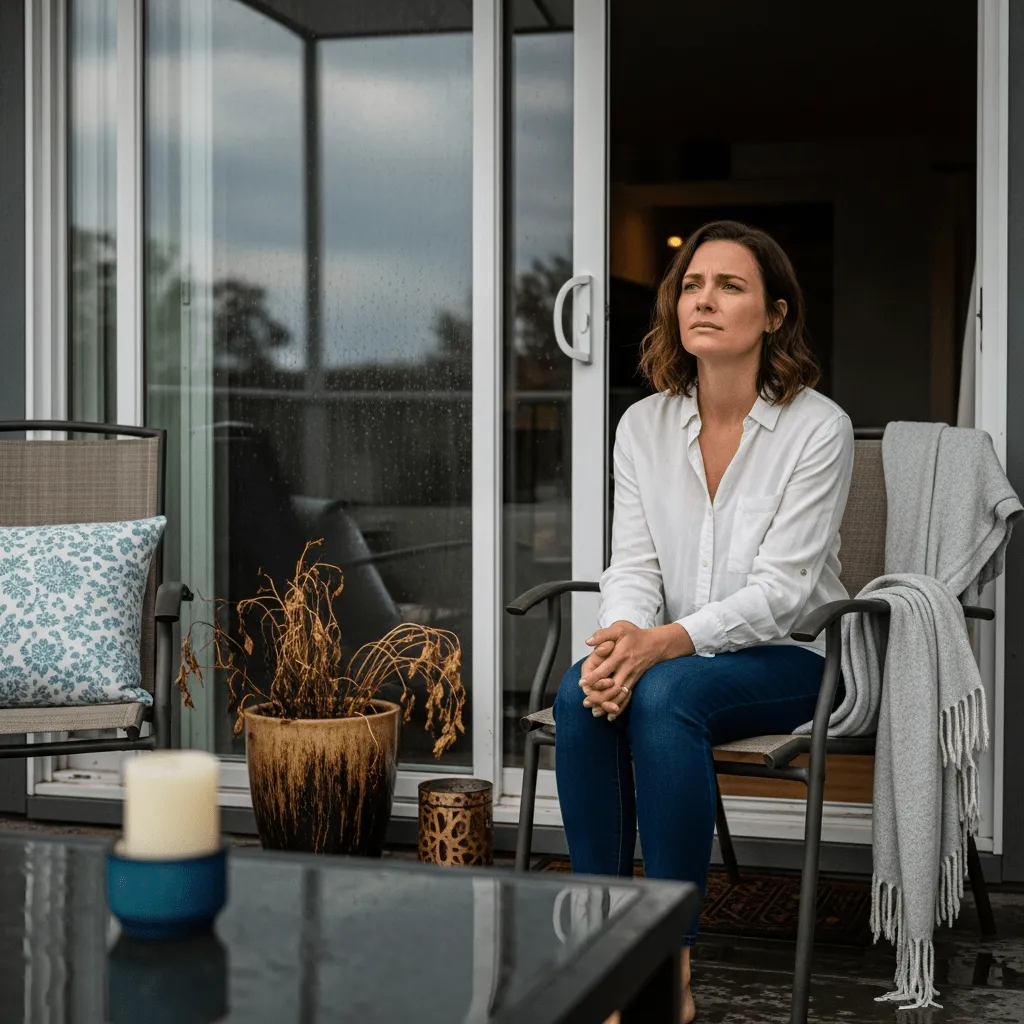
Every season brings its challenges. Bugs swarm your evenings, the sun turns your patio into an oven, and storms or cold weather force you inside. It shouldn't be this hard to enjoy your outdoor space. Your patio should be your escape, not a source of stress.
Not all motorized screens are built the same
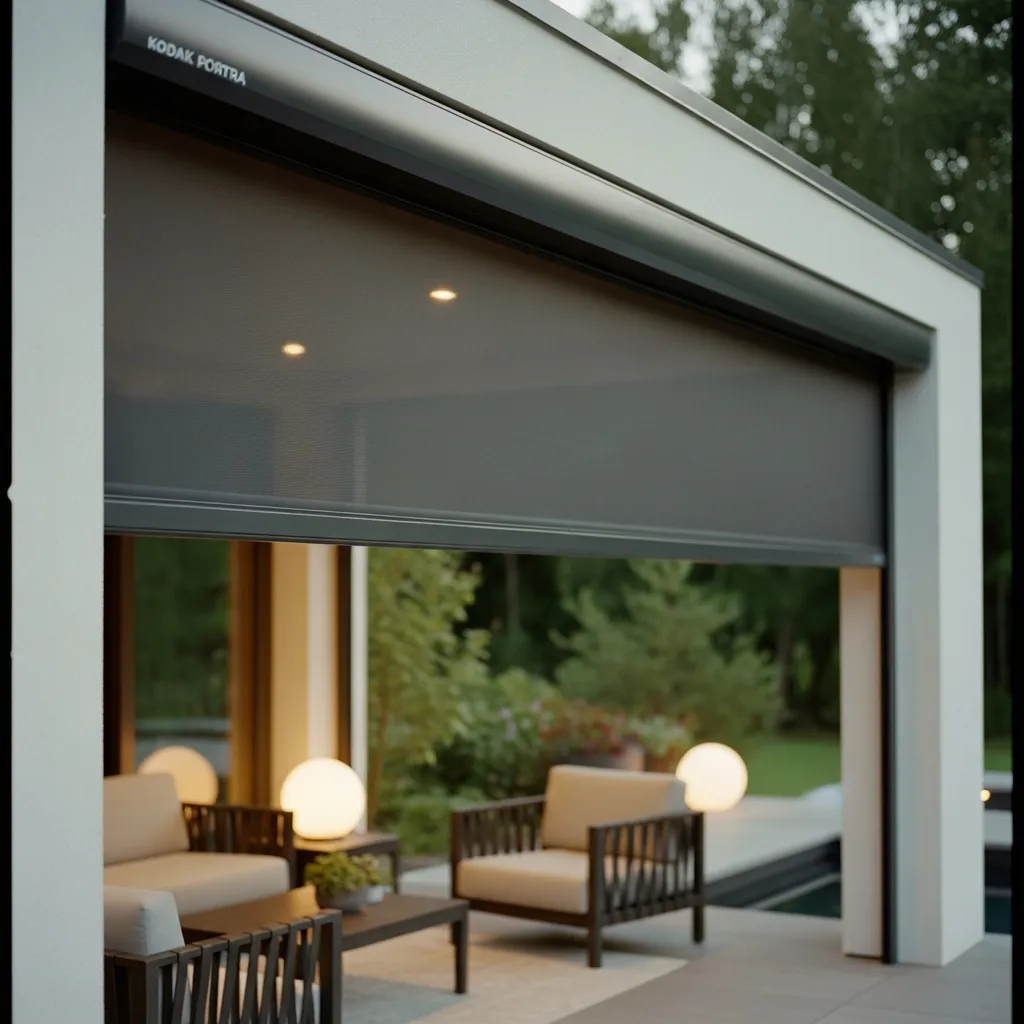
OneTrack's patented Lock Tight Keder system eliminates zippers, gaps, and failures. Deploy protection at the touch of a button. Trust American engineering. Rely on a lifetime warranty that actually means something.
MOTORIZED SCREEN SOLUTIONS
Year - Round Protections
Does Mother Nature spend more time on your patio and lanai then you do? Take it back. Maximize and extend your outdoor living space with MagnaTrack and Florida Living Outdoor. The Residential Series offers year-round protection from storms, insects, sun and glare, and much more. while providing the quality.
Sun
Insect
Wind
Privacy
Hurricane
RESIDENTIAL APPLICATIONS
Explore FL Outdoor's Residential Screen
Your Vision Deserves
A Partner
Who Listens...
RESIDENTIAL APPLICATIONS
Explore FL Outdoor's Residential Screen
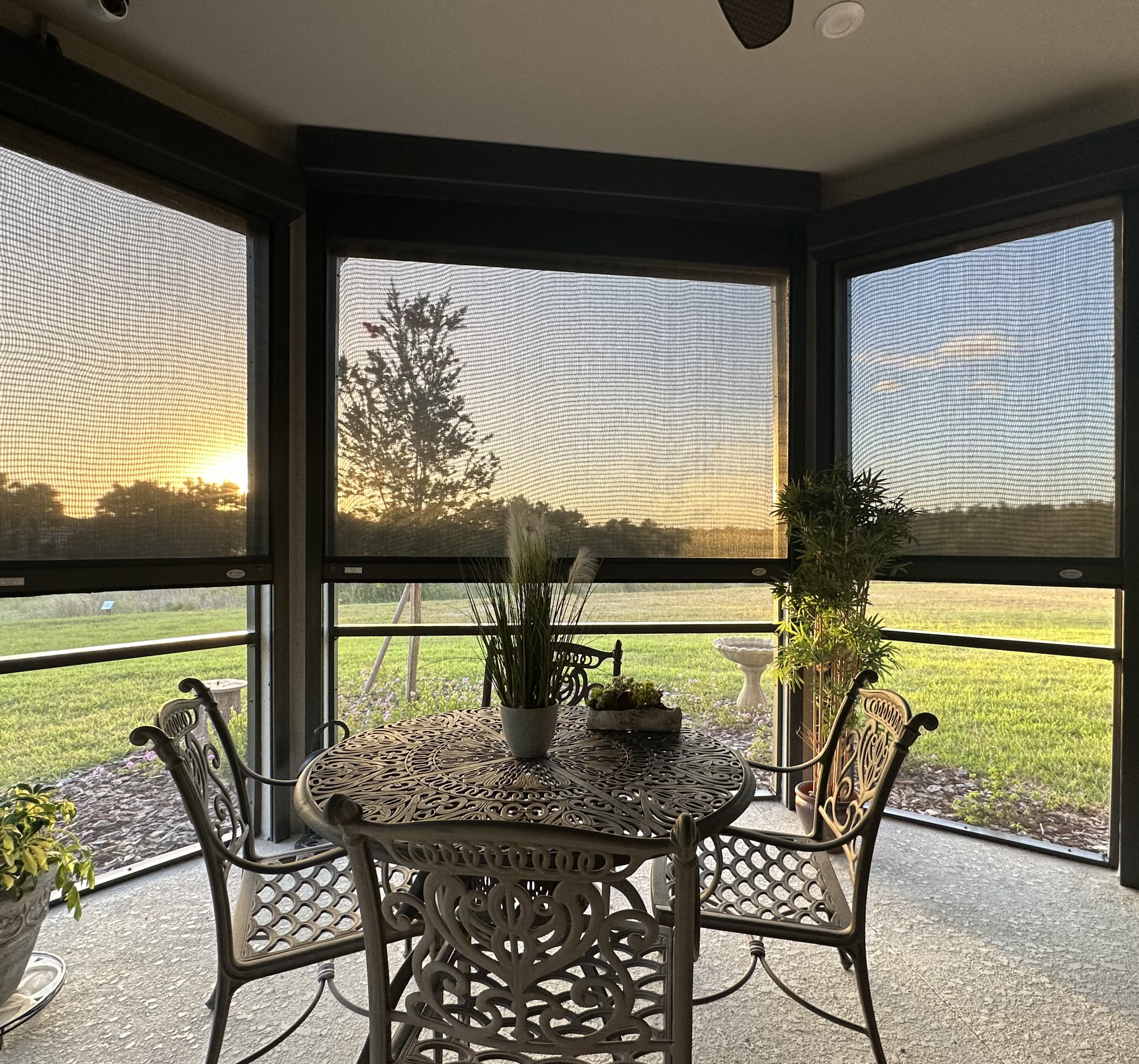
SOLAR SCREENS
Our Solar Screens are a perfect for summer heat and the pounding sun of West facing patios, doors, and lanais.
Our mesh selections block 70%-97% of harmful UV rays while also providing shade and cooling on the most sweltering days.
Protect Against all the Florida sun, heat, wind, and prying eyes.
INSECT SCREENS
Motorized insect screens are perfect for Florida Lake Home or waterfront outdoor space.
Safeguard against insects while maximizing airflow through your space. Protects against:
Flies
Mosquitos
Tiny Insects
No-see-ums
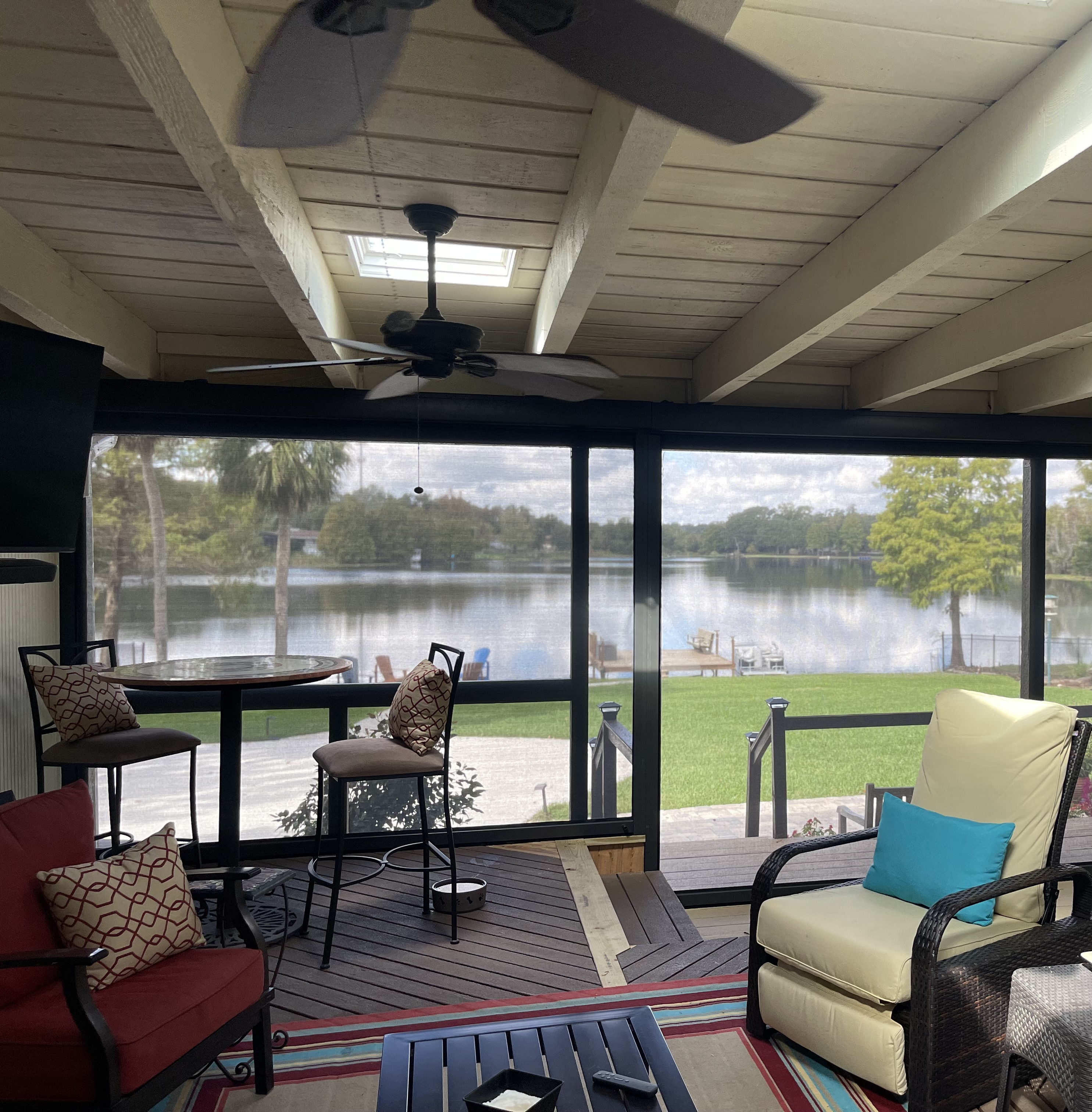
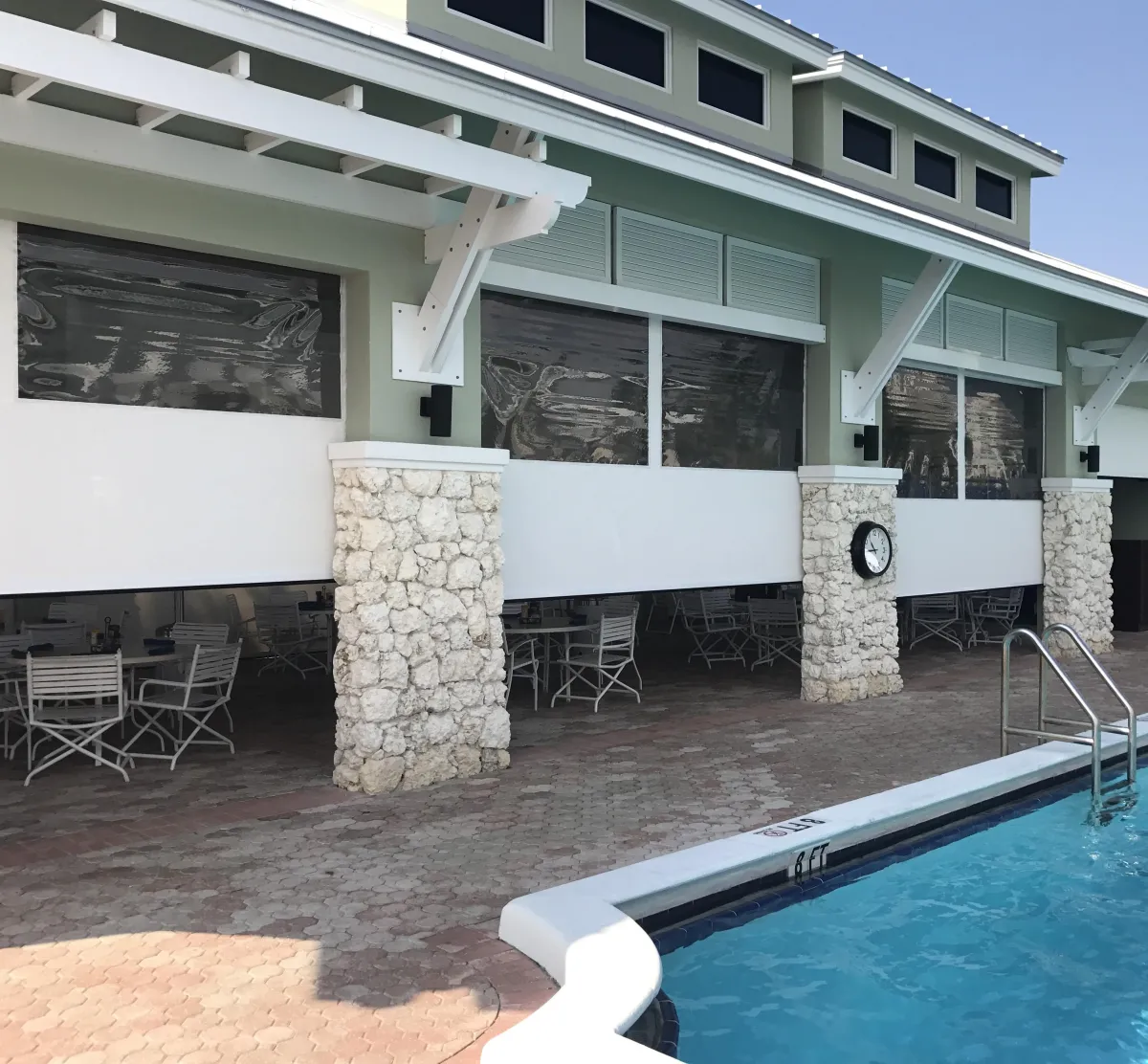
VINYL SCREENS
Make your outdoor space accessible year-round. Our vinyl screens offer temperature control and energy savings, so you can enjoy hot or cold, rain or shine.
HURRICANE SCREENS
Protect your outdoor space accessible year-round. Our Defender Hurricane and Fenetex Hurricane screens offer easy hurricane prep and temperature control so you can enjoy hot or cold, rain or shine.
Your Vision Deserves
A Partner
Who Cares...
SOLAR SCREENS
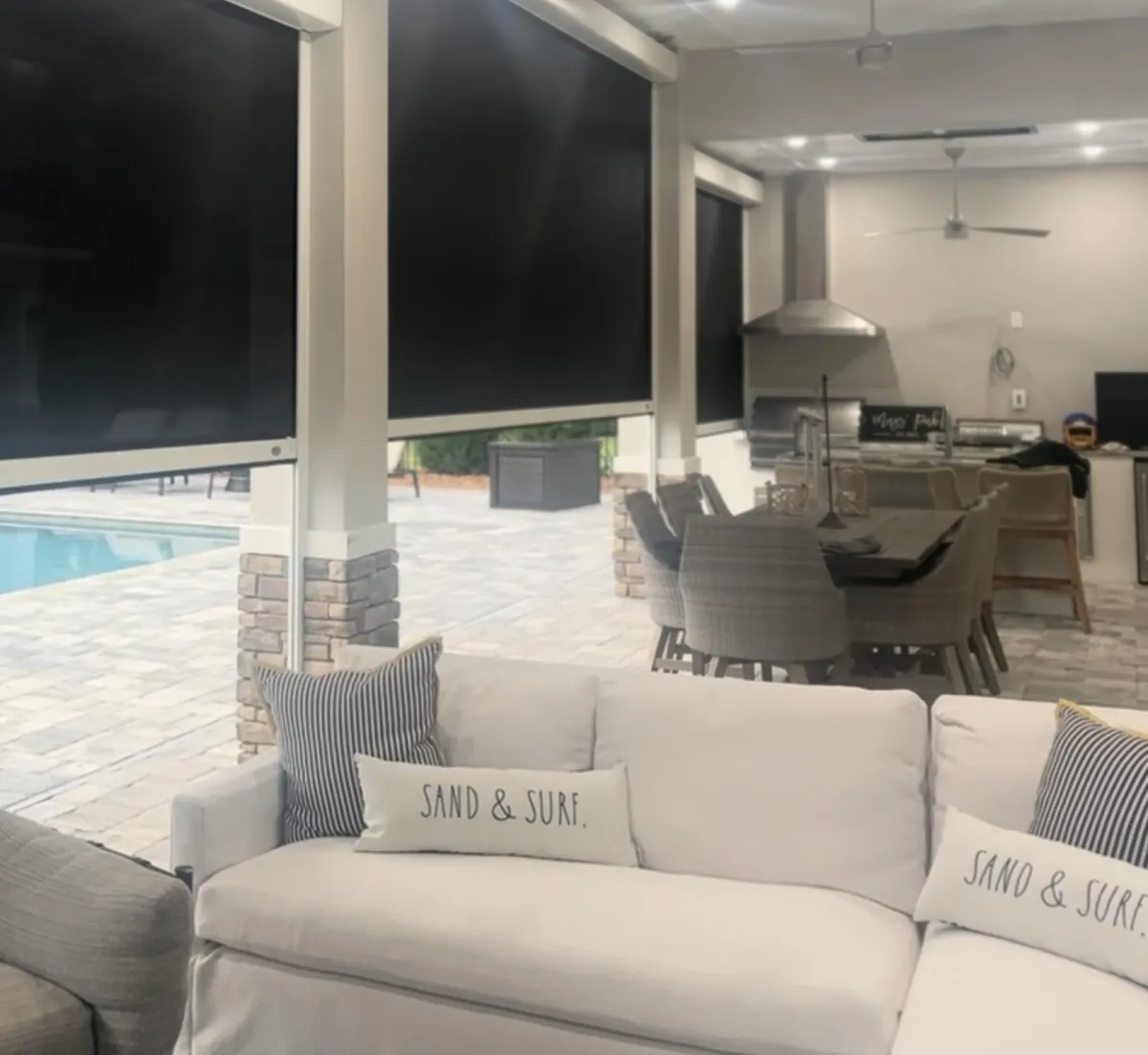
Our Solar Screens are a perfect for summer heat and the pounding sun of West facing patios, doors, and lanais.
Our mesh selections block 70%-97% of harmful UV rays while also providing shade and cooling on the most sweltering days.
Protect Against all the Florida sun, heat, wind, and prying eyes.
INSECT SCREENS
Motorized insect screens are perfect for Florida Lake Home or waterfront outdoor space.
Safeguard against insects while maximizing airflow through your space. Protects against:
Flies
Mosquitos
Tiny Insects
No-see-ums
VINYL SCREENS
Make your outdoor space accessible year-round. Our vinyl screens offer temperature control and energy savings, so you can enjoy hot or cold, rain or shine.
HURRICANE SCREENS
Protect your outdoor space accessible year-round. Our Defender Hurricane and Fenetex Hurricane screens offer easy hurricane prep and temperature control so you can enjoy hot or cold, rain or shine.
Your Vision Deserves
A Partner
Who Cares...
TRUSTED PARTNERS
Get to know your system....

MagnaTrack Hurricane Screens
Our most popular system. Side channels lock the screen in place during storms while maintaining smooth operation for daily use.

One-Track Motorized Screens
Sleek, minimalist design for controlled environments. Perfect for lanais and covered patios where style meets function.
Complete Customization
STEP ONE:
Choose Your Screen Color...
Backed by Twitchell’s our insect and shade screens are engineered for maximum strength and durability. These fabrics aren’t just tough—they’re also UV-protected for long-lasting performance and crafted with aesthetics in mind. Choose from six elegant colors designed to complement the architecture of your home.
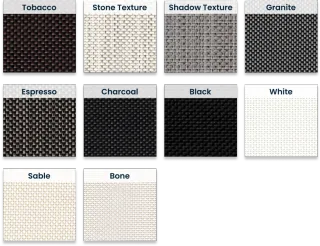
Nano 95
Are you looking for the perfect solutions to keep Mother Nature out. Nano 95 screens do exactly that?
Colors:
Black, Stone Texture, Shadow Texture, Granite, Espresso, Charcoal, White, Bable, Bone
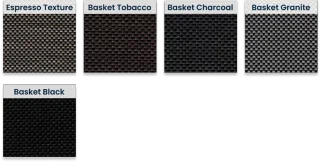
Nano 97
Do you want to create that perfect 4 season patio. Nano 97 blocks outdoor elements, provides maximum privacy, but they do not compromise visibility?
Colors:
Espresso Texture, Basket Tobacco, Basket Charcoal, Basket Granite, Basket Black
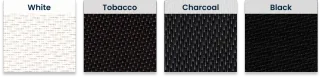
Specialty AME 97
AME 97 Screens are as they sound, Special. They are the Provide altimate cliamate control for your patio or lanai.
Colors:
White, Tobaco, Charcoal, Black
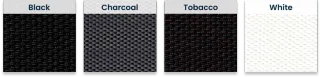
Black Out
Do you have an annoying neighbor or need Friday night privacy. Black out screen are solid wall of pure unadlitrated privacy?
Black, Charcoal, Tobacco, White
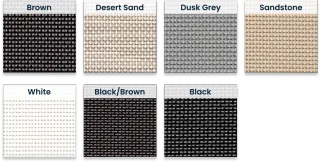
Textilene 80, 90
The Textilene Series is all about weather control and air flow. Control what you let in. If you block 80, then you allow 20%/10% to flow. Blocks dirt, rain, dander, harmful UV-Rays, and dust.
Colors:
Brown, Desert Sand, Busk Grey, Sandstone, White, Black & Brown, Black
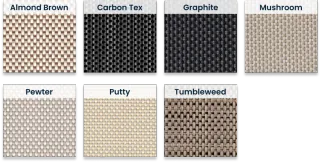
Textilene 95
The Textilene Series is all about weather control and air flow. Control what you let in. If you block 95, then you allow 5% to flow. Blocks dirt, rain, dander, harmful UV-Rays, and dust
Colors:
Almond Brown, Carbon Tex, Graphite, Mushroom, Pewter, Putty, Tumbleweed
STEP TWO:
Choose Your Frame Color...
Choosing the right screen color is simple with One-Track. Our standard color selections are designed to blend seamlessly with your architecture and framework, offering a clean, cohesive look. For unique designs, custom powder coating is available to match any project. All finishes are marine-grade and infused with UV ray inhibitors—built to endure the elements and maintain their beauty for years to come.
STEP THREE:
3. Choose Your Control...
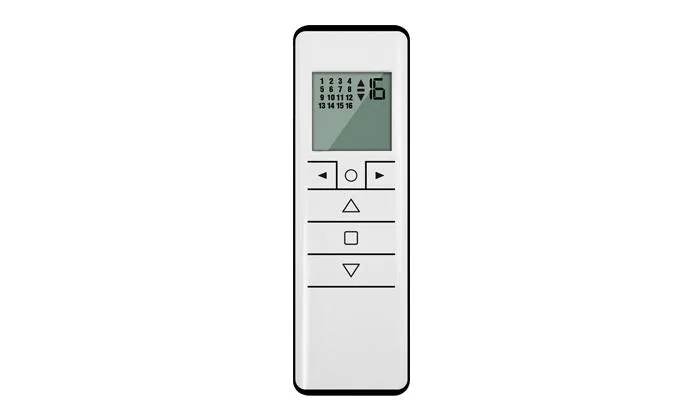
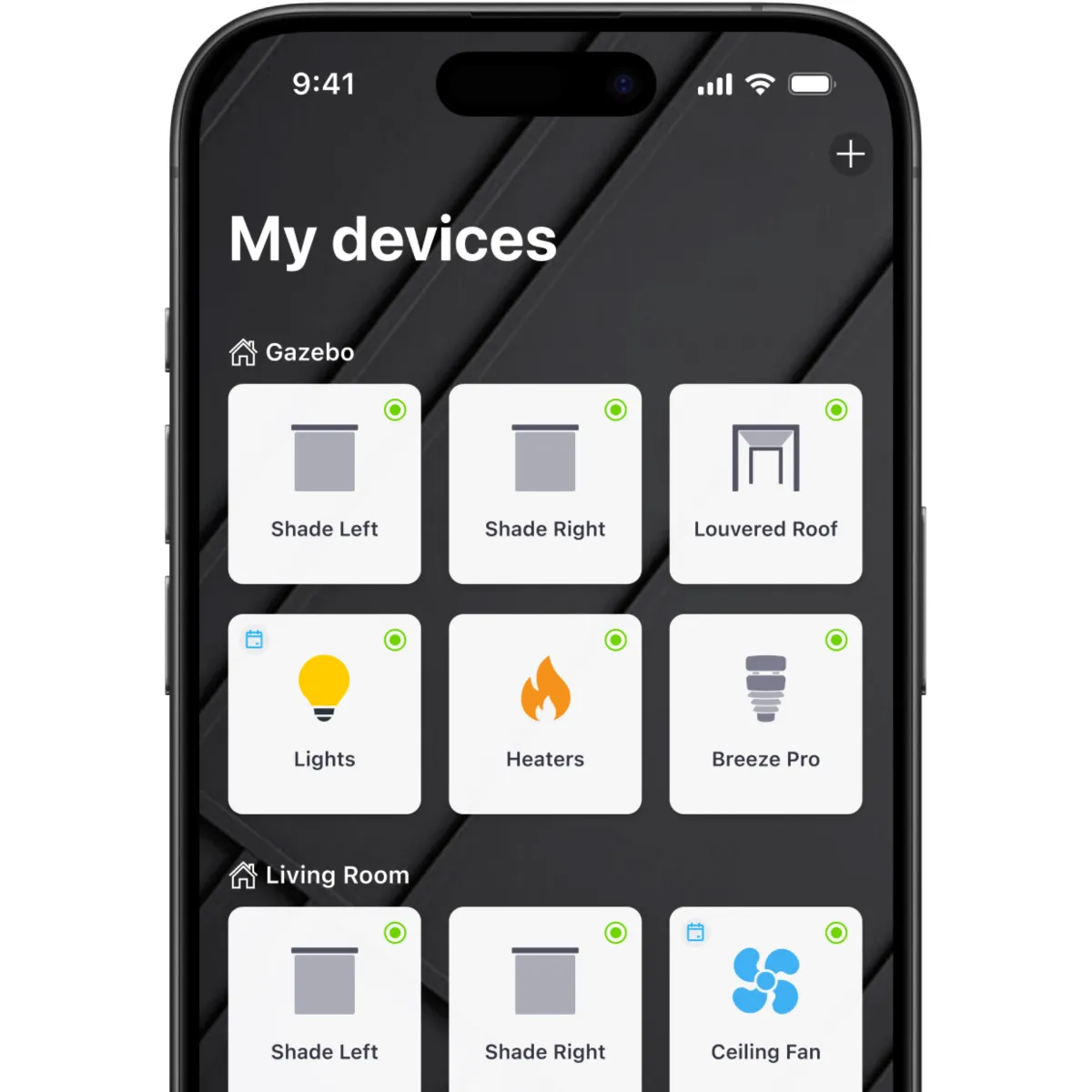
Selecting your preferred control method is effortless with One-Track. Whether you choose handheld remotes, mobile apps, or smart home integration, our systems are designed to fit your lifestyle. No need to settle—just integrate and enjoy continuous, seamless operation 24/7. It's control on your terms, exactly when and where you need it.
TRUSTED PARTNERS
Get to know your system....
MagnaTrack Hurricane Screens
Our most popular system. Side channels lock the screen in place during storms while maintaining smooth operation for daily use.
One-Track Motorized Screens
Sleek, minimalist design for controlled environments. Perfect for lanais and covered patios where style meets function.
Complete Customization
STEP ONE:
Choose Your Screen Color...
Nano 95
Are you looking for the perfect solutions to keep Mother Nature out. Nano 95 screens do exactly that?
Colors:
Black, Stone Texture, Shadow Texture, Granite, Espresso, Charcoal, White, Bable, Bone
Nano 97
Do you want to create that perfect 4 season patio. Nano 97 blocks outdoor elements, provides maximum privacy, but they do not compromise visibility?
Colors:
Espresso Texture, Basket Tobacco, Basket Charcoal, Basket Granite, Basket Black
Specialty AME 97
AME 97 Screens are as they sound, Special. They are the Provide altimate cliamate control for your patio or lanai.
Colors:
White, Tobaco, Charcoal, Black
Black Out
Do you have an annoying neighbor or need Friday night privacy. Black out screen are solid wall of pure unadlitrated privacy?
Black, Charcoal, Tobacco, White
Textilene 80, 90
The Textilene Series is all about weather control and air flow. Control what you let in. If you block 80, then you allow 20%/10% to flow. Blocks dirt, rain, dander, harmful UV-Rays, and dust..
Colors:
Brown, Desert Sand, Busk Grey, Sandstone, White, Black & Brown, Black
Textilene 95
The Textilene Series is all about weather control and air flow. Control what you let in. If you block 95, then you allow 5% to flow. Blocks dirt, rain, dander, harmful UV-Rays, and dust.
Colors:
Almond Brown, Carbon Tex, Graphite, Mushroom, Pewter, Putty, Tumbleweed
Backed by Twitchell’s OmegaTex fabric, our hurricane screens are engineered with ballistic-grade and enhanced fibers for maximum strength and durability. These fabrics aren’t just tough—they’re also UV-protected for long-lasting performance and crafted with aesthetics in mind. Choose from six elegant colors designed to complement the architecture of your home.
STEP TWO:
Choose Your Frame Color...
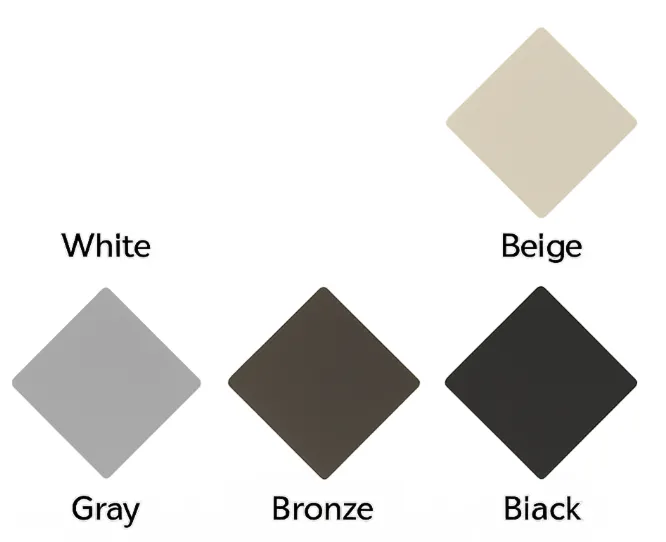
Choosing the right screen color is simple with One-Track. Our standard color selections are designed to blend seamlessly with your architecture and framework, offering a clean, cohesive look. For unique designs, custom powder coating is available to match any project. All finishes are marine-grade and infused with UV ray inhibitors—built to endure the elements and maintain their beauty for years to come.
STEP THREE:
3. Choose Your Control...
Selecting your preferred control method is effortless with One-Track. Whether you choose handheld remotes, mobile apps, or smart home integration, our systems are designed to fit your lifestyle. No need to settle—just integrate and enjoy continuous, seamless operation 24/7. It's control on your terms, exactly when and where you need it.
GET INSPIRED
Be In The Know
Commercial Motorized Screen Florida: Why Residential Specs Fail
Residential vs. Commercial Motorized Screens — Why Restaurant Patios Need a Different Spec (and a Different Dealer)
A residential motorized screen installed on a restaurant patio typically fails within 18 to 36 months. Not because the product is bad — OneTrack or MaxForce are the same industry-leading system in both applications — but because the motor, the mounting, the fabric, the code pathway, and the service response commercial patios require are fundamentally different from residential specifications. A residential motor is rated for 1 to 2 cycles per day. A restaurant patio cycles the screens 6 to 15 times per day during active service. Run residential spec on commercial duty, and the motor burns out during peak season. Usually on a Friday night. Almost always on the operator's dime.
The housing looks identical. The spec isn't. This blog is what actually differs between a residential MagnaTrack install and a commercial one — and why picking the wrong dealer is the single most common reason restaurant patio installs fail in year two or three.
The Short Answer: Same System, Different Spec
MagnaTrack's track and housing are shared across residential and commercial applications. Progressive Screens, the manufacturer, supplies restaurants and hotel chains nationwide with the same self-correcting magnetic-track system that serves Florida homeowners. The engineering platform is proven in both settings. What changes is everything mounted to, spec'd into, and signed off on that platform.
Spec Dimension
1. Motor duty cycle
2. Expected motor life
3. Span capability (single zone)
4. Structural review
5. Code compliance
6. Service response
7. Fabric grade
Residential
1. 1–2 cycles/day
2. 15 years at residential use
3. Up to 30' × 20'
4. Walk-through
5. Building permit
6. Business hours
7. Residential weight
Commercial
1. 6–15 cycles/day
2. 15 years only at commercial spec
3. Up to 26' × 16' in commercial Cat-5
4. Engineered structural sign-off
5. Building + fire + egress review
6. Off-peak, often overnight
7. Commercial-duty, higher wear tolerance
The rest of this blog unpacks each row of that table — why commercial is different, what failure looks like when the spec is wrong, and how to pick a dealer equipped to handle the difference.
Five Places the Spec Differs (and Why It Matters)
1. Motor Duty Cycle
The single biggest difference. Residential motors are engineered for 1 to 2 full deployment cycles per day — a homeowner raising and lowering their lanai screens in the morning and at sunset. Commercial motors are engineered for 6 to 15 daily cycles, accommodating start-of-service deployment, weather-response mid-shift adjustments, staff-change retractions, and end-of-night closure. Residential motors on commercial duty cycles burn out in 18 to 36 months. The motor upgrade at installation runs approximately $400 to $800. The mid-peak replacement when the residential motor fails runs $1,400 to $2,200 per opening, plus the service call, plus the lost revenue from the Friday night the patio was closed to fix it.
2. Mounting and Structural Sign-Off
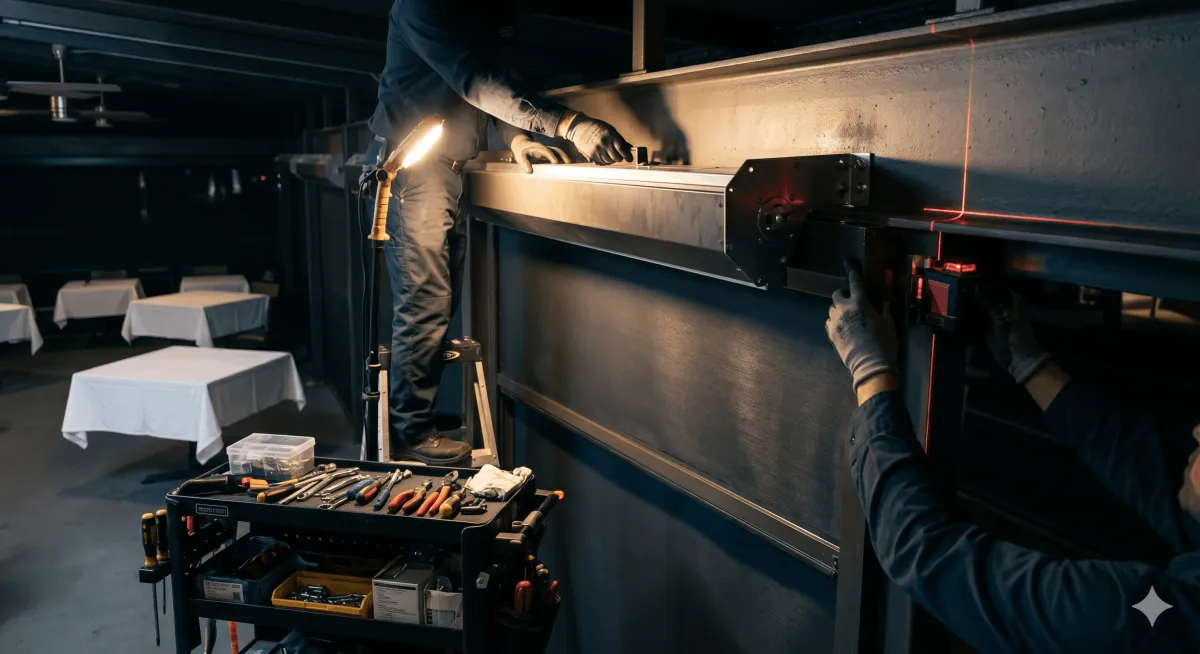
Residential installs require a substrate walk-through. Commercial installs require an engineered structural sign-off. The difference matters because commercial openings are usually larger, carry more aggregate housing weight (a 26-foot opening with a commercial hurricane Defender housing can clear 200 pounds), and sit in structures with different load paths than a single-family home. A licensed structural engineer's review ensures that the beam, fascia, or wall carrying the installation can handle the load throughout the full duty cycle — including hurricane loading. A residential installer working from a homebuilder's rough drawings often gets this wrong on a commercial build-out.
3. Code Compliance Beyond the Building Permit
Residential permits are a building review. Commercial permits add fire-code review, egress review, and — in HVHZ counties (Miami-Dade, Broward) — explicit adherence to Florida Building Code opening-protection standards. A motorized screen enclosure that changes the patio's exit pathway, blocks access to a fire extinguisher, or encloses a space used for cooking triggers fire-code provisions that simply don't exist in a residential installation. Dealers without commercial history often miss these. The fire marshal doesn't miss them.
4. Fabric and Hardware Grade
Commercial fabrics are rated for higher cycling wear, higher UV exposure per cycle (patios are open longer each day than lanais), and in food-service environments, more frequent cleaning contact. The fabric looks the same visually. Under the cycles of five years of restaurant operation, it performs meaningfully differently. Similarly, hardware — the pulleys, the weight bars, the fasteners — all meet commercial-duty specifications in proper installations. A residential spec on a commercial patio often shows wear in the fabric and hardware before the motor even fails.
5. Service Level Agreement
Residential service is scheduled during business hours. Commercial service can't be. A motor failing at 6:15 p.m. on a Friday doesn't wait until Monday morning. A dealer equipped to serve commercial operators offers an off-peak response SLA — typically a 24-hour initial response and overnight or pre-service-hours repair availability for urgent failures. Dealers without that infrastructure treat commercial service calls as residential ones, which means the patio stays closed through the weekend.
Three Commercial Failure Scenarios
Composite scenarios — not identifying any specific operator, but representative of work we see consulting on across Florida's hospitality landscape.
The peak-season motor burnout. A 40-seat waterfront bistro installs residential-spec MagnaTrack screens from a low-bid installer during a slow shoulder season. Install cost: $18,000 across three openings. The screens cycle 8 to 12 times per day during the busy season as staff adjust for sun, rain, and insect pressure. At month 22, the center motor fails during Saturday dinner service. Emergency replacement arrives Monday. Weekend revenue lost: approximately $18,000. Motor replacement at full retail plus service: approximately $2,200. If the original install had specified commercial-grade motors — a $1,200 upgrade across the three openings — the motor would not have failed in month 22.
The fire-marshal shutdown. A 90-seat South Florida restaurant retrofits its patio with clear vinyl motorized screens. The low-bid installer pulls only a building permit. The screens install cleanly. Three weeks after opening the enclosed patio for dinner service, the local fire marshal flags the installation: the deployed screens block access to an exit stairwell mapped as a secondary egress on the approved floor plan. The restaurant is required to retract the screens during service until an engineered egress variance is approved, which takes 6 weeks and $3,800 in consulting fees. The patio is exposed to the elements for most of the summer storm season. A commercial-capable dealer would have flagged the egress issue before the install quote.
The subcontracted install. A 120-seat resort hotel commissions motorized screens for a 30-foot covered lanai beside the pool deck. The general contractor sources the product through a residential-focused dealer, who subcontracts the install to an unrelated crew. The install completes on schedule, but the magnet calibration is incorrect on two of the three housings — screen deployment hangs up intermittently during high-wind conditions. The resort spends the first summer having maintenance run the screens manually, then pays a certified commercial dealer $4,400 to tear out the original calibration and redo both housings properly. The original install dealer is unreachable by month nine.
The pattern across all three: the original install appeared cheaper because commercial rigor was absent. The rigor costs $1,500 to $5,000 on a typical commercial install. The missing rigor costs $20,000 to $80,000 over the first two years of operation.
What a Commercial Install Actually Looks Like
A properly scoped commercial OneTrack installation includes the following. Missing any of these flags that the dealer is selling a residential install at commercial pricing.
Engineered structural review. A licensed structural engineer reviews the substrate, the housing weight, the span, and the expected wind load on the deployed screen. Sign-off is documented and provided with the install contract.
Coordinated code review. Building permit, fire code review for any impacts on egress or occupancy, and HVHZ opening protection compliance, where applicable. The dealer coordinates with the jurisdiction's review team as part of the scope.
Commercial-grade motor specification. Every motor specified in writing has a duty-cycle rating appropriate for the expected commercial use. The quote names the specific motor model, not a generic “MagnaTrack motorized screen” line.
Off-peak install scheduling. The install is scheduled overnight, during scheduled closures, or across a slow shoulder week — not during operational hours or peak season unless specifically required.
Written Service Level Agreement. 24-hour initial response guarantee, overnight or pre-service emergency repair availability, a named project coordinator from install through the first 90 days of operation, and scheduled annual recalibration before each hurricane season.
Documented warranty pathway. The dealer documents the install with Progressive Screens and provides the warranty paperwork at handoff. The operator can verify the installation is on record with the manufacturer before the first service call is ever needed.
Questions to Ask Any Dealer Before Signing
Seven questions. Written answers only. A dealer who can't provide all seven in writing is selling residential under a commercial label.
1. Are you a OneTrack Authorized Dealer certified with prior commercial install experience in hospitality? You want yes to both parts — certification AND commercial history.
2. Can you provide three completed commercial installations I can reference or visit? Commercial-capable dealers have a portfolio. Commercial newcomers don't.
3. Is the motor specified commercial-grade, with a duty-cycle rating for 6 to 15 daily cycles? The motor model should be named in the quote.
4. Is an engineered structural sign-off included in scope? Yes, with a named licensed engineer, or with a specific written exception for openings that genuinely don't require one.
5. Is fire-code review coordinated as part of the permit scope? Required when the enclosure affects egress or occupancy. The dealer should know which applies to your install.
6. What's your service SLA for post-install response during operational hours? A real commercial dealer offers a 24-hour initial response and overnight repair availability for urgent failures. A residential dealer offers business-hours response.
7. Is the installation scheduled off-peak? Commercial installs happen overnight, during scheduled closures, or in the slowest shoulder week available. Never during operational service.
Run the Commercial Calculator Before the Dealer Conversation
The commercial calculator at floridalivingoutdoor.com/commercial-solutions gives you a weather-loss number and an install-cost range before you compare quotes. That number anchors the conversation: a cheap residential-spec quote that looks $8,000 below a commercial-spec quote is not $8,000 cheaper — it's a $20,000 to $80,000 two-year cost difference that doesn't show up in the bid document.
The next blog in this series covers which motorized screen types (insect, solar, clear vinyl, MaxForce hurricane Screens) match which commercial dining seasons. So once you've run the calculator and confirmed you need a commercial install, you can walk into the dealer conversation knowing which screen tier fits your patio's actual service pattern.
Frequently Asked Questions
What's the difference between residential and commercial motorized screens?
The housing and track are shared across both tiers, but commercial installations require higher-duty-cycle motors, an engineered structural review, fire and egress code compliance (not just a building permit), commercial-grade fabric, and a service-level agreement that covers off-peak response. A residential motor rated for 1 to 2 cycles per day will burn out in 18 to 36 months of restaurant use; a commercial-grade motor is rated for the 6 to 15 daily cycles typical in hospitality operations.
Do restaurants need a special type of motorized screen?
Yes. A commercial patio needs commercial-grade components across five dimensions: motor duty cycle, structural mounting, code compliance, fabric grade, and service level agreement. The same OneTrack motorized screen system serves both residential and commercial applications, but the motor, mounting detail, and service expectations differ meaningfully. Residential-spec installations in commercial use typically fail within 3 years.
How do I pick a commercial motorized screen installer in Florida?
Verify three things in writing before signing. First, the dealer is a OneTrack Motorized Authorized Dealer certified by Fenetex Corporation — not a residential subcontractor. Second, the dealer has prior commercial install references you can visit or verify. Third, the dealer can provide engineered structural sign-off, permit documentation, fire code review coordination, and a service-level agreement covering off-peak response. Dealers with only residential history often learn commercial on their first install. That's your patio.
Can you use residential motorized screens on a restaurant patio?
Technically, the product will install. Functionally, it fails. A residential-spec motor cycled 8 to 12 times a day by a restaurant patio typically lasts 18 to 36 months before failure — usually during peak season when replacement is most disruptive. Commercial-spec motors cost approximately $400 to $800 more at install and last the full 15-year warranty window under commercial duty cycles. The math always favors commercial spec at install.
How long does a commercial motorized screen installation take?
Most commercial installations run 1 to 4 days on-site, depending on the opening count, structural complexity, and whether the installation is new construction or a retrofit. Lead time from contract to install is typically 6 to 10 weeks for custom fabrication. Commercial installs are scheduled off-peak to minimize operational disruption — overnight or during scheduled closures for most restaurant patios.
Does a commercial motorized screen installation require a permit?
Yes. Commercial installations require a building permit, often a fire code review, and — in HVHZ counties (Miami-Dade, Broward) — compliance with Florida Building Code opening protection requirements for hurricane-rated installations. Some municipalities also require a site-specific egress review if the enclosure changes the patio's evacuation pathway. A commercial-capable dealer handles the permit process as part of the scope.
What warranty applies to a commercial MagnaTrack motorized screen installation?
The published OneTrack warranty, backed by Fenetex, applies to both residential and commercial installations when completed by an Authorized Dealer: limited lifetime on aluminum; 15 years on screen; 5 years on motor; 2 years on remote; 1 year on vinyl. The warranty requires that the correct spec be installed for the application — running a residential-grade motor on a commercial duty cycle may not be covered under the published motor warranty if the failure is tied to spec mismatch.
Florida Living Outdoor is a Fenetex-Certified Dealer serving hospitality operators in Central and South Florida. Veteran-owned. Owner-operated. Run your commercial calculator and request a commercial-spec walkthrough before you compare quotes.

GET INSPIRED
Be In The Know
Commercial Motorized Screen Florida: Why Residential Specs Fail
Residential vs. Commercial Motorized Screens — Why Restaurant Patios Need a Different Spec (and a Different Dealer)
A residential motorized screen installed on a restaurant patio typically fails within 18 to 36 months. Not because the product is bad — OneTrack or MaxForce are the same industry-leading system in both applications — but because the motor, the mounting, the fabric, the code pathway, and the service response commercial patios require are fundamentally different from residential specifications. A residential motor is rated for 1 to 2 cycles per day. A restaurant patio cycles the screens 6 to 15 times per day during active service. Run residential spec on commercial duty, and the motor burns out during peak season. Usually on a Friday night. Almost always on the operator's dime.
The housing looks identical. The spec isn't. This blog is what actually differs between a residential MagnaTrack install and a commercial one — and why picking the wrong dealer is the single most common reason restaurant patio installs fail in year two or three.
The Short Answer: Same System, Different Spec
MagnaTrack's track and housing are shared across residential and commercial applications. Progressive Screens, the manufacturer, supplies restaurants and hotel chains nationwide with the same self-correcting magnetic-track system that serves Florida homeowners. The engineering platform is proven in both settings. What changes is everything mounted to, spec'd into, and signed off on that platform.
Spec Dimension
1. Motor duty cycle
2. Expected motor life
3. Span capability (single zone)
4. Structural review
5. Code compliance
6. Service response
7. Fabric grade
Residential
1. 1–2 cycles/day
2. 15 years at residential use
3. Up to 30' × 20'
4. Walk-through
5. Building permit
6. Business hours
7. Residential weight
Commercial
1. 6–15 cycles/day
2. 15 years only at commercial spec
3. Up to 26' × 16' in commercial Cat-5
4. Engineered structural sign-off
5. Building + fire + egress review
6. Off-peak, often overnight
7. Commercial-duty, higher wear tolerance
The rest of this blog unpacks each row of that table — why commercial is different, what failure looks like when the spec is wrong, and how to pick a dealer equipped to handle the difference.
Five Places the Spec Differs (and Why It Matters)
1. Motor Duty Cycle
The single biggest difference. Residential motors are engineered for 1 to 2 full deployment cycles per day — a homeowner raising and lowering their lanai screens in the morning and at sunset. Commercial motors are engineered for 6 to 15 daily cycles, accommodating start-of-service deployment, weather-response mid-shift adjustments, staff-change retractions, and end-of-night closure. Residential motors on commercial duty cycles burn out in 18 to 36 months. The motor upgrade at installation runs approximately $400 to $800. The mid-peak replacement when the residential motor fails runs $1,400 to $2,200 per opening, plus the service call, plus the lost revenue from the Friday night the patio was closed to fix it.
2. Mounting and Structural Sign-Off
Residential installs require a substrate walk-through. Commercial installs require an engineered structural sign-off. The difference matters because commercial openings are usually larger, carry more aggregate housing weight (a 26-foot opening with a commercial hurricane Defender housing can clear 200 pounds), and sit in structures with different load paths than a single-family home. A licensed structural engineer's review ensures that the beam, fascia, or wall carrying the installation can handle the load throughout the full duty cycle — including hurricane loading. A residential installer working from a homebuilder's rough drawings often gets this wrong on a commercial build-out.
3. Code Compliance Beyond the Building Permit
Residential permits are a building review. Commercial permits add fire-code review, egress review, and — in HVHZ counties (Miami-Dade, Broward) — explicit adherence to Florida Building Code opening-protection standards. A motorized screen enclosure that changes the patio's exit pathway, blocks access to a fire extinguisher, or encloses a space used for cooking triggers fire-code provisions that simply don't exist in a residential installation. Dealers without commercial history often miss these. The fire marshal doesn't miss them.
4. Fabric and Hardware Grade
Commercial fabrics are rated for higher cycling wear, higher UV exposure per cycle (patios are open longer each day than lanais), and in food-service environments, more frequent cleaning contact. The fabric looks the same visually. Under the cycles of five years of restaurant operation, it performs meaningfully differently. Similarly, hardware — the pulleys, the weight bars, the fasteners — all meet commercial-duty specifications in proper installations. A residential spec on a commercial patio often shows wear in the fabric and hardware before the motor even fails.
5. Service Level Agreement
Residential service is scheduled during business hours. Commercial service can't be. A motor failing at 6:15 p.m. on a Friday doesn't wait until Monday morning. A dealer equipped to serve commercial operators offers an off-peak response SLA — typically a 24-hour initial response and overnight or pre-service-hours repair availability for urgent failures. Dealers without that infrastructure treat commercial service calls as residential ones, which means the patio stays closed through the weekend.
Three Commercial Failure Scenarios
Composite scenarios — not identifying any specific operator, but representative of work we see consulting on across Florida's hospitality landscape.
The peak-season motor burnout. A 40-seat waterfront bistro installs residential-spec MagnaTrack screens from a low-bid installer during a slow shoulder season. Install cost: $18,000 across three openings. The screens cycle 8 to 12 times per day during the busy season as staff adjust for sun, rain, and insect pressure. At month 22, the center motor fails during Saturday dinner service. Emergency replacement arrives Monday. Weekend revenue lost: approximately $18,000. Motor replacement at full retail plus service: approximately $2,200. If the original install had specified commercial-grade motors — a $1,200 upgrade across the three openings — the motor would not have failed in month 22.
The fire-marshal shutdown. A 90-seat South Florida restaurant retrofits its patio with clear vinyl motorized screens. The low-bid installer pulls only a building permit. The screens install cleanly. Three weeks after opening the enclosed patio for dinner service, the local fire marshal flags the installation: the deployed screens block access to an exit stairwell mapped as a secondary egress on the approved floor plan. The restaurant is required to retract the screens during service until an engineered egress variance is approved, which takes 6 weeks and $3,800 in consulting fees. The patio is exposed to the elements for most of the summer storm season. A commercial-capable dealer would have flagged the egress issue before the install quote.
The subcontracted install. A 120-seat resort hotel commissions motorized screens for a 30-foot covered lanai beside the pool deck. The general contractor sources the product through a residential-focused dealer, who subcontracts the install to an unrelated crew. The install completes on schedule, but the magnet calibration is incorrect on two of the three housings — screen deployment hangs up intermittently during high-wind conditions. The resort spends the first summer having maintenance run the screens manually, then pays a certified commercial dealer $4,400 to tear out the original calibration and redo both housings properly. The original install dealer is unreachable by month nine.
The pattern across all three: the original install appeared cheaper because commercial rigor was absent. The rigor costs $1,500 to $5,000 on a typical commercial install. The missing rigor costs $20,000 to $80,000 over the first two years of operation.
What a Commercial Install Actually Looks Like
A properly scoped commercial OneTrack installation includes the following. Missing any of these flags that the dealer is selling a residential install at commercial pricing.
Engineered structural review. A licensed structural engineer reviews the substrate, the housing weight, the span, and the expected wind load on the deployed screen. Sign-off is documented and provided with the install contract.
Coordinated code review. Building permit, fire code review for any impacts on egress or occupancy, and HVHZ opening protection compliance, where applicable. The dealer coordinates with the jurisdiction's review team as part of the scope.
Commercial-grade motor specification. Every motor specified in writing has a duty-cycle rating appropriate for the expected commercial use. The quote names the specific motor model, not a generic “MagnaTrack motorized screen” line.
Off-peak install scheduling. The install is scheduled overnight, during scheduled closures, or across a slow shoulder week — not during operational hours or peak season unless specifically required.
Written Service Level Agreement. 24-hour initial response guarantee, overnight or pre-service emergency repair availability, a named project coordinator from install through the first 90 days of operation, and scheduled annual recalibration before each hurricane season.
Documented warranty pathway. The dealer documents the install with Progressive Screens and provides the warranty paperwork at handoff. The operator can verify the installation is on record with the manufacturer before the first service call is ever needed.
Questions to Ask Any Dealer Before Signing
Seven questions. Written answers only. A dealer who can't provide all seven in writing is selling residential under a commercial label.
1. Are you a OneTrack Authorized Dealer certified with prior commercial install experience in hospitality? You want yes to both parts — certification AND commercial history.
2. Can you provide three completed commercial installations I can reference or visit? Commercial-capable dealers have a portfolio. Commercial newcomers don't.
3. Is the motor specified commercial-grade, with a duty-cycle rating for 6 to 15 daily cycles? The motor model should be named in the quote.
4. Is an engineered structural sign-off included in scope? Yes, with a named licensed engineer, or with a specific written exception for openings that genuinely don't require one.
5. Is fire-code review coordinated as part of the permit scope? Required when the enclosure affects egress or occupancy. The dealer should know which applies to your install.
6. What's your service SLA for post-install response during operational hours? A real commercial dealer offers a 24-hour initial response and overnight repair availability for urgent failures. A residential dealer offers business-hours response.
7. Is the installation scheduled off-peak? Commercial installs happen overnight, during scheduled closures, or in the slowest shoulder week available. Never during operational service.
Run the Commercial Calculator Before the Dealer Conversation
The commercial calculator at floridalivingoutdoor.com/commercial-solutions gives you a weather-loss number and an install-cost range before you compare quotes. That number anchors the conversation: a cheap residential-spec quote that looks $8,000 below a commercial-spec quote is not $8,000 cheaper — it's a $20,000 to $80,000 two-year cost difference that doesn't show up in the bid document.
The next blog in this series covers which motorized screen types (insect, solar, clear vinyl, MaxForce hurricane Screens) match which commercial dining seasons. So once you've run the calculator and confirmed you need a commercial install, you can walk into the dealer conversation knowing which screen tier fits your patio's actual service pattern.
Frequently Asked Questions
What's the difference between residential and commercial motorized screens?
The housing and track are shared across both tiers, but commercial installations require higher-duty-cycle motors, an engineered structural review, fire and egress code compliance (not just a building permit), commercial-grade fabric, and a service-level agreement that covers off-peak response. A residential motor rated for 1 to 2 cycles per day will burn out in 18 to 36 months of restaurant use; a commercial-grade motor is rated for the 6 to 15 daily cycles typical in hospitality operations.
Do restaurants need a special type of motorized screen?
Yes. A commercial patio needs commercial-grade components across five dimensions: motor duty cycle, structural mounting, code compliance, fabric grade, and service level agreement. The same OneTrack motorized screen system serves both residential and commercial applications, but the motor, mounting detail, and service expectations differ meaningfully. Residential-spec installations in commercial use typically fail within 3 years.
How do I pick a commercial motorized screen installer in Florida?
Verify three things in writing before signing. First, the dealer is a OneTrack Motorized Authorized Dealer certified by Fenetex Corporation — not a residential subcontractor. Second, the dealer has prior commercial install references you can visit or verify. Third, the dealer can provide engineered structural sign-off, permit documentation, fire code review coordination, and a service-level agreement covering off-peak response. Dealers with only residential history often learn commercial on their first install. That's your patio.
Can you use residential motorized screens on a restaurant patio?
Technically, the product will install. Functionally, it fails. A residential-spec motor cycled 8 to 12 times a day by a restaurant patio typically lasts 18 to 36 months before failure — usually during peak season when replacement is most disruptive. Commercial-spec motors cost approximately $400 to $800 more at install and last the full 15-year warranty window under commercial duty cycles. The math always favors commercial spec at install.
How long does a commercial motorized screen installation take?
Most commercial installations run 1 to 4 days on-site, depending on the opening count, structural complexity, and whether the installation is new construction or a retrofit. Lead time from contract to install is typically 6 to 10 weeks for custom fabrication. Commercial installs are scheduled off-peak to minimize operational disruption — overnight or during scheduled closures for most restaurant patios.
Does a commercial motorized screen installation require a permit?
Yes. Commercial installations require a building permit, often a fire code review, and — in HVHZ counties (Miami-Dade, Broward) — compliance with Florida Building Code opening protection requirements for hurricane-rated installations. Some municipalities also require a site-specific egress review if the enclosure changes the patio's evacuation pathway. A commercial-capable dealer handles the permit process as part of the scope.
What warranty applies to a commercial MagnaTrack motorized screen installation?
The published OneTrack warranty, backed by Fenetex, applies to both residential and commercial installations when completed by an Authorized Dealer: limited lifetime on aluminum; 15 years on screen; 5 years on motor; 2 years on remote; 1 year on vinyl. The warranty requires that the correct spec be installed for the application — running a residential-grade motor on a commercial duty cycle may not be covered under the published motor warranty if the failure is tied to spec mismatch.
Florida Living Outdoor is a Fenetex-Certified Dealer serving hospitality operators in Central and South Florida. Veteran-owned. Owner-operated. Run your commercial calculator and request a commercial-spec walkthrough before you compare quotes.
Your Vision Deserves
A Partner
Who Delivers...
Your Vision Deserves
A Partner
Who Delivers...
COMPANY
MOTORIZED SCREENS
SHADE SOLUTIONS
FENCING & LIGHTING
DESIGN IDEAS
SUPPORT



Copyright 2026. FL OUTDOOR. All Rights Reserved.
Powered and Built By