
Motorized Hurricane Screens & Shade Solutions
Does Mother Nature Spend More Time On Your
Florida Patio or Lanai Than You Do?
Protect your outdoor space from hurricanes, bugs, and blazing sun,
so you can enjoy Florida living 365 days a year with a click of a button.


BBB Accredited

26 Years Experience

Veteran Owned

Cat 5 Certified Screens
You Didn't Buy A Home to Stay Inside
You invested in the patio. The lanai. The view.
But somehow, you're not the one enjoying it.
The sun is relentless. The mosquitoes own the evenings. Every hurricane season brings the same scramble—plywood, panic, and prayers. And that outdoor furniture you splurged on? It's already fading.
Mother Nature has taken over your outdoor space. And every month you don't act, you're paying for square footage you can't use.
It doesn't have to be this way. One button changes everything.
One Button. Total Control
Premium motorized screens for every Florida challenge
Magnetic Hurricane Screens
We've installed more than 1,000 magnetic hurricane screens across Florida. These systems are Category-5 rated with impact absorption. Learn more before you buy.
Retractable Bug Screens
Do pesky insects evict you from your patio 30 minutes before dusk? Avoid the itch; click a button and watch OneTrack Motorized insect screens deploy.
Retractable Shades Screens
Beat the Heat. Getting Chased off your patio or lanai. Our OneTrack Motorized Shade Solutions for patios and lanais blocks up to 80% -97% of harmful UV rays
MaxForce Hurricane Screens
Are you worried hurricane? Harness the ultimate protection with a click a button & watch the MaxForce Hurricane Screens deploy. Rate for 185+ MPH
You Didn't Buy A Home to
Stay Inside
You invested in the patio. The lanai. The view.
But somehow, you're not the one enjoying it.
The sun is relentless. The mosquitoes own the evenings. Every hurricane season brings the same scramble—plywood, panic, and prayers. And that outdoor furniture you splurged on? It's already fading.
Mother Nature has taken over your outdoor space. And every month you don't act, you're paying for square footage you can't use.
It doesn't have to be this way. One button changes everything.
One Button. Total Control
Premium motorized screens for every Florida challenge
Magnetic Hurricane Screens
We've installed more than 1,000 magnetic hurricane screens across Florida. These systems are Category-5 rated with impact absorption.
Retractable Insect & Bug Screens
Do pesky insects evict you from your patio 30 minutes before dusk? Avoid the itch; click a button and watch OneTrack Motorized insect screens deploy.
OneTrack Motorized Solar & Shade Screens
Beat the Heat. Getting chased off your patio or lanai. Our OneTrack Motorized Shade Solutions for patios and lanais blocks up to 80% -97% of harmful UV rays
Fenetex MaxForce Cat-5 Hurricane Screens
Are you worried about a hurricane? Harness the ultimate protection with a click a button & watch the MaxForce Hurricane Screens deploy. Rated for 185+ MPH
Your Vision Deserves
A Partner
Who Listens...
Your Vision Deserves
A Partner
Who Listens...
Take Total Control of Your Outdoors.
Block the sun. Light up the nights. The perfect backdrop
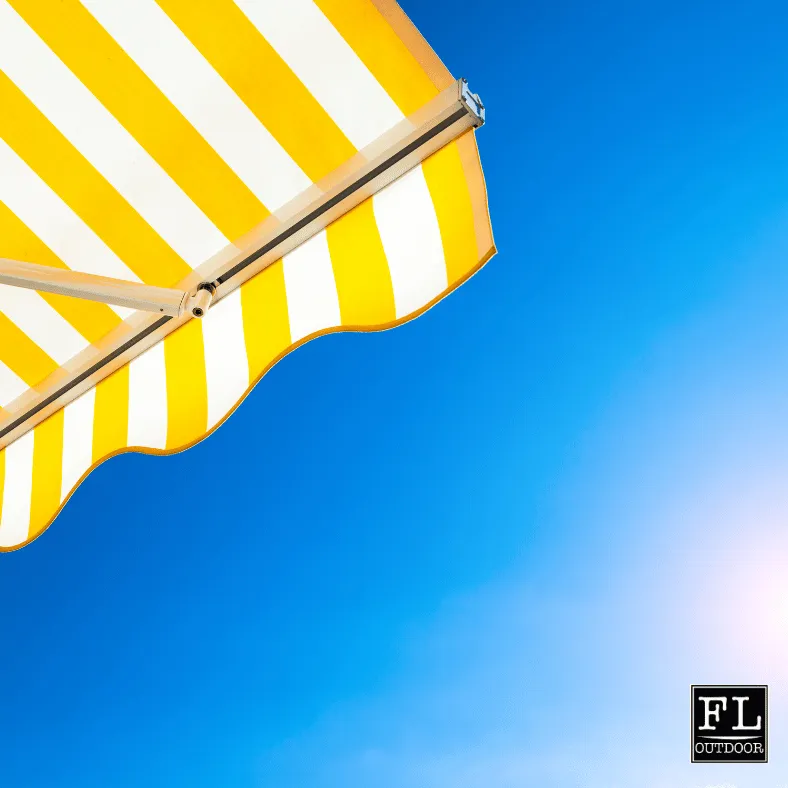
Retractable Awnings
Enjoy on-demand sun protection with retractable awnings, offering shade when you need it and open skies when you don't.
Motorized Awnings: Upgrade your outdoor space with motorized awnings, providing effortless sun protection at the touch of a button.
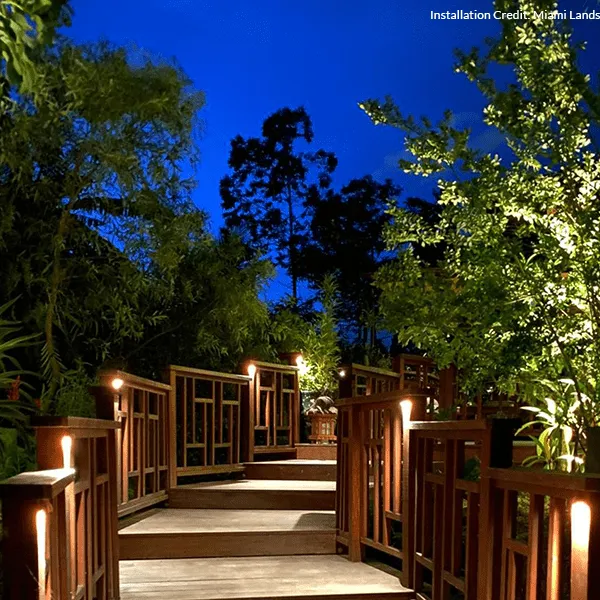
Landscape Lighting
Light up your home at night with beautiful, customized outdoor landscape lighting from Garden LED Lighting.
It doesn't matter whether you're looking to increase your home's security or boost its curb appeal; our team is here to bring your vision to life.
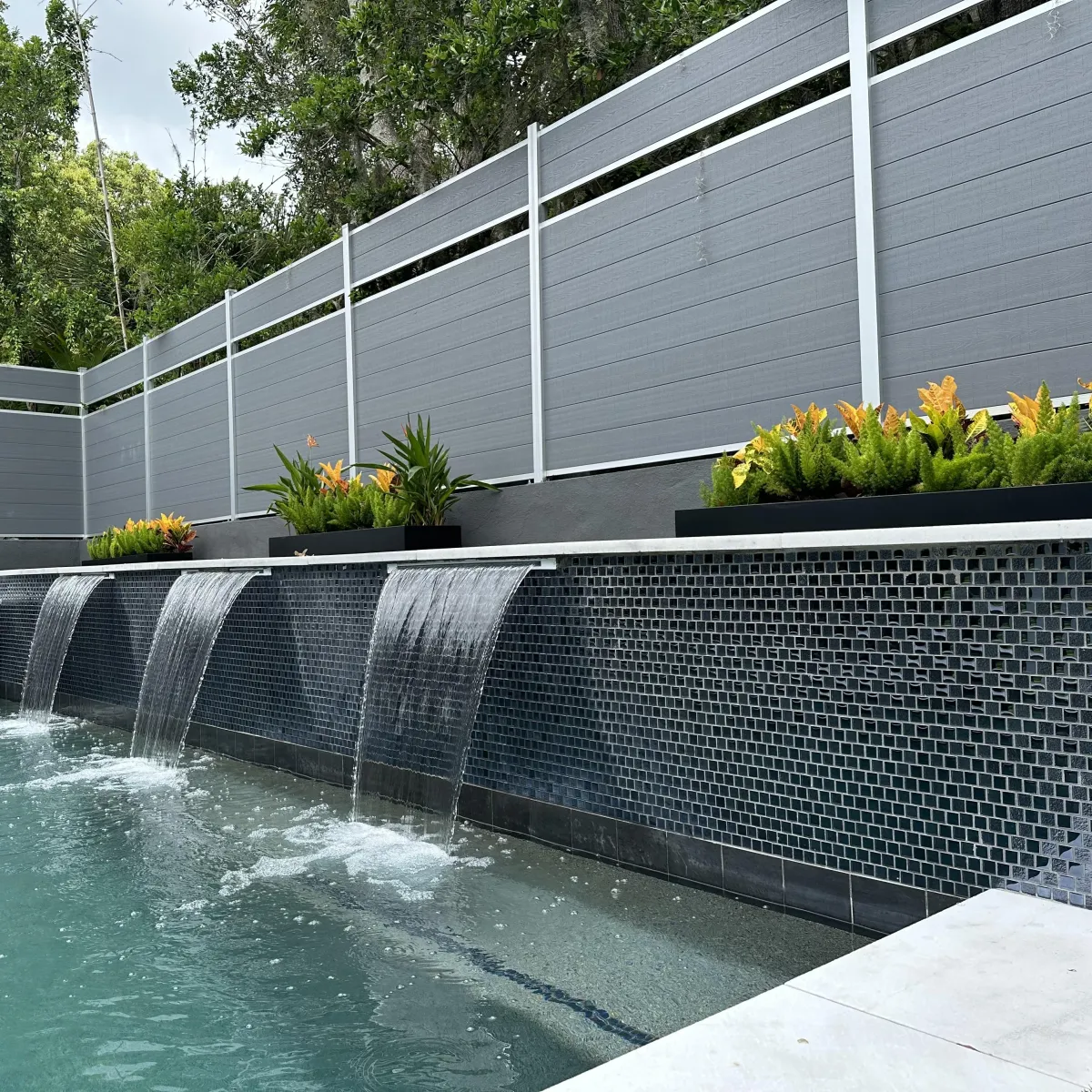
Greenwood Composite Fence
Need privacy in your backyard that combines aesthetics with durability and requires very little maintenance?
Welcome to Greenwood Fence. High-quality modern European-style fencing for the residential, commercial
Your Vision Deserves
A Partner
Who Cares...
WHY FLORIDA LIVING OUTDOOR...?
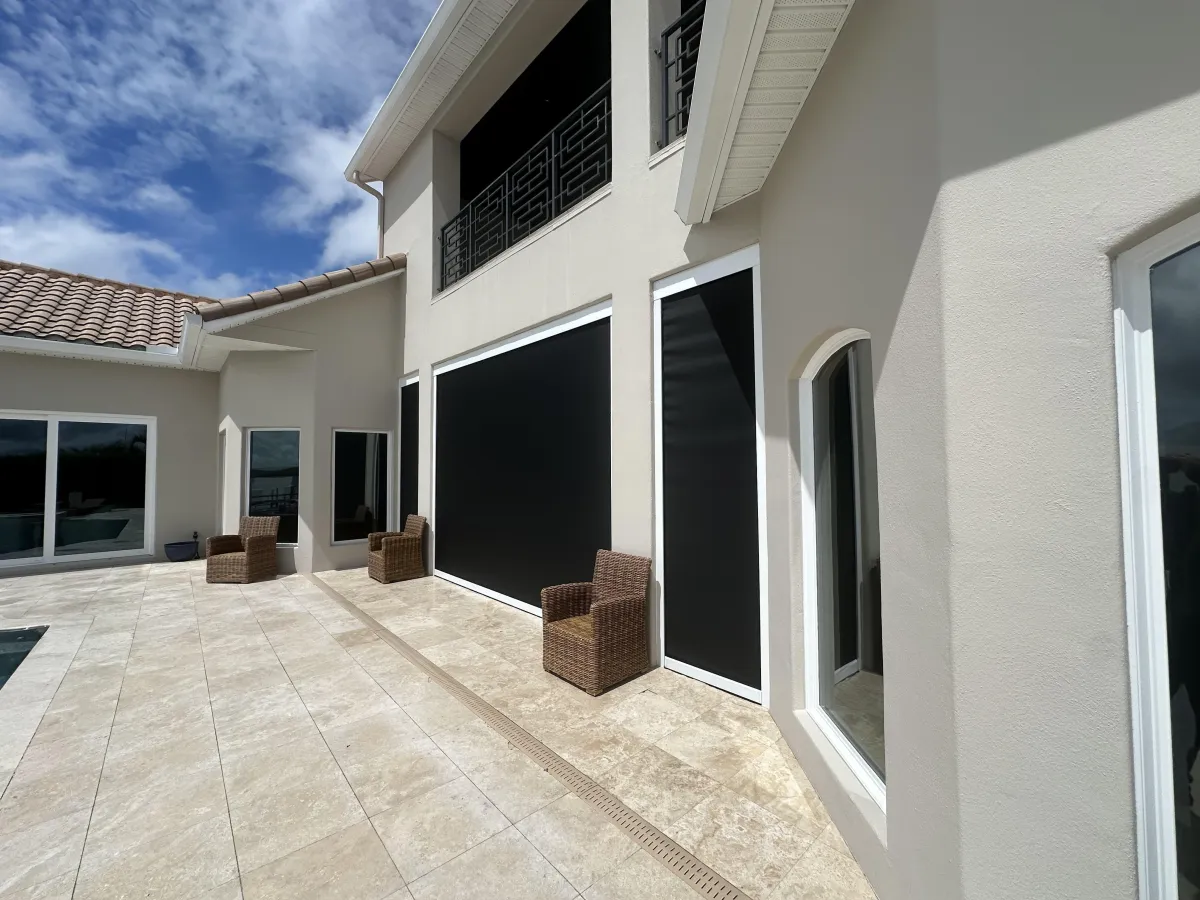
At Florida Living Outdoor, we specialize in enhancing, expanding, and protecting your outdoor living spaces, making them more functional and enjoyable. It does not matter if it is an open space, patio, or lanai. We offer top-of-the-line solutions, including motorized retractable screens, sun awnings, and aluminum pergolas.
At Florida Living Outdoor, we understand. When it comes to enhancing your outdoor living spaces or making them more functional, you're not just looking for a product. You are looking for a partner to help complete your vision.
The bottom line is that nobody knows Sun Pro Awnings, MagnaTrack Motorized Screens, and Fenetex Motorized Screens better than Florida Living Outdoor. We are Florida's number one Trusted resource for Motorized Screens and Awnings.
Don't Take Our Word For It.
Here Is What People Are Saying About Florida Living Outdoor.
Take Total Control of Your Outdoors.
Block the sun. Light up the nights. The perfect backdrop
Retractable Awnings
Enjoy on-demand sun protection with retractable awnings, offering shade when you need it and open skies when you don't.
Motorized Awnings: Upgrade your outdoor space with motorized awnings, providing effortless sun protection at the touch of a button.
Landscape Lights
Light up your home at night with beautiful, customized outdoor landscape lighting from Garden LED Lighting.
It doesn't matter whether you're looking to increase your home's security or boost its curb appeal; our team is here to bring your vision to life.
Greenwood Composite Fence
Need privacy in your backyard that combines aesthetics with durability and requires very little maintenance?
Welcome to Greenwood Fence. High-quality modern European-style fencing for the residential, commercial
Your Vision Deserves
A Partner
Who Cares...
WHY FLORIDA LIVING OUTDOOR...?
At Florida Living Outdoor, we specialize in enhancing, expanding, and protecting your outdoor living spaces, making them more functional and enjoyable. It does not matter if it is an open space, patio, or lanai. We offer top-of-the-line solutions, including motorized retractable screens, sun awnings, and aluminum pergolas.
Bottom line, we install the products that actually win their job. For Category-5 hurricane protection, MaxForce Hurricane Screens by Fenetex — engineered for daily-use, code-compliant storm protection. For everyday shade, insect, UV, and privacy protection, OneTrack motorized screens, engineered with a patented self-adjusting tension system, welded seams, and UV-stable fabrics made for long-term Florida exposure.
For the full picture of outdoor living — Sun Pro awnings, Azenco-Outdoor pergolas, Greenwood Fence, and Garden LED lighting — all under one veteran-owned roof.
Don't Take Our Word For It.
Here Is What People Are Saying About Florida Living Outdoor.
Your Vision Deserves
A Partner
Who Delivers...
Your Vision Deserves
A Partner
Who Delivers...
Aluminum Pergolas -Turn Your Patio Into the Room Everyone Wants
An aluminum pergola gives you shade, structure, and a reason to stay outside longer.
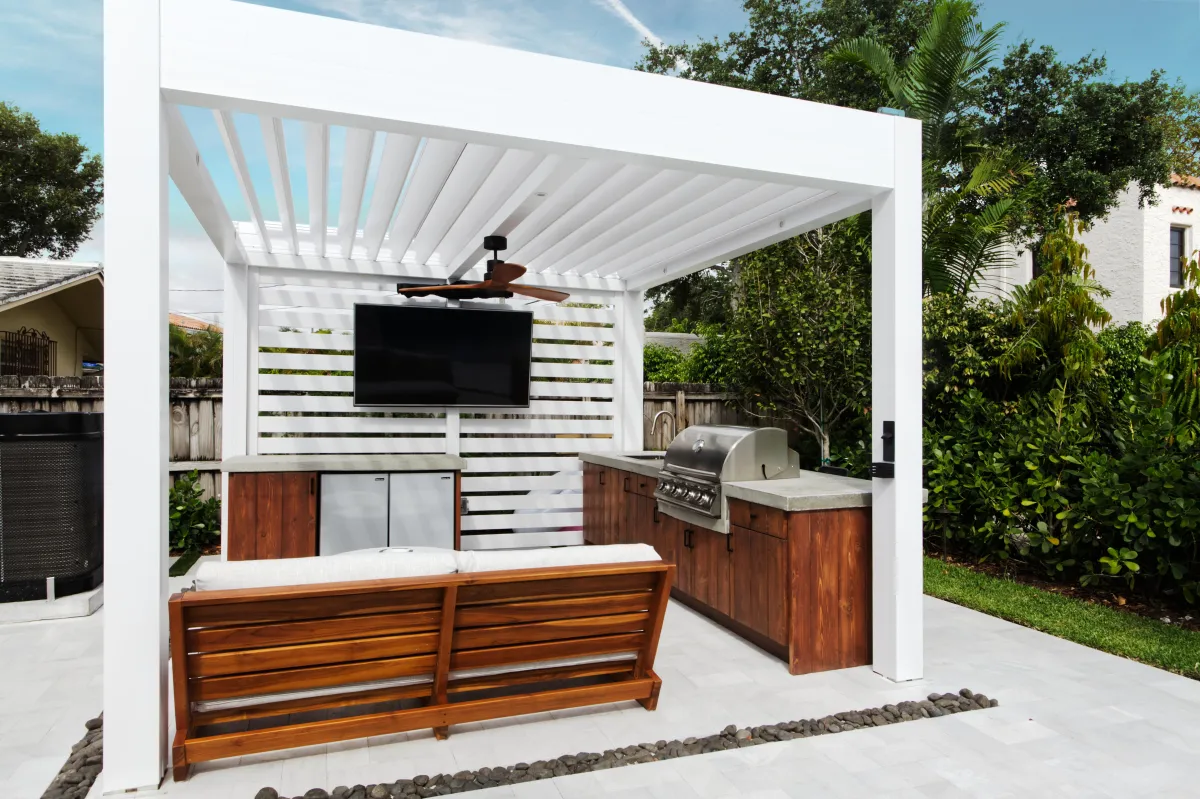
Louver Roof Pergolas
Enhance your outdoor space with aluminum pergolas with louvers, This modern pergola idea lets you control sunlight and airflow, creating the perfect ambiance year-round.
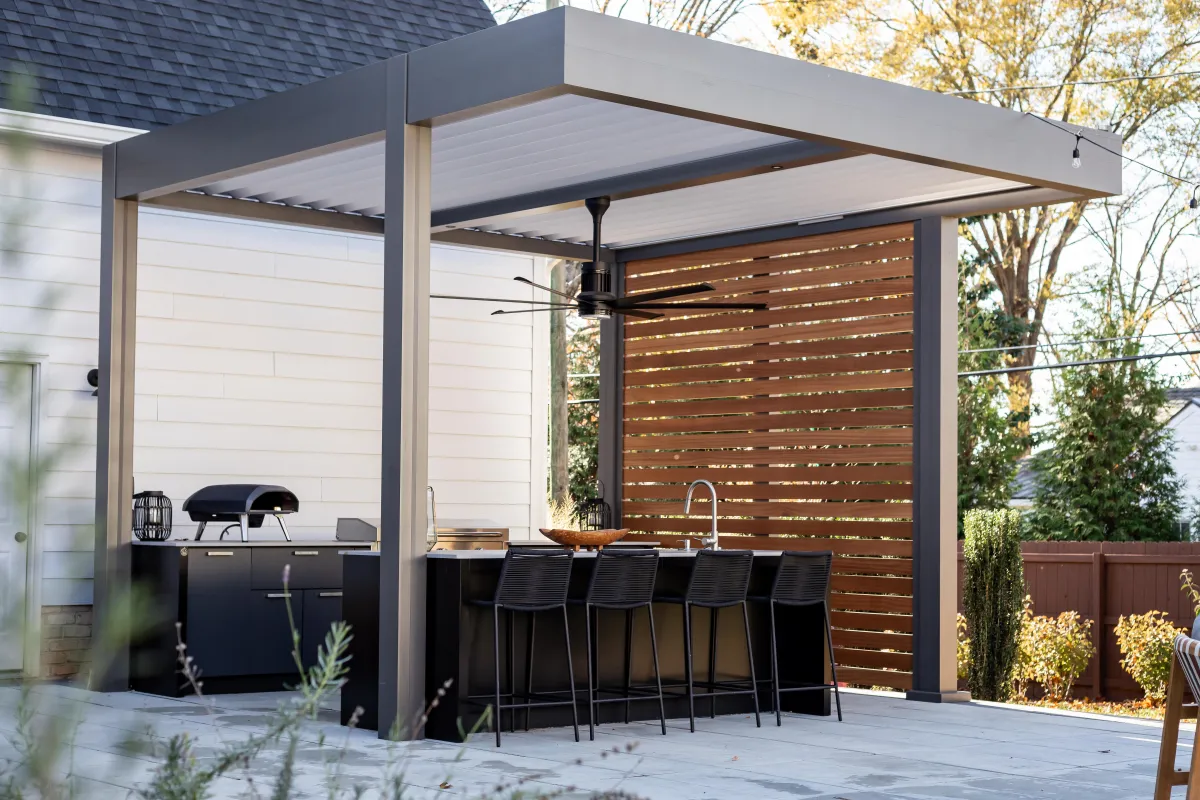
Insulated Roof Pergolas
For a cooler, more comfortable outdoor retreat, insulated roof pergolas provide superior protection from heat and rain. This pergola idea blends style and function, making your patio usable in any season.
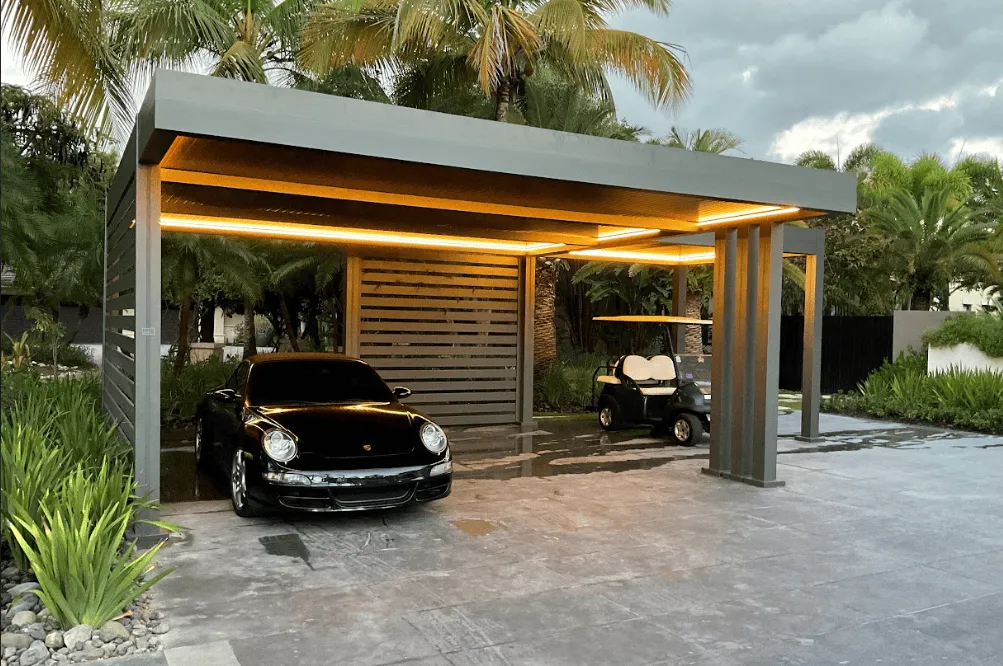
Car Port and Sun Shades
Protect your vehicles with durable aluminum carports, a sleek and modern alternative to traditional garages, creating curb appeal while shielding your car from the elements.
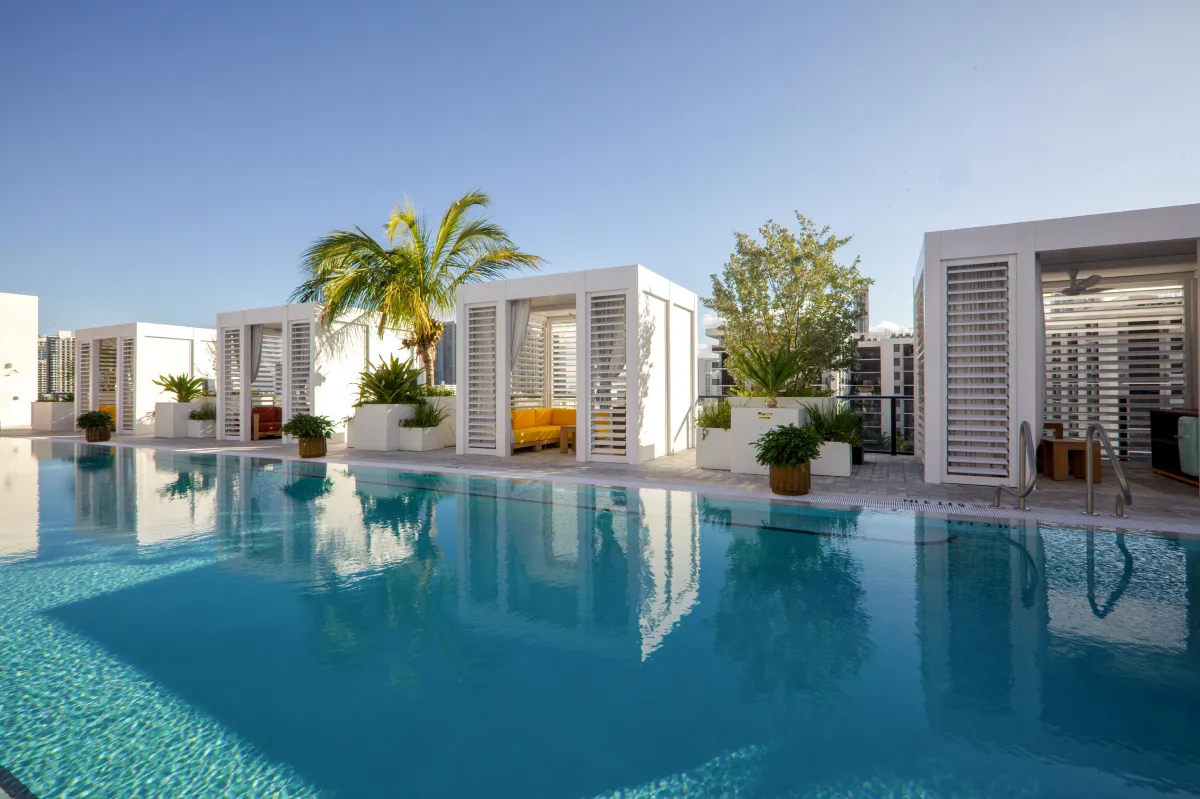
Aluminum Cabanas
Create a private, resort-style escape with aluminum cabanas, perfect for poolside lounging or outdoor entertaining. This pergola idea combines shade, style, and durability for a luxurious backyard retreat.
The Florida Living Outdoor Advantage

Luxury Products
Each product is chosen for quality — we proudly install only premium-grade systems that function well in creating those outdoor spaces. Our hurricane and motorized screens are engineered to truly enhance your outdoor living experience and deliver trouble-free performance year after year and long-lasting beauty.

Local Experts
As a family-veteran-owned, faith-based business, our team brings a personal touch to every project. We care. Our goal is to ensure your satisfaction and deliver unmatched service and outdoor luxury spaces.

Extensive Experience
FL Outdoors possesses a track record of 26 years of serving major clients; our extensive experience speaks for itself. Trust our licensed Class A contractor services for excellence in installation and customer satisfaction.

Superior Service
At Florida Living Outdoor, white-glove service is our hallmark. Your job is to dream and let us create a smile. We prioritize your needs, ensuring a hassle-free experience from consultation to installation.
The Florida Living Outdoor Advantage
Luxury Products
Each product is chosen for quality — we proudly install only premium-grade systems that function well in creating those outdoor spaces. Our hurricane and motorized screens are engineered to truly enhance your outdoor living experience and deliver trouble-free performance year after year and long-lasting beauty.
Local Experts
As a family-veteran-owned, faith-based business, our team brings a personal touch to every project. We care. Our goal is to ensure your satisfaction and deliver unmatched service and outdoor luxury spaces.
Extensive Experience
FL Outdoors possesses a track record of 26 years of serving major clients; our extensive experience speaks for itself. Trust our licensed Class A contractor services for excellence in installation and customer satisfaction.
Superior Service
At Florida Living Outdoor, white-glove service is our hallmark. Your job is to dream and let us create a smile. We prioritize your needs, ensuring a hassle-free experience from consultation to installation.
Your Vision Deserves
A Partner,
Not Just A Vendor
Florida Living Outdoors Solutions
Dual Specialties
Residential Solutions
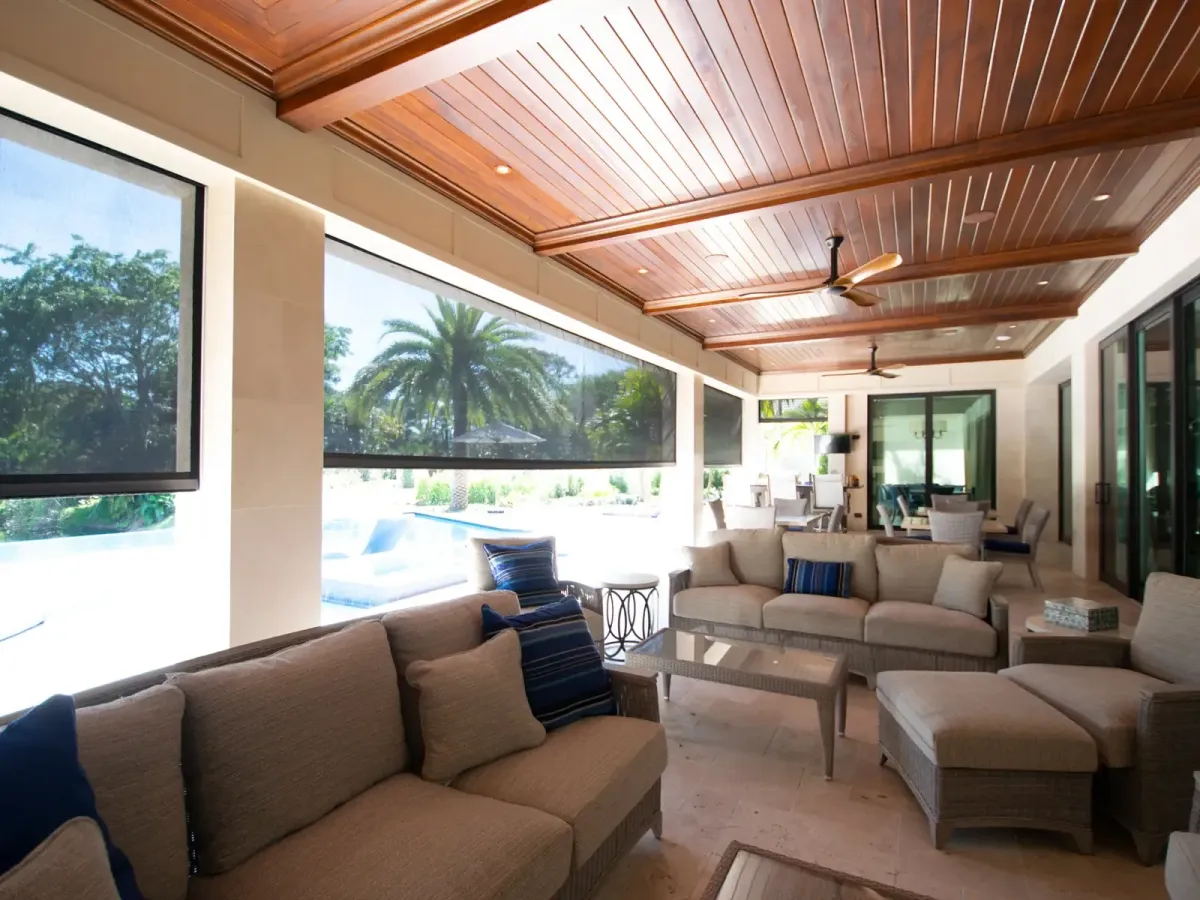
Your Florida home should be a sanctuary for relaxation, family time, and maybe even entertaining. Adding Motorized Screens to patios empowers you to curate any outdoor space to complement your aesthetics and meet your needs.
From Lanai Living to patio perfection, poolside cabanas to garages, and windows to doors, there are motorized screen options for every situation. Need motorized design ideas or a price check? Check out our motorized screen residential design guides and calculator.
Commercial Solutions
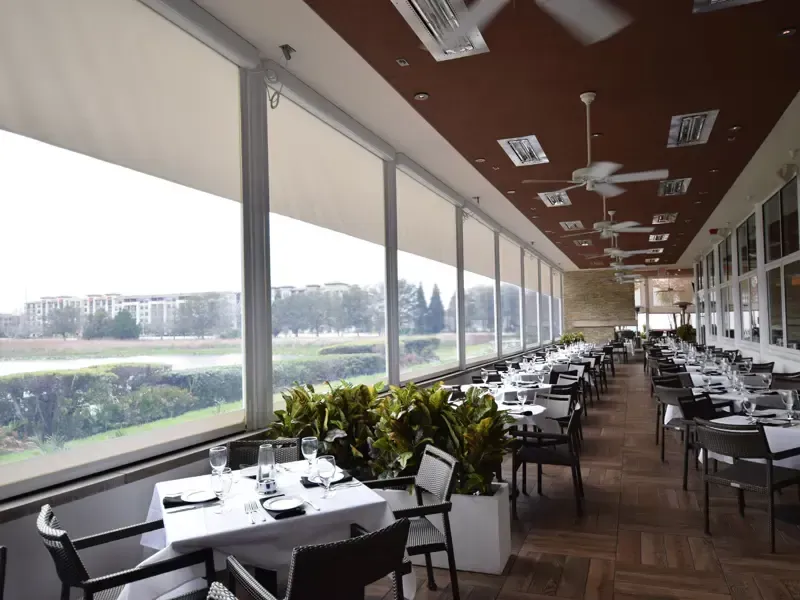
Whether you're investing in your restaurant's patio seating or weatherproofing your outdoor event space, ensuring those areas remain usable and enjoyable for guests is critical to your bottom line and ultimate business success.
Does your restaurant’s patio contend with glaring sun? Or maybe the luxury outdoor kitchen area is being invaded by bugs? Maybe the upcoming hurricane season has you concerned. Whatever the challenge, Florida Living Outdoor, Fenetex, and MagnaTrack Motorized got you covered.
Your Vision Deserves
A Partner,
Not Just A Vendor
Florida Living Outdoors Solutions
Dual Specialties
Residential Solutions
Your Florida home should be a sanctuary for relaxation, family time, and maybe even entertaining. Adding Motorized Screens to patios empowers you to curate any outdoor space so it complements your aesthetics and meets your needs.
From Lanai Living to patio perfection, poolside cabanas to garages, and windows to doors, there are motorized screen options for every situation. Need motorized design ideas or a price check?
Check out our motorized screen residential design guides and calculator.
Commercial Solutions
Whether you're investing in your restaurant's patio seating or weather-proofing your outdoor event space, making sure those areas remain usable and enjoyable for guests is critical to the bottom line and your business' ultimate success.
Does your restaurant's patio contend with glaring sun? Or maybe the luxury outdoor kitchen at your home is being invaded by bugs? Maybe the upcoming hurricane season has you concerned.
Whatever the challenge, Fenetex Motorized screens and our full outdoor solutions line are engineered to keep your commercial space open, comfortable, and operational year-round.
Outdoor Living Explained
Real Advice From 26 Years of Florida Outdoor Living
The outdoor resource Floridians trust for expert tips on shade solutions, hurricane preparedness, product reviews, and patio and lanai transformations. Be in the know before you decide.
FL Outdoor News
Stay up to date with the latest news.
FAQ - FLORIDA LIVING OUTDOORS
What does Florida Living Outdoor install?
Florida Living Outdoor designs and installs motorized hurricane screens, retractable awnings, luxury louvered pergolas, custom fencing, outdoor lighting, and insect and solar screen systems. We serve Florida homeowners and commercial properties from Daytona Beach through Orlando, Tampa, the Treasure Coast, and South Florida. Every system is installed by our in-house crews — never subcontracted — and backed by a 3-year craftsmanship warranty.
How much do motorized hurricane screens cost in Florida?
Motorized hurricane screen pricing in Florida typically ranges from $3,500 to $9,500 per opening, depending on size, mesh weave, motor type, and structural attachment. Larger openings, integrated smart-home controls, and impact-rated installations move toward the upper end. We provide written, itemized quotes after an on-site measurement — no estimates over the phone, because hurricane screens are engineered to your specific opening, not sold off a shelf.
What is MaxForce 365 and when does it launch?
MaxForce 365 is the world's first motorized hurricane screen with a spring retention and self-correcting tensioning system, eliminating the manual recalibration conventional screens require over their lifespan. Manufactured by Fenetex with patent pending, MaxForce 365 carries the same Miami-Dade County Notice of Acceptance approval as the existing MaxForce line — the most demanding hurricane protection certification in the United States. The system launches June 29, 2026, and Florida Living Outdoor is a launch-day certified dealer.
How long does a hurricane screen installation take?
Most residential hurricane screen installations take one to three days on-site, depending on the number of openings and structural complexity. Lead time from contract signing to installation is typically four to eight weeks, accounting for engineering, permit approval, and manufacturing. Commercial projects and multi-unit installations follow a project-managed timeline scoped during design. We handle all permitting, HOA submittals, and final inspection coordination.
What's the difference between a hurricane screen, an insect screen, and a solar screen?
Each is engineered for a different job. Hurricane screens withstand Category-5 winds and debris impact, deploying for storm protection. Insect screens block mosquitoes, no-see-ums, and flying debris while allowing breeze through — ideal for daily lanai and patio use. Solar screens use a denser weave to reduce solar heat gain by up to 80%, lowering cooling costs and protecting interior furnishings from UV damage. Many Florida Living Outdoor customers install two systems on the same opening — one for daily comfort, one for storms.
What service areas does Florida Living Outdoor cover?
Florida Living Outdoor serves homeowners and commercial properties across Central Florida, the Space Coast, the Treasure Coast, Tampa Bay, and South Florida — including Orlando, Oviedo, Winter Park, Cocoa Beach, New Smyrna Beach, Vero Beach, Stuart, Jupiter, Tampa, Sarasota, Naples, Deerfield Beach, Lighthouse Point, Plantation, and Southwest Ranches. We coordinate larger commercial and coastal projects statewide. All work is performed under DBPR licensure CGC1532839.
How much does a retractable awning cost in Florida?
Retractable awning pricing in Florida typically ranges from $2,800 to $8,500 installed, depending on projection width, motor and remote configuration, fabric grade, and wind sensors. Motorized models with sun, wind, and rain sensors deploy and retract automatically based on conditions. A properly sized awning lowers patio temperatures by 15 to 20 degrees, reduces sun-driven interior fading, and pays for itself in expanded usable outdoor square footage faster than most homeowners expect.
What is a louvered pergola and how is it different from a regular pergola?
A louvered pergola has motorized aluminum slats in the roof that rotate from fully open to fully closed at the press of a button — letting you control sun, shade, and rain in real time. A traditional fixed pergola has decorative beams with no weather control. Florida Living Outdoor installs Azenco louvered pergolas, engineered for Florida wind loads and integrated with lighting, heaters, screens, and smart-home controls. They function year-round in Florida's climate, unlike fixed pergolas which become unusable in rain or peak summer sun.
Your Vision Deserves
A Partner
Who Listens...
FL Outdoor News
Stay up to date with the latest news.
FL Outdoor News
Stay up to date with the latest news.
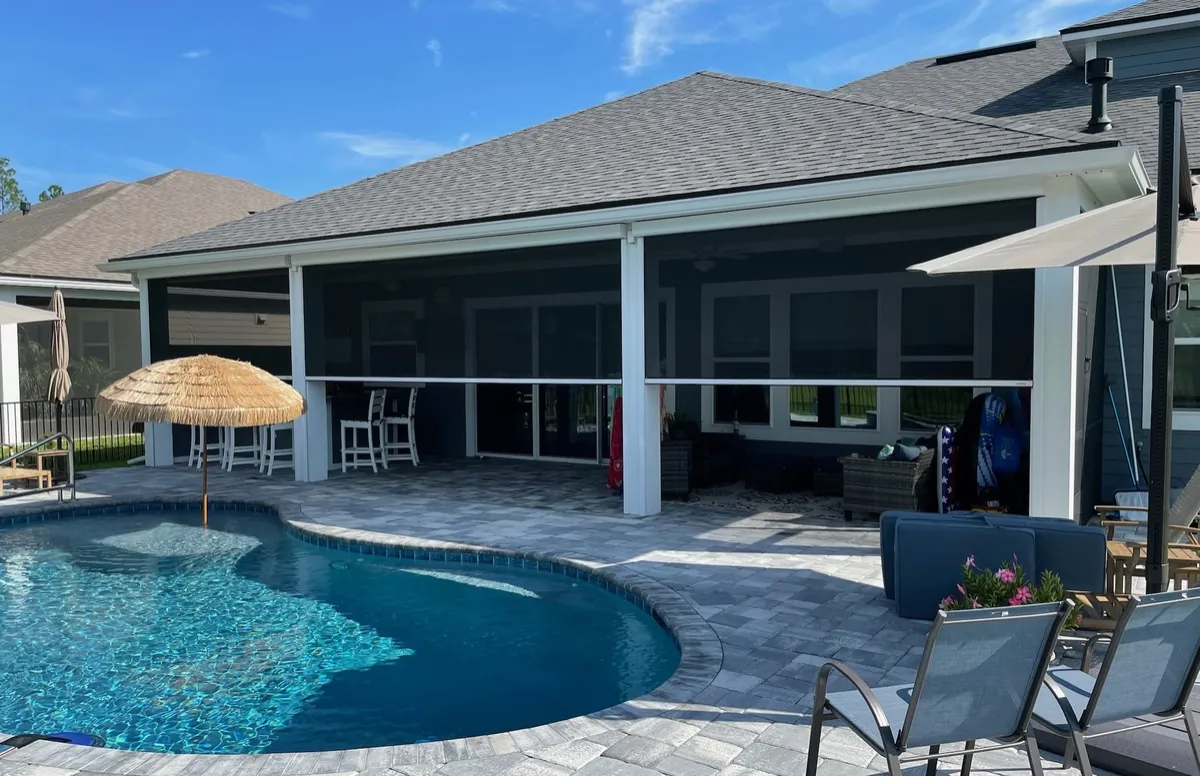
Top 10 Mistakes Homeowners Make Choosing a Motorized Screen: An Interview With Florida Living Outdoor
On installation day, two motorized screens can look identical. Same bronze housing tucked against the header. Same mesh gliding down in a clean, quiet line. Same remote resting in the homeowner's hand. The difference stays hidden until a July afternoon, when the sky over the lanai turns the color of a bruise and the first gust hits. One screen flexes and holds. The other bellies out of its track and slaps against the frame like a loose sail.
Kip has spent his career learning to tell those two screens apart before the storm does. The owner of Florida Living Outdoor has worked in the outdoor service industry for more than 25 years. In 2019 and 2020, he co-hosted the Florida Home and Garden Radio Show, part of News 96.5 WDBO's Ask the Experts weekend lineup, where he fielded homeowners' questions and worked to strip the myths out of the marketing. Since late 2020, his company has installed more than 500 motorized screen systems, working with magnetic, spring-tensioned and zipper-retention designs along the way.
His own journey started with patio furniture. "I got tired of buying my wife patio furniture every three to five years because the Florida sun and weather destroyed it," he says. "I'm an owner. My job is solutions." The deeper he dug, the more the screens did. They cut the afternoon glare, kept out the bugs and, when they were built for it, stood up to hurricanes.
He also learned that the job doesn't end when the installers drive away. Over the years, some manufacturers didn't do right by homeowners, and his company "went and fought for our customers," he says. "A motorized screen is more than getting installed. It's what happens afterwards that defines the journey and the experience."
That is the lens for everything that follows. The ten mistakes below rarely reveal themselves on installation day. They surface in year two or year five, as a jammed weight bar, a burned-out motor, a warranty claim that comes back denied, or a housing working loose from a wall. Each one grows from the same assumption, and each one can be stopped with a single question asked before you sign.
Quick Answer: Assuming all motorized screens are equal. Every system has the same six components: a housing, a motor, a reel, a weight bar, two side tracks and the screen fabric. How each one is engineered decides whether it survives Florida. A fixed track can let a screen pop out under what installer Kip of Florida Living Outdoor estimates is 10 to 20 pounds of pressure, while a floating track flexes and keeps the screen seated. Zippers wear and lose teeth; a keder edge, like the bolt rope on a sail, rarely pulls free. For storm protection, ask for the Florida Product Approval number, not the phrase "wind abatement." Choose fabric by what you need it to block, since no-see-ums pass through standard insect mesh. Pay roughly $100 more per motor for obstacle detection, insist on laser measuring, ask how a housing that can weigh 100 to 200 pounds will be anchored to your structure, and read every warranty line by line, because "lifetime" often means the product's lifetime and may be prorated.
Mistake 1: Assuming all motorized screens are created equal
When a homeowner first calls you, what have they usually gotten wrong before you even arrive?
Most have already collected a quote or two, and most are comparing the bottom line. "They think that all motorized screens, and the manufacturers that make them, are equal," Kip says. "Quite the opposite."
He reaches for the car lot to explain it. An economy hatchback and a hand-built luxury coupe both roll on four wheels. Both have a body, an engine and a transmission. Park them side by side, and a quick glance won't tell you which one will still run smoothly at 200,000 miles. "You get what you pay for," he says. "The truth is often under the hood and in the hand stitching on the seats."
Motorized screens work the same way. Every one is built from six components: the housing, the motor, the reel the screen winds onto, the weight bar, two side tracks and the screen stretched between them. What separates a good system from a poor one is the job it was engineered to do. "There's a difference between a vehicle built for the Baja 500 and one built for a casual Sunday drive," Kip says.
In Florida, the Baja 500 runs through your backyard every summer: daily thunderstorms, punishing UV, salt air near the coast and, for many homes, hurricane season looming behind it all. The first place that difference shows is in the two aluminum channels running down either side of your opening. For how that difference adds up in dollars over the life of a system, see what a motorized screen returns in Florida.
The question to ask: What conditions was this screen engineered for, and how is each of the six components built?
Mistake 2: Ignoring the track
Of the six components, which one fails first on a screen that wasn't built for Florida?
The track, Kip says, and it often fails in a single gust. There are two basic designs. A fixed track grips the edge of the screen rigidly and permanently, so when wind presses on the fabric, the force has nowhere to go but out. A floating track pairs a fixed outer track with a self-articulating inner track, held in place by magnets in some systems and leaf-style springs in others. When the wind pushes, the inner track gives, then guides the screen back to center.
"A fixed track can be dislodged from the side track with 10 to 20 pounds of external pressure," he says, drawing on what he has seen in the field. Ten to 20 pounds is not a hurricane. "That's a Florida afternoon thunderstorm, or three martinis on a Friday night."
He has been called out "multiple times" after it happened: the screen bowed out of its track, one edge hanging free, the lanai suddenly open to the rain. It isn't a fix for a ladder and a screwdriver. "The only way to fix it is to call the company."
Whether a screen pops loose, though, depends on more than the track. It also depends on what holds the fabric inside it.
The question to ask: Is this track fixed, or does it float and flex under pressure?
Mistake 3: Overlooking side retention and friction
How is the screen actually held inside the track, and why does it matter?
Hidden inside every track, the edge of the screen is held by one of three things: a cable, a zipper or a keder. Keder is borrowed from sailing. It is the rounded cord along the edge of a sail that slides into a slot in the mast and keeps the sail captive in a gale. "They rarely dislodge," Kip says.
Zippers are another story. Picture the zipper on a pair of jeans split down the middle, one half stitched to the screen, riding up and down an aluminum channel hundreds of times a year. "Zippers constantly dislodge and cause damage to the teeth," Kip says. "It's metal on metal friction. It won't end well." Each time one pops loose, more teeth bend or break, and the next failure comes easier.
Whatever holds the edge, the manufacturer has to tune the friction between screen and track. Too much, and the motor strains on every trip up, heating and wearing until it burns out. Too little, and the screen loses tension on the way down, so the fabric bunches, overlaps and flaps, and a service call follows.
None of this appears in a brochure, so Kip tells homeowners to ask for it outright: "Talk to me about the manufacturer. Talk to me about how that screen is made, what makes it work, and what problems it can have." That raises the next question: can the person sitting at your kitchen table actually answer?
The question to ask: Is the screen held by a cable, a zipper or a keder, and how is side friction controlled?
Mistake 4: Trusting the salesperson without testing them
What's the biggest mistake homeowners make with the person sitting across the table?
Motorized screens have gone mainstream, and manufacturers are racing to claim the market. That race has filled the industry with eager salespeople, some of whom learned the product last month. Homeowners, meanwhile, assume whoever holds the clipboard knows more than they do. "They assume the person or company in front of them knows what they're doing," Kip says.
He listens for one sentence on every estimate: "Well, I'm not the professional. You are. I trust you." When he hears it, he stops, whether or not he wins the job. "I want you to eliminate that statement from your way of thinking," he tells homeowners, "because you just gave them a carte blanche check to decide what's right for you. And they will."
"Yes, I'm the professional in motorized screens, but I am not the professional of your wants, needs and desires. So we're going to have to slow down and find those, because it's my job to match your needs and desires to the right application."
Trust should be earned in the conversation, and Kip offers two simple ways to test it. First, ask the person to explain how the system operates beyond going up and down. Every system works on the same basic principle, so you aren't grading the answer. You're listening for whether they know the process. "If you listen closely, you can tell if somebody knows their product," he says.
Second, ask them to walk you through what happens, step by step, if you sign today: measurements, ordering, installation, all the way to the final walkthrough. Then stop talking. "Do they give you a highlight reel and move on, or do they genuinely explain it?" Every company has its own process, and there is no single right answer. What you're learning is whether the person asking for your money, and your plans for your home, truly knows theirs.
Nowhere does that knowledge matter more than when the conversation turns to hurricanes.
The question to ask: How does this system work beyond up and down, and what happens at every step after I sign?
Mistake 5: Confusing "wind abatement" with hurricane protection
What do homeowners most often misunderstand about hurricane protection?
The trouble starts with the vocabulary. "Wind abatement." "Storm-rated." "Tested to withstand." Kip calls the industry "full of gray" rather than black and white, and says some sellers ride that gray right up to the edge of black. Homeowners hear the words and picture a shield. What they may be buying is a screen that was never tested to a hurricane standard at all.
His shortcut cuts through the fog: ask for the Florida Product Approval number. Florida's statewide product approval system has been in place since 2003, and approved products can be looked up at floridabuilding.org. An approval tells you two things, Kip says: the product has been formally tested and engineered, and it states whether it can be used in the High-Velocity Hurricane Zone. Under the Florida Building Code, that zone covers Miami-Dade and Broward counties, and an approval may or may not include it.
Then ask where the testing happened. "A lot of times the manufacturer will go, oh, we tested," he says. "Well, where'd you test? Does it have TAS testing? Does it have ASTM testing?" In-house testing by the company selling the product can lose objectivity, he adds, though "not all manufacturers. There's some good manufacturers out there with core principles, and their tests are genuine."
Even an approved product isn't one-size-fits-all, because wind doesn't press evenly on a house. Engineering standards treat the corners and edges of a wall as a higher-pressure zone than its middle, and the load climbs with height, so a second-story opening faces different forces than one at ground level. "The person you're talking to has to be knowledgeable and understand those things," Kip says. And an everyday insect or solar screen, however sturdy it looks, is not hurricane protection. When high winds are coming, it belongs rolled up inside its housing, not stretched across the opening.
That brings us to the screens most homeowners actually buy, and the fabric that does the everyday work.
The question to ask: What is the Florida Product Approval number, does it cover the High-Velocity Hurricane Zone, and who did the testing?
Mistake 6: Choosing fabric before auditing what you need
Where do fabric choices go wrong?
It usually starts with one pain point spoken out loud: "I want to get rid of the bugs." The salesperson nods, opens the sample book, and the homeowner picks a standard insect mesh in a color that matches the trim. Weeks later, on the first still evening, they're sitting behind brand-new screens, scratching their ankles.
"Nobody stopped to ask about the little tiny bugs that bite, the ones you can't see," Kip says. No-see-ums, the biting midges that rise from damp ground at dawn and dusk, are small enough that University of Florida entomologists describe them passing easily through ordinary window screen. "When you make this major investment and your screen is set up for regular insects, it becomes frustrating." Florida's biting season starts earlier than most people expect, as mosquitoes don't care that it's only March explains.
That's why Kip opens every fabric conversation with an audit of how you actually use the space, not a sample book. "What am I asking the screen to do? What's bothering you? Is it the sun when you walk outside at 4 p.m., the bugs that bite at 7 p.m., or packing up your patio furniture?"
Solar fabrics bring a trade-off of their own. They're rated by how much they block, from roughly 60% to about 97%, and the number tells you what stays outside. "If I have a 90, that means 90% of what's outside stays outside, and 10% comes through," Kip explains, and that includes the breeze. In his experience, real control of sun and heat begins around 95%, and fabric below about 90% "will let the little guys in." That is how a homeowner who wanted both shade and bug protection ends up with an 80% sunshade: cooler in the afternoon, still bitten at dusk. "The salesperson is trained to find your pain points," Kip says. "It takes a real person to connect the dots."
The fabric decides what the screen keeps out. The motor decides whether it keeps working.
The question to ask: What exactly am I asking this screen to block, and will this fabric stop no-see-ums?
Mistake 7: Getting mesmerized by the motor
What do homeowners get wrong about the motor and controls?
"Don't get mesmerized," Kip says. He has a name for it: the mesmerized syndrome. It's the feeling of walking a dealer's lot, sliding behind the wheel of something gleaming, and tuning out every word after "test drive." With screens, the gleaming part is the smooth, silent glide on demonstration day. The part that matters is buried inside the housing.
Only a handful of companies make motors for outdoor screens, plus white-label versions of their products, and each has its own track record. Kip's first question is whether the motor has obstacle detection. Picture the morning after a backyard party. A patio chair sits in the screen's path, forgotten. Someone taps the remote. Without obstacle detection, the motor keeps turning, the fabric keeps unspooling inside the housing, and the weight bar stays parked on the chair. Press "up," and the slack fabric folds back on itself around the roll. Now someone has to come out and rewrap it. With obstacle detection, the screen behaves like a garage door: it senses the chair and stops.
Kip puts the upgrade at roughly $100 more per motor, or $500 to $1,000 across a five-screen job. A single rewrap, he says, can cost around $500 in a service call, and he has seen that scenario repeat three or four times a year on some patios.
His second question is duty cycle. A light-duty motor that runs up and down every day wears out on a schedule, and replacements run $300 to $400 each, plus the visit. "It's like buying a low-slung luxury sedan when you live at the end of a washed-out dirt road," he says. "It won't be long before something starts happening. There's a right motor for every job."
The strongest motor, though, can't save a screen built to the wrong dimensions.
The question to ask: Does the motor have obstacle detection, and is it rated for how often I'll use it?
Mistake 8: Accepting a quick measurement and the wrong mount
What should homeowners watch for when the opening is measured?
Too many quotes happen like this: a quick stretch of the tape across the opening, a couple of numbers scrawled on a pad, a signature, and a promise of installation in a few weeks. Kip's response is three words: "Pump the brakes."
Motorized screens are built to order for one specific opening. "They don't make kits that are adjustable or come in a box," he says, so the measurement is the foundation for everything that follows. His team sets a horizontal line laser across the opening, establishes a benchmark, and measures from that line up to the header and down to the floor on both the left and right sides. The goal is to learn what the opening is really doing: whether the header drifts higher at one end, whether the patio slopes toward the yard.
Screens are designed to run square and plumb. If nobody accounts for a sloping floor or a crooked header, the housing gets installed tilted to look level, or slivers of daylight open under the weight bar. "Those are not fixable by an installer going, let me just tweak this," Kip says. "That is a complete reorder." Live with it, and the strain builds: fabric winding unevenly on the roll, a weight bar jamming on a diagonal, a motor burning out early, or a unit that "chitters and chatters and talks to you on its way up and down."
Where the housing sits matters just as much. Kip describes an estimate he sees often: a 10-foot-wide, 96-inch-tall opening. The homeowner wants the clean picture-frame look of a housing tucked under the header, and also wants a view. From inside a slightly elevated house, that opening already reads closer to 92 inches. Tuck the housing underneath, and in his example the view shrinks to about 86. "Is that what the customer asked for? No," he says. Mounting on the face of the opening, sometimes with a build-out of an inch or two, lifts the housing out of the sightline.
Getting the size and position right answers only half the question. The other half is what holds all that weight up.
The question to ask: How exactly do you measure, where will the housing mount, and how much of my view will it take?
Mistake 9: Ignoring how the unit attaches to your house
What gets overlooked about how the screen is actually fastened to the home?
Look up at a mounted housing and it reads as a slim, finished box. It isn't light. "A motorized screen is not something you're putting up that's 10 or 15 pounds," Kip says. "Often the roll and the housing going up there is 100-plus pounds, in some cases 200 pounds." That is roughly the weight of a grown man, suspended over the table where your family eats dinner, held by fasteners you will never see again once the trim goes on.
So Kip asks every installer for the attachment schedule. What type of screws or anchors? Where do they go? How deep do they embed? How far apart are they spaced? "The manufacturers often answer this in their product engineering," he says, "and it's very important that the unit gets installed according to that, or better, at a closer spacing."
He has seen what happens when someone guesses. "Somebody doesn't use the right anchors or the right screws, and that header unit falls off the wall or a track gets ripped out," he says. "That is dangerous when you have 200 pounds hanging over your head. It would make for a very bad Saturday afternoon, or even worse, possible loss of life." He has also seen units torn from walls during hurricanes, "not because the screen failed," but because the wrong screw or the wrong embedment let the wind rip the whole assembly free.
The tell is in how the estimator treats your house. "Do they stop and take the time to address it? Do they look at it? Do they feel it? Do they knock on it? Do they ask questions?" Kip says. "Is it wood? Is it block? Is it poured concrete? Or is it empty block? These things make all the difference in the world in how you secure it."
The fasteners hold the screen to your house. The warranty is supposed to hold the company to its promises, and that is where the last mistake hides.
The question to ask: What is my wall made of, and what fasteners, embedment and spacing will you use?
Mistake 10: Taking "lifetime warranty" at face value
What do homeowners miss about warranties?
"This is the most commonly manipulated fact," Kip says. The big numbers are hard to resist: 15 years, 30 years, lifetime. He compares it to the warranty pitch in a car dealer's finance office, which tends to arrive after you've fallen for the car and stopped listening.
Start with the word itself. "Lifetime is not your lifetime," he says. "It is the product's lifetime." The better manufacturers honor each component's warranty for its full term, whether two years or 30. Others shrink the promise over time, for example by prorating coverage after a set number of years, or by declining to cover parts they no longer make. Picture year three: a part fails, and the service tech explains it has been discontinued and the only fix is a whole new unit. "You're going to be mad," Kip says. "You'll probably pay double what you did the first time."
Next, know that a motorized screen carries a stack of warranties, not one: the unit itself (housing, tracks and weight bar), the powder coat that keeps it looking new, the motor, the remotes and controls, the fabric, and the installer's own labor and craftsmanship. Kip insists on a motor with a five-year manufacturer warranty, "because if something's going to go down on a motorized screen system, it's going to be the motor first." Remotes are often covered for only a year or two, and a $200 replacement "will turn into $400 very easily." Fabric coverage varies by type; in his experience, solar fabrics typically carry about 10 years, premium solar fabrics around 15 and insect screens about five.
Finally, learn the difference between a defect and what Kip calls a self-inflicted wound: something knocked through the mesh, or a non-hurricane screen left down in high winds when it should have been rolled up. Then ask the company to sit down and go through the warranty with you. "Not just bullet point this, bullet point that," he says. "Show me the details. You'll understand real quickly how that product is made."
The question to ask: Can we go through every warranty, including yours, line by line, and what happens if a part is discontinued?
The 10 mistakes and the question that prevents each
Frequently asked questions
Are all motorized screens the same?
No. Every motorized screen has the same six components (housing, motor, reel, weight bar, two side tracks and the screen), but the engineering of each one varies widely. The track design, side-retention method, motor and fabric decide whether a screen holds up to daily Florida weather or needs repeated service.
What is the difference between a fixed track and a floating track?
A fixed track holds the screen rigidly, so strong outside pressure can pop the screen out; Kip of Florida Living Outdoor estimates it can take as little as 10 to 20 pounds. A floating track pairs a fixed outer track with an articulating inner track held by magnets or springs, so it flexes under load and keeps the screen seated.
How do I know if a motorized screen is real hurricane protection?
Ask for its Florida Product Approval number, which you can look up at floridabuilding.org, and check whether the approval covers the High-Velocity Hurricane Zone (Miami-Dade and Broward counties). Be cautious of "wind abatement" claims backed only by in-house testing. Regular insect and solar screens are not hurricane protection and should be raised in high winds.
Will a regular insect screen keep out no-see-ums?
Usually not. University of Florida entomologists note that biting midges are small enough to pass through ordinary window screen. If no-see-ums are the problem, tell your installer at the start and choose a fabric specified to block them.
Is obstacle detection worth paying for?
In Kip's experience, yes. It adds roughly $100 per motor, while a single rewrap caused by a screen lowering onto a chair or other object can mean a service call of around $500. Obstacle detection stops or reverses the screen when something is in its path, much like a garage door.
How should a motorized screen be attached to my house?
According to the manufacturer's engineering for that product, or with closer fastener spacing. A housing and roll can weigh 100 to 200 pounds, so ask what screws or anchors will be used, how deep they embed, how far apart they are, and whether the installer has checked if your wall is wood, poured concrete, filled block or hollow block. The wrong fastener can let a unit pull off the wall, especially in a hurricane.
What does a "lifetime warranty" on a motorized screen actually cover?
Usually the product's lifetime, not yours, and often only certain components. Motors, remotes, fabric, powder coat and installation labor typically carry separate, shorter terms, and some warranties are prorated or exclude discontinued parts. Ask the company to go through every warranty line by line before you sign.
The bottom line
Go back to those two screens on installation day: same housing, same smooth glide, same remote. Nothing a homeowner can see in that moment reveals which one will still be running quietly in year five and which one will be on its third service call. That was decided earlier, in the questions somebody did or didn't ask.
Kip has answered those questions on the radio, and he still answers them at kitchen tables across Florida. "We're not the cheapest," he says. "We're the company you call when you have a complicated situation and you're trying to figure it out." Whoever you choose, slow the conversation down. Ask how the screen is built, how it's measured, how it will be anchored, what the warranty really says, and who will stand behind it long after the installers have gone. If you'd like Florida Living Outdoor to walk through your opening with you, start with a consultation on motorized screens.
Sources
University of Florida IFAS Extension. Biting Midges, No-See-Ums Culicoides spp. (EDIS IN626). edis.ifas.ufl.edu
Florida Building Commission. Florida Product Approval: Questions and Answers. floridabuilding.org
Palm Beach County Planning, Zoning and Building. Product Approval (Rule 61G20-3, F.A.C.). discover.pbc.gov
Florida Roofing and Sheet Metal Contractors Association. Florida Building Code and Product Approvals. floridaroof.com
Engineering Express. ASCE 7 Wall Zones Explained. engineeringexpress.com
Custom Fence Orlando. News 96.5 WDBO and Custom Fence Orlando Team Up. August 3, 2019. customfenceorlando.com
Custom Fence Orlando. Ask The Expert, Radio Show News 96.5 FM (Florida Home and Gardens episode archive, 2019). customfenceorlando.com
Custom Fence Orlando. Hurricane Fence Preparedness Florida (Kip quoted as co-host during Hurricane Dorian, 2019). customfenceorlando.com
News 96.5 WDBO. Florida Homes and Gardens Show. news965.com
Interview with Kip, owner of Florida Living Outdoor, conducted October 2026. Figures attributed to Kip reflect his field experience and are not independent measurements.
Custom HTML/CSS/JavaScript

Your Vision Deserves
A Partner
Who Listens...
COMPANY
MOTORIZED SCREENS
SHADE SOLUTIONS
FENCING & LIGHTING
DESIGN IDEAS
SUPPORT



Copyright 2026. FL OUTDOOR. All Rights Reserved.
Powered and Built By