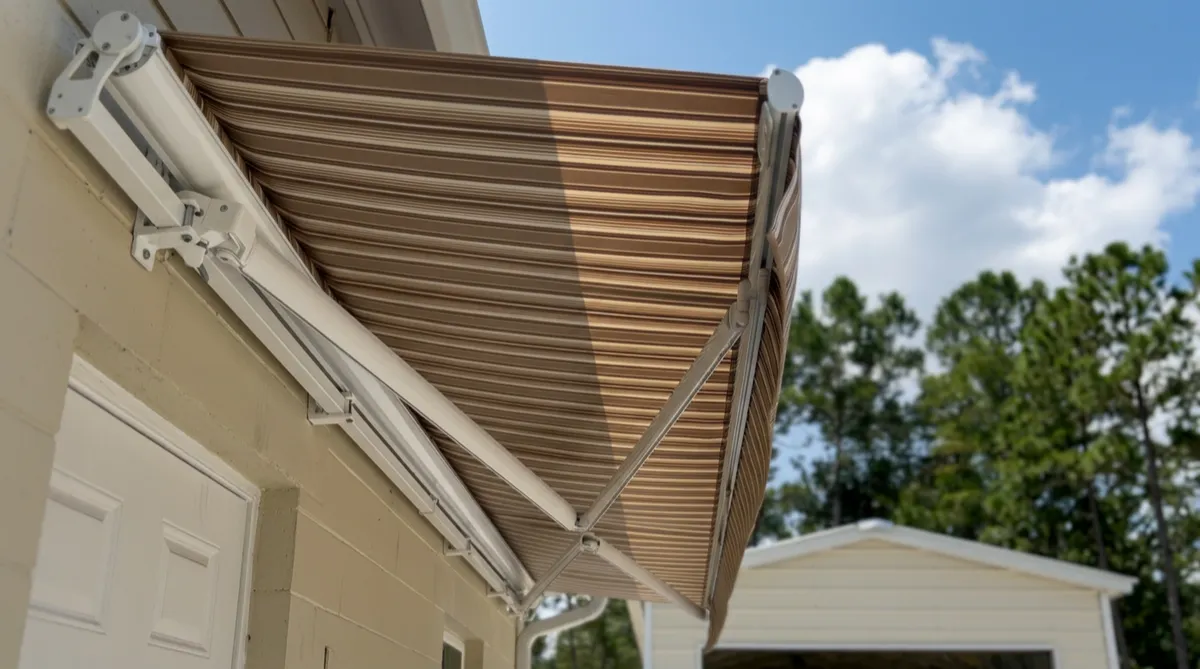
Retractable awnings
Shade when you want it, open sky when you don’t. A retractable awning rolls out over a patio that bakes in the afternoon and rolls back when you want the sun.
See awning optionsFLORIDA LIVING OUTDOOR
You have the space. We make it work.
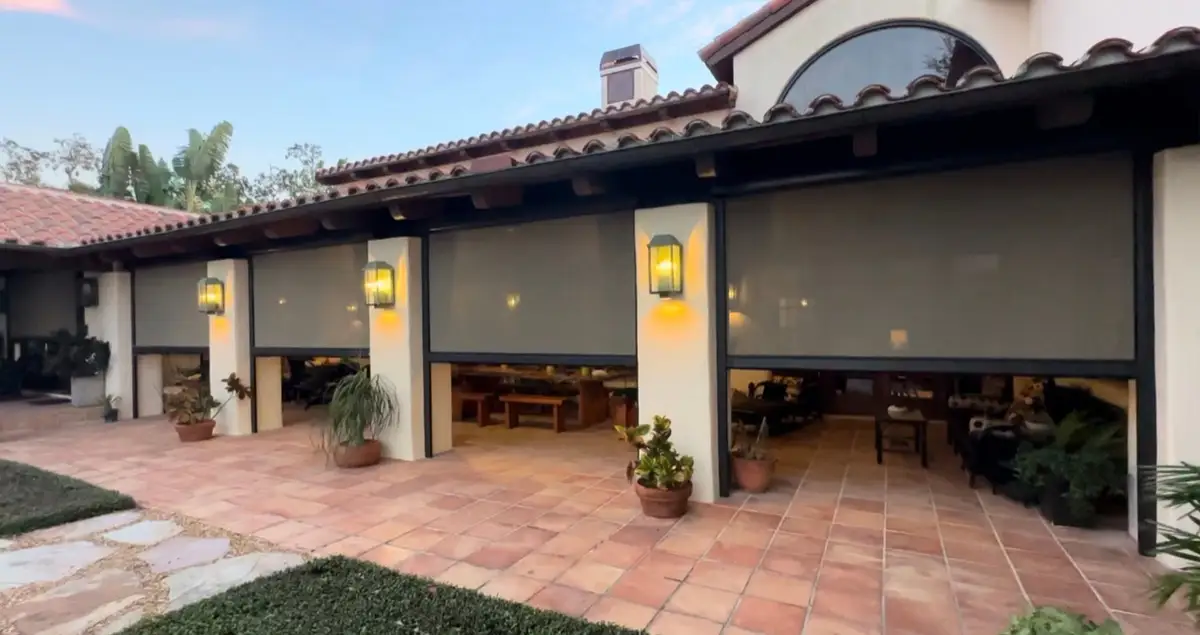
You already have the space. We make it work.
Fenetex® One-Track™ motorized shade and insect screens for Orlando’s lake homes, with MaxForce™ Hurricane Screens as the storm option, inside City of Orlando limits and in unincorporated Orange County.
Florida Living Outdoor installs Fenetex® One-Track™ motorized shade and insect screens on Orlando lanais and patios, in Orange County, with MaxForce™ Hurricane Screens, rated for the 185 MPH wind zone (HVHZ), as the storm option. We work inside City of Orlando limits and in the unincorporated areas with Orlando addresses, and we confirm whether the City or the county issues any permit. Screens take 4–8 weeks to build and 1–3 days to install; MaxForce typically runs $3,500–$9,500 per opening.
Orlando’s neighborhoods grew up around its lakes, and the city line winds between them. One street can be City of Orlando and the next unincorporated Orange County, with the same Orlando address. Both the lake and the line shape what a lanai needs.
From November through April, Orlando’s normal rainfall is about 14.4 inches, roughly 28% of the year. Those mild, drier months are when a lanai gets the most use, so screens are worth having in place before the season starts.
Plenty of homes with an Orlando address sit in unincorporated Orange County. That decides who issues the permit: the City of Orlando’s Permitting Services Division or Orange County’s Division of Building Safety. We check your address first.
The City of Orlando has six historic preservation districts, from Lake Cherokee to Colonialtown South. Before exterior changes there, the City asks for a Certificate of Appropriateness from its Historic Preservation Board, so a screen has to suit the house.
On an east-facing lanai or a wall of new glass, the low morning sun comes straight in at breakfast. A screen lowered outside the glass cuts the glare before it reaches the room.
Lakefront evenings bring no-see-ums and mosquitoes off the water at dusk. The wind gets a long run across the lake too, driving rain sideways under the roof and keeping the wood around doors and windows damp.
Hurricane season runs from June through November. MaxForce hurricane screens are rated for the 185 MPH wind zone (HVHZ) and lower fully when a storm is on the way, with no panels to haul out of the garage.
None of that calls for a new structure. It calls for the right screen on each opening. Shade for the morning sun, insect screens for dusk on the lake, and one button for all of it.
January
February
March
April
May
June
July
August
September
October
November
December
Today in Orlando
Sunrise · Sunset
Climate normals: NOAA NCEI, 1991–2020, Orlando International Airport (USW00012815).
We work from our base in Oviedo, about 23 miles (roughly 35 minutes without traffic) from Orlando City Hall, and every site visit, install and service call starts there.
Founder Kip Hudakoz is a Marine Corps veteran with 26 years in outdoor living. He hand-selects and personally trains every crew, and he’d rather you understand your options than buy the wrong screen: “My job is to educate you, regardless if you use us or go with someone else.”
Orlando homeowners may know Kip’s voice. He co-hosted a home-improvement radio show on News 96.5 WDBO, answering listeners’ questions on air.
Sources: City of Orlando: History · City of Orlando: Historic Preservation Districts
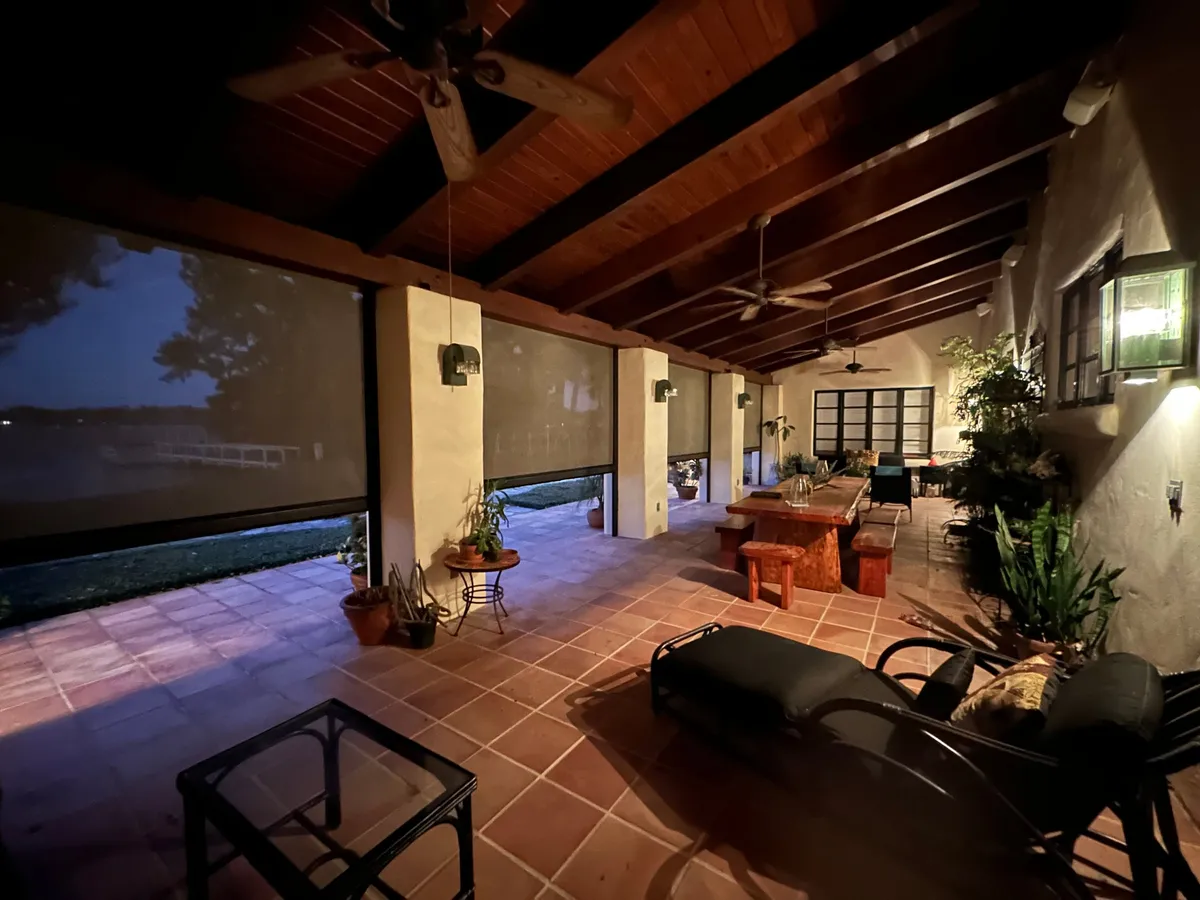
Best investment ever. Function as intended and installed with such attention to details and craftsmanship you think they existed as part of the original build.
Today we’d fit these openings with Fenetex® MaxForce™ Hurricane Screens.
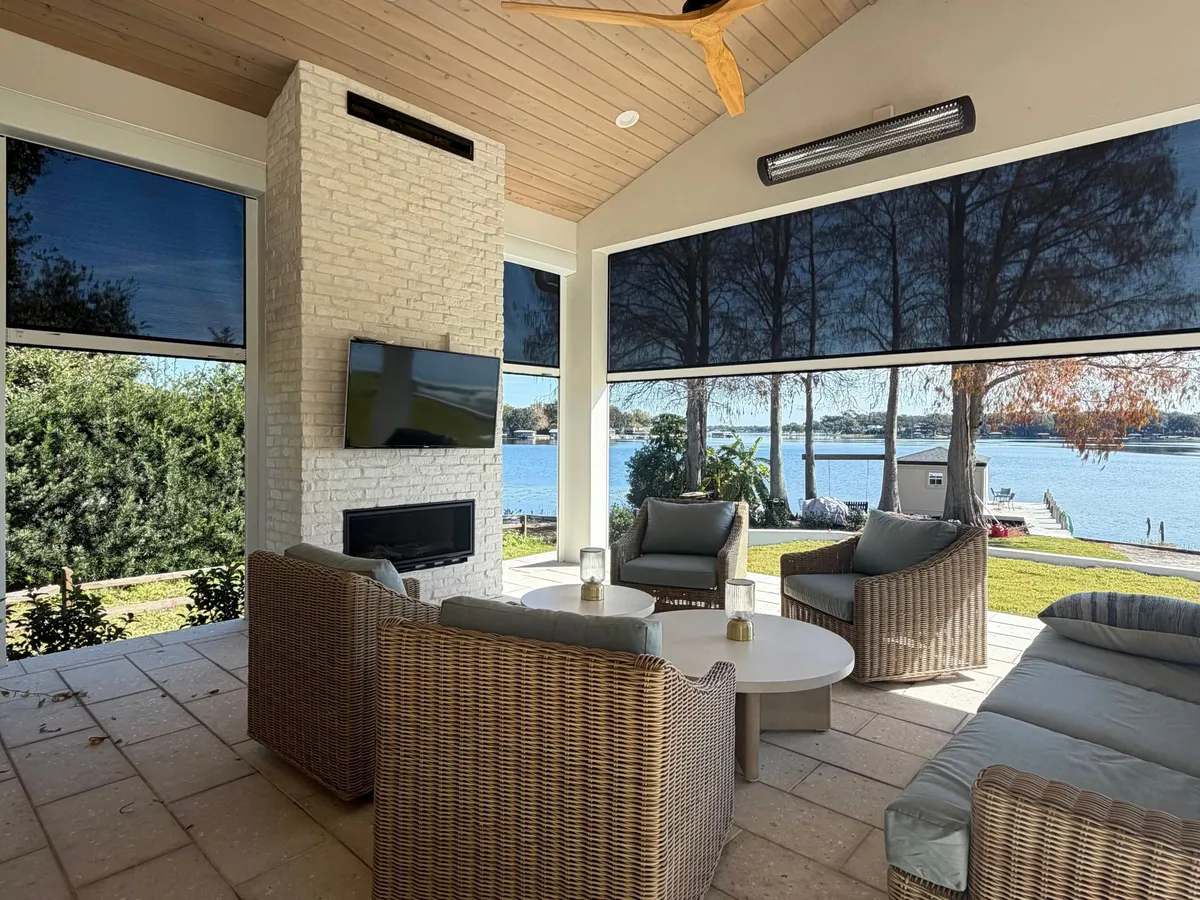
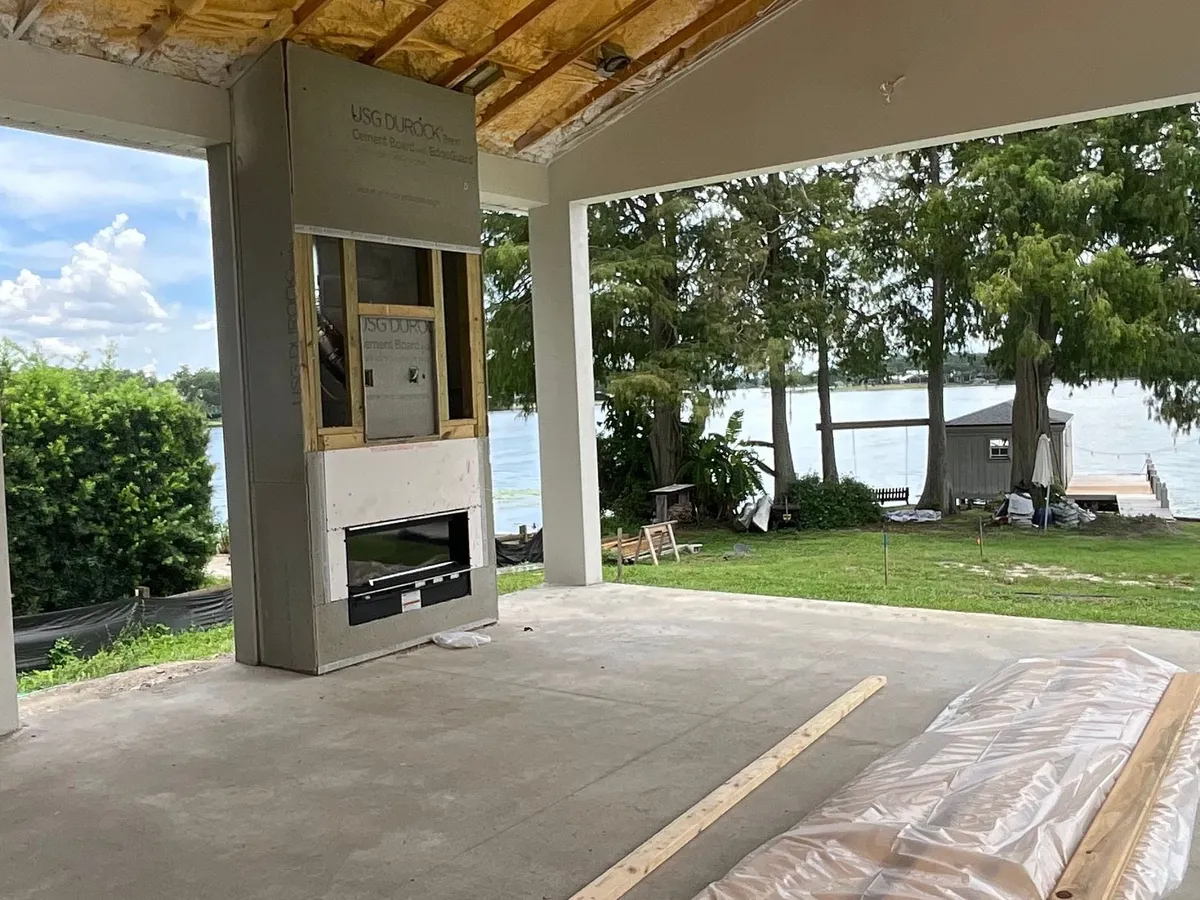
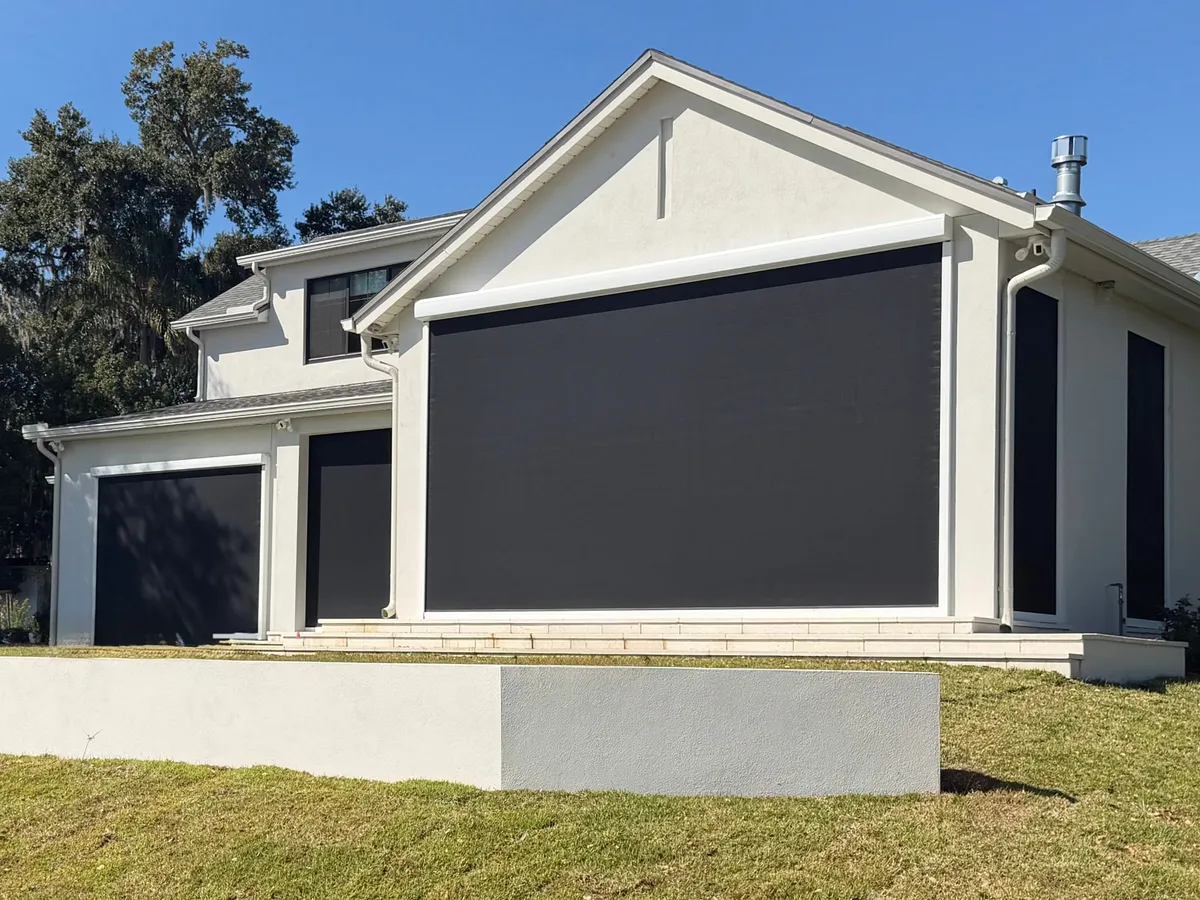
Edited: objects removed with Apple Photos Clean Up.
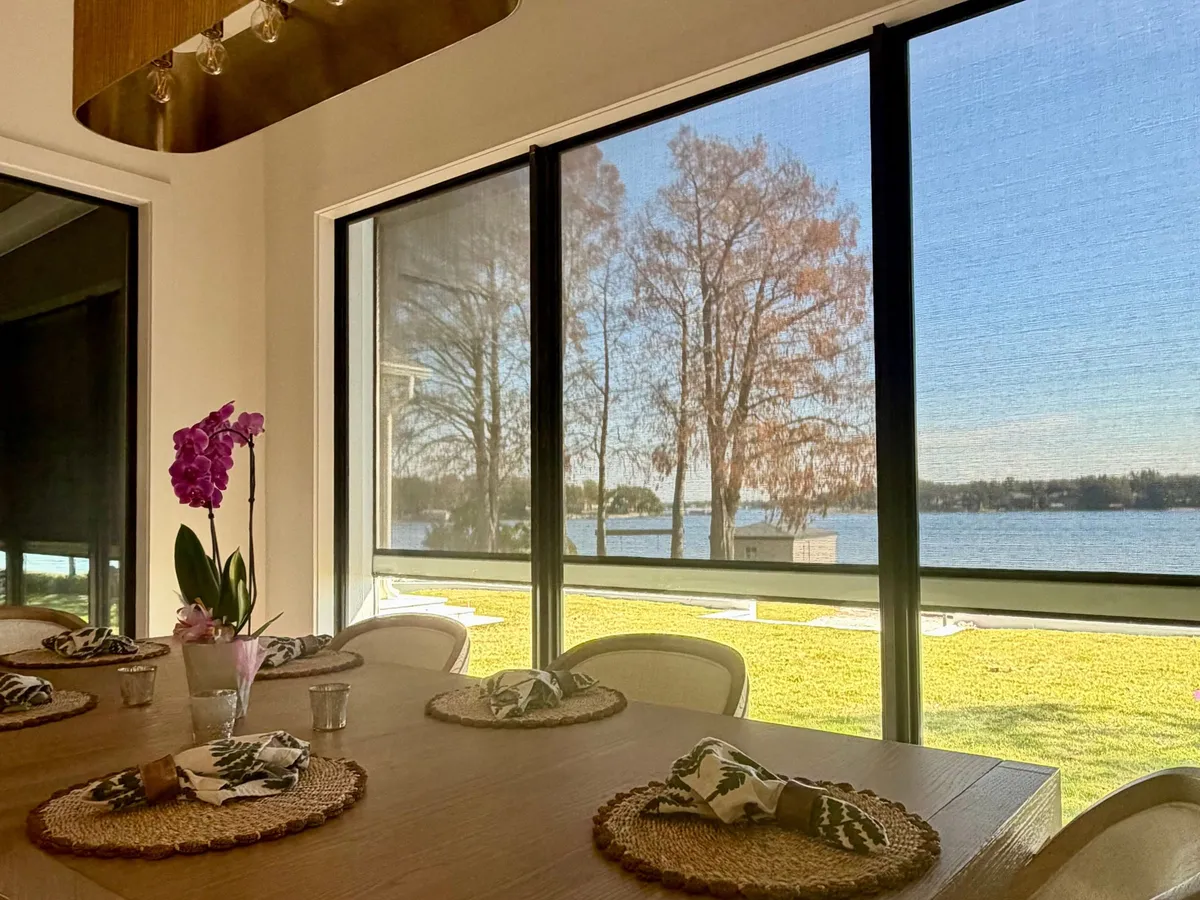
Excellent product. Has performed exactly as presented. New build. Kip was engaged from initial design until final CO. I was most impressed with his followup and engagement through the life of the project from concept to operational completion. Kip is a pleasure to work with and is adaptable and mission focused to deliver the best solution for the situation.
Today we’d fit these openings with Fenetex® MaxForce™ Hurricane Screens.
Most Orlando lanais start with a shade or insect screen. Here’s how the two Fenetex systems compare.
| Fenetex® One-Track™ | Fenetex MaxForce™ | |
|---|---|---|
| Best for | Bugs, sun and privacy, every day | Hurricane protection, plus everyday use |
| In a storm | Raise it fully before the storm | Lower it fully when the storm comes |
| Storm rating | Tested up to 100 MPH; not impact-rated. Raise it before a storm. | Rated for the 185 MPH wind zone (HVHZ); approved under Florida Product Approval FL8637-R15 |
| Shade | Shade fabric blocks up to 97% of UV | Ask us about shade options for your opening |
| Permit | Depends on the job | Permit and engineering required |
| Control | Motorized, one button; built to fit each opening | |
| Learn more | See One-Track screens | See MaxForce hurricane screens |
A free 20-minute call. Tell us which space you want to use more and what’s stopping you. We’ll tell you honestly what fits.
We come to your home, look at the space with you, show you the options and give you a quote.
We measure every opening and confirm whether the City of Orlando’s Permitting Services Division or Orange County’s Division of Building Safety covers your address. We pull the permit on every job that needs one, help with any HOA or historic-district review, and don’t order anything until approvals are in.
Your screens are built to order, usually 4–8 weeks after we place the order. Our crews install in 1–3 days.
We show you how everything works, set up your controls and answer every question. Your warranties start here.
typical price per opening for MaxForce hurricane screens
Ask us for One-Track pricing on your call. Every quote is set after a free site visit, because no two openings are the same.
If an awning or a simpler screen solves your problem, we'll tell you, even if it's the smaller job.
It depends on the system and the opening. One-Track shade and insect screens are quoted after a free site visit; for MaxForce hurricane screens, plan on roughly $3,500–$9,500 per opening. The size of the opening, how it’s mounted, the motor and controls, and any permit all move the price.
Start with what drives you inside. If it’s no-see-ums and mosquitoes at dusk, insect fabric keeps them out and leaves the view open. If it’s the sun, shade fabric cuts the glare and heat: Fenetex One-Track Shade screens block up to 97% of the sun’s harmful rays. Many Orlando homes use insect fabric on one side and shade on another, and we’ll help you decide opening by opening.
One-Track handles bugs, sun and privacy, and you raise it fully before a storm. MaxForce is built for hurricanes: you lower it fully when a storm comes. It’s approved under Florida Product Approval FL8637-R15.
It depends on the address. Homes inside City of Orlando limits go through the City’s Permitting Services Division; homes in unincorporated Orange County go through the county’s Division of Building Safety, even with an Orlando mailing address. We confirm whether the City of Orlando or Orange County covers your address, and we pull the permit on every job that needs one.
The City lists six historic preservation districts: Downtown, Lake Cherokee, Lake Copeland, Lake Eola Heights, Lake Lawsona and Colonialtown South. Before exterior changes in one, the City asks for approval first: a Certificate of Appropriateness from the Historic Preservation Board, or downtown, a Certificate of Appearance Approval from the Appearance Review Board. We’ll help you gather what the City asks for.
Morning sun and dusk bugs off the water are the usual problems. A shade screen lowered outside the glass cuts the glare before it reaches the room, and insect screens keep the lanai usable at dusk. We’ll walk each opening with you and match the screen to its problem.
Orlando City Hall is about 23 miles from our Oviedo base, roughly 35 minutes without traffic. We work on Orlando-area homes inside the city and out.
Once we place the order, screens take 4–8 weeks to build and 1–3 days to install. Add time for the permit from the City of Orlando or Orange County, and for HOA or historic-district review if your home needs it.
We do. We service every screen we install, and new installations come with a 5-year craftsmanship warranty and a 3-year track warranty.
Ask what tracks and motors they use, how the screens are anchored, who pulls the permit, what the warranty covers and for how long, and who services the screens afterward. Get the answers in writing, from us or anyone else.
Picture dinner on the lanai with no bugs, no glare and nothing to put away when the afternoon storm rolls through. It starts with a 20-minute call.
What happens next: you'll get a text and an email from us within five minutes. If you asked us to call, we usually call back within a couple of hours. After your phone consultation, we'll set up your on-site visit.
Shade, light and privacy for the space you already have.
Shade when you want it, open sky when you don’t. A retractable awning rolls out over a patio that bakes in the afternoon and rolls back when you want the sun.
See awning options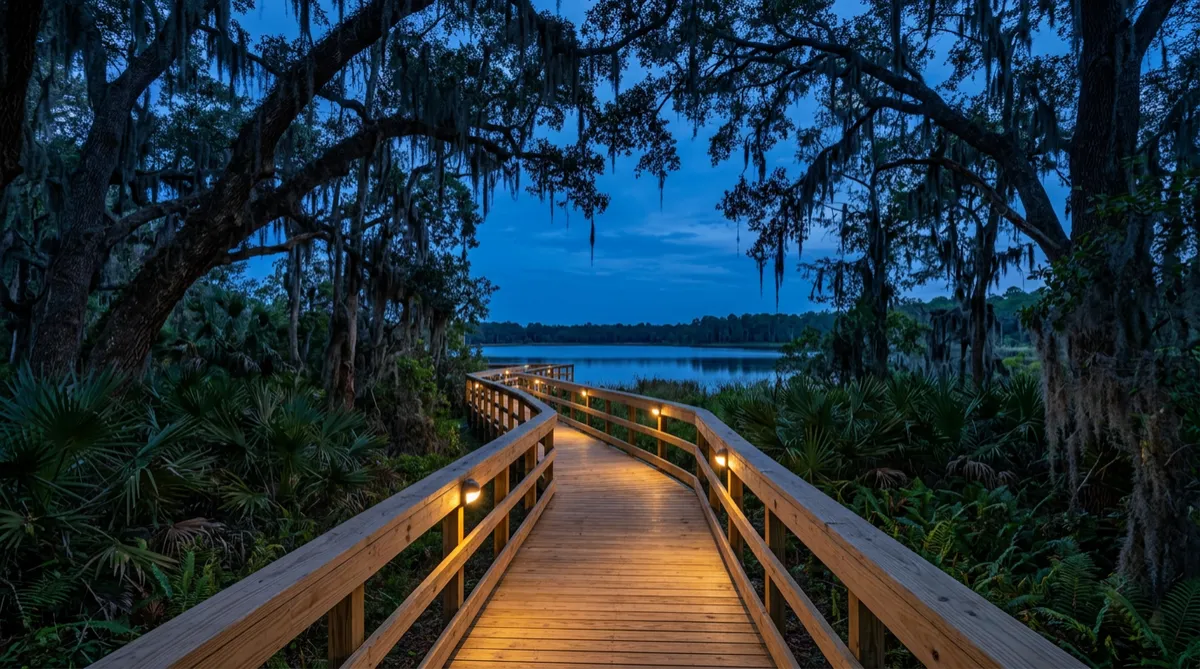
Low-voltage landscape lighting for docks, paths and the shoreline, so a lakefront yard stays usable and easy to walk after dark.
See lighting options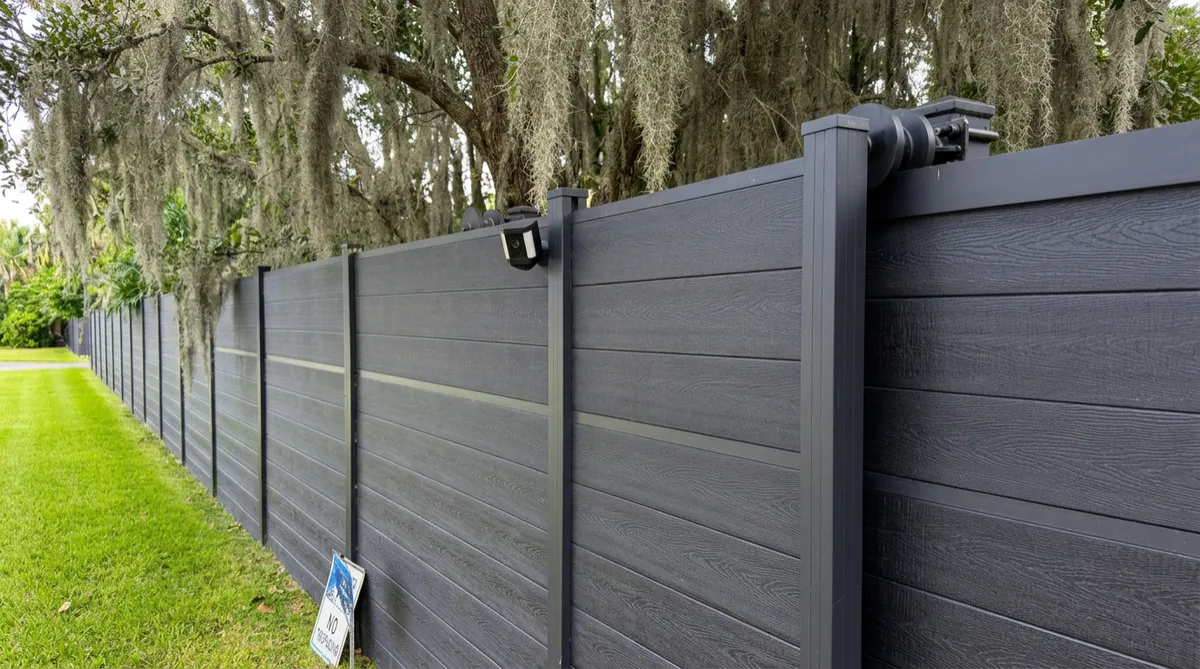
Horizontal privacy fencing with Greenwood’s modern panels screens a yard from the street and the neighbors, with very little upkeep.
See fence optionsInterested in awnings, lighting or fencing? Book a free consultation
Some of these are inside City of Orlando limits and some are unincorporated Orange County. Tell us your street or community, and we’ll check which rules apply and help with any HOA application.



Copyright 2026. Florida Living Outdoor, LLC. All Rights Reserved.
Powered and Built By